Sorting skills Easy Numbers Worksheets for Ages 3-6
3 filtered results
-
From - To
Unlock your child's potential with our "Sorting Skills Easy Numbers Worksheets" designed for ages 3-6. These engaging worksheets help young learners develop essential sorting skills through fun, interactive exercises featuring colorful numbers and playful visuals. By sorting various objects and numbers, children enhance their understanding of categories, patterns, and mathematical concepts. Our worksheets align with early learning standards, fostering critical thinking and problem-solving abilities. Perfect for homeschooling or classroom use, these worksheets offer a delightful way to make learning enjoyable. Give your little ones the gift of foundational math skills with our easy-to-use, printable sorting worksheets today!
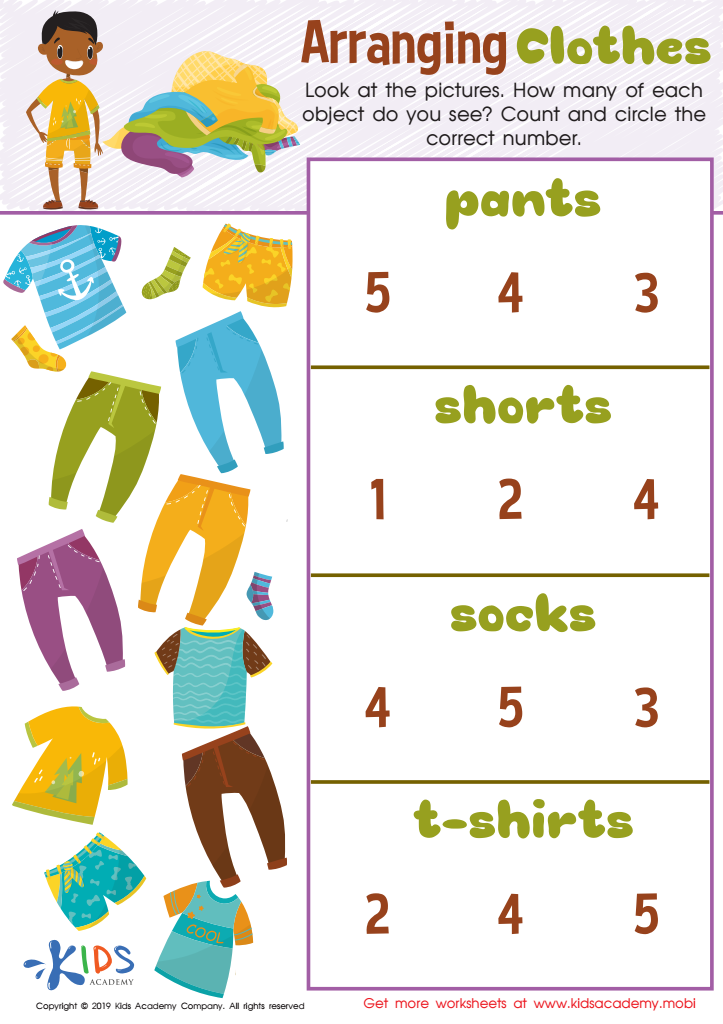
Arranging Clothes Worksheet
 Assign to My Students
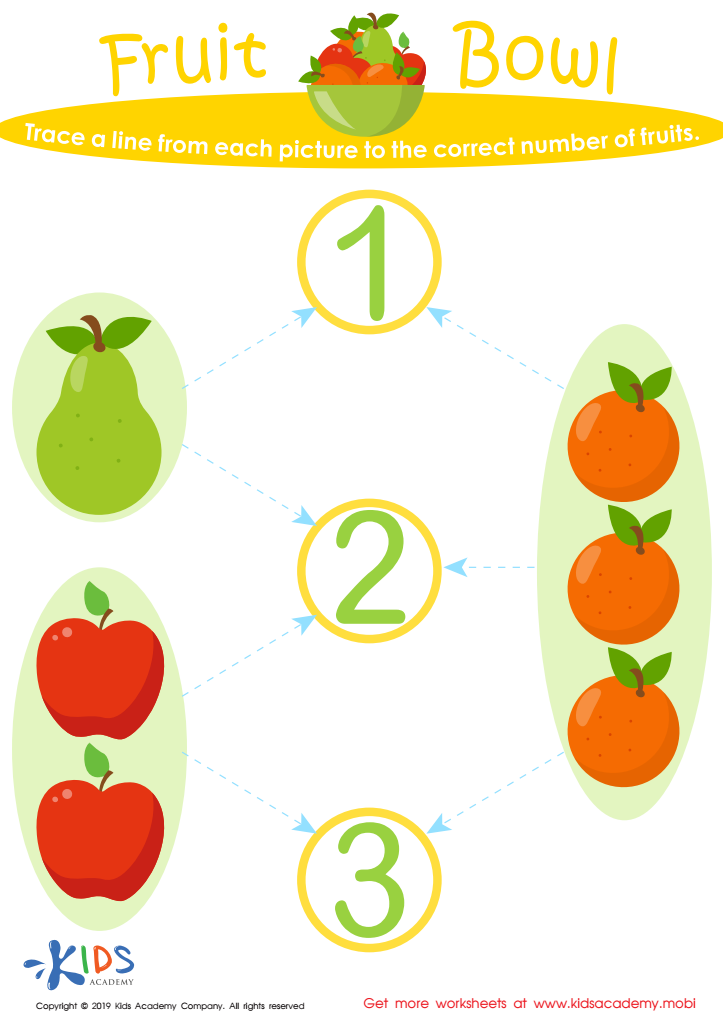
Fruit Bowl Worksheet
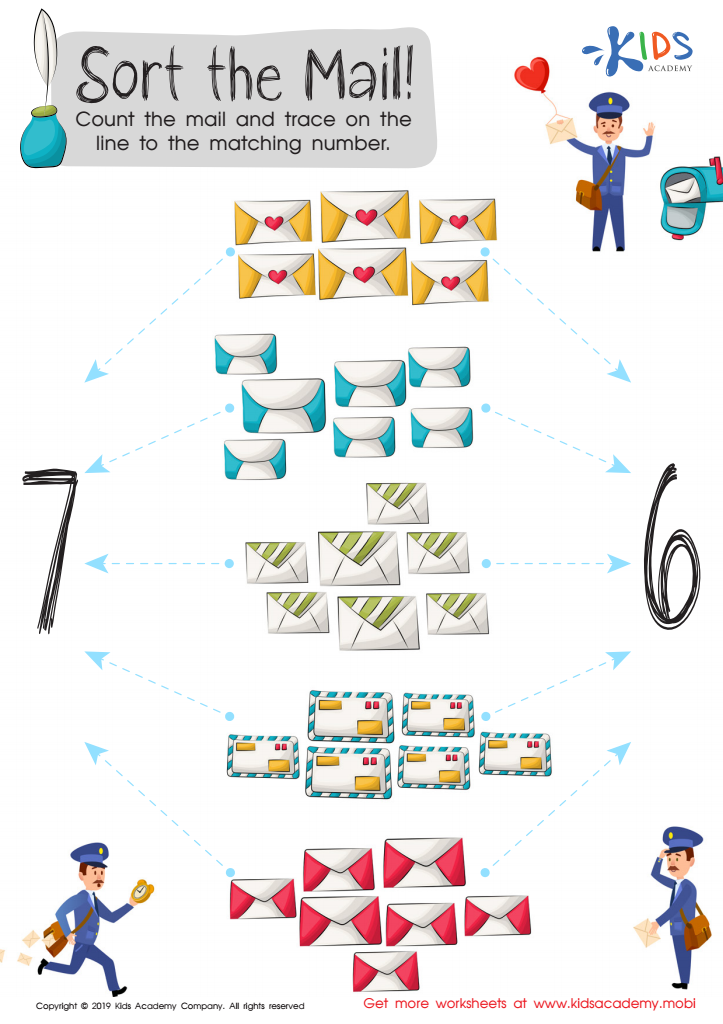
Sort the Mail Worksheet








Sorting skills, particularly with easy numbers, are foundational for young learners aged 3-6, and both parents and teachers should prioritize this important aspect of early education. Firstly, sorting helps children develop critical cognitive skills. As they categorize objects by number, children enhance their ability to recognize patterns, make comparisons, and analyze properties. These skills are essential for future mathematics and problem-solving tasks.
Secondly, sorting activities promote fine motor development and hand-eye coordination. Manipulating items to sort them, whether counting cups, blocks, or other manipulatives, allows children to practice gripping, pinching, and precise movements, contributing to their overall physical dexterity.
Furthermore, mastering sorting introduces early statistical thinking. Understanding that groups can change and recognizing quantity in various contexts lays groundwork for later concepts such as addition, subtraction, and number sense.
Lastly, sorting activities encourage social skills as children often work in pairs or small groups, fostering teamwork, communication, and sharing. This rich interaction not only supports their social-emotional development but also makes learning enjoyable and engaging. By emphasizing sorting skills, parents and teachers empower children with essential tools to navigate their world, paving the way for future academic success.








