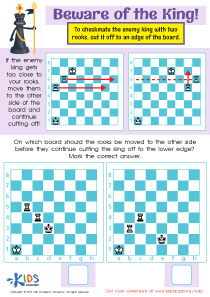
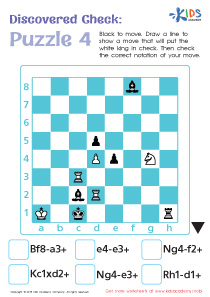
Chess strategy understanding Easy Chess Worksheets for Ages 3-7
3 filtered results
-
From - To
Description for "Chess Strategy Understanding Easy Chess Worksheets for Ages 3-7"
Dive into the exciting world of chess with our "Chess Strategy Understanding Easy Chess Worksheets" designed especially for young minds aged 3-7. These interactive activities make learning chess fun and accessible, sparking curiosity and strategic thinking. Our worksheets progressively teach kids basic moves, board setup, and essential strategies in a simple, engaging manner. Perfect for parents and educators, these printables help children build concentration, problem-solving skills, and patience—one move at a time. Unlock the potential of every young learner with tailored activities that turn chess into an enjoyable and educational adventure.
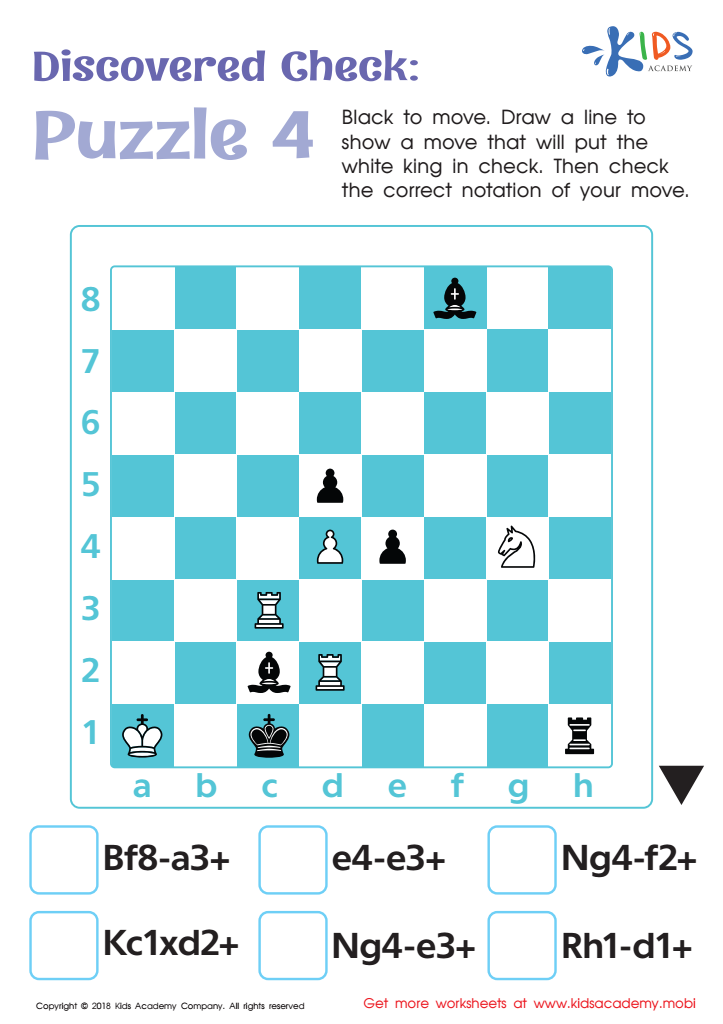
Discovered Check: Puzzle 4 Worksheet

Discovered Check: Puzzle 2 Worksheet
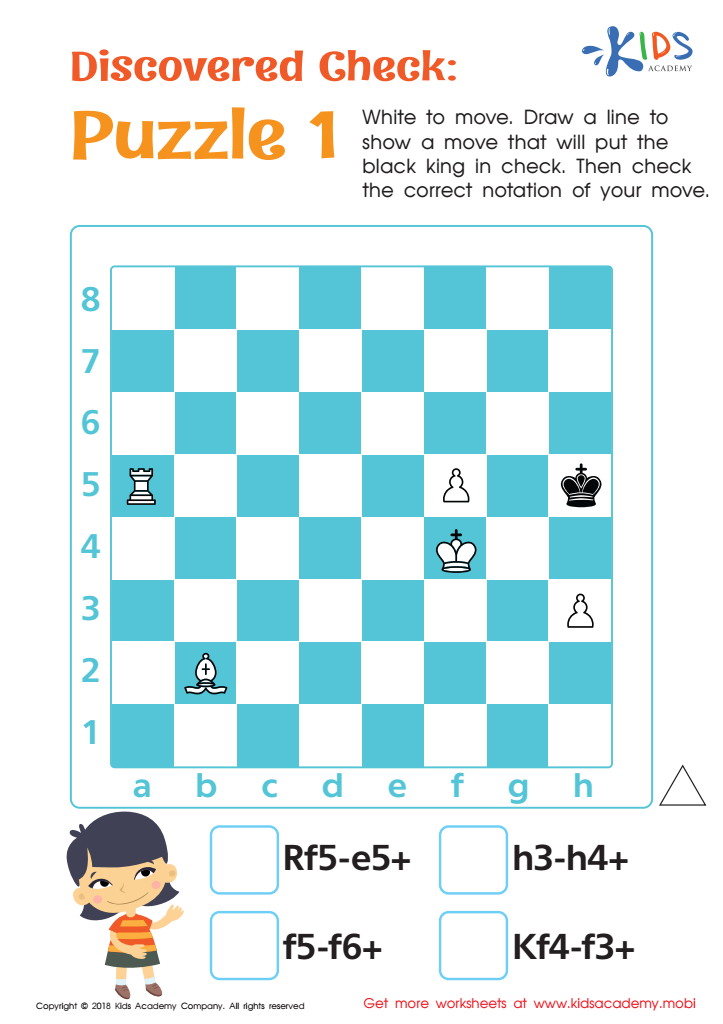
Discovered Check: Puzzle 1 Worksheet






Parents and teachers should care about introducing chess strategy to young children, especially ages 3-7, because it offers compelling developmental benefits. Early exposure to chess builds cognitive skills, such as critical thinking and problem-solving, which are fundamental for academic success. Learning to anticipate an opponent’s moves cultivates both foresight and strategic planning—abilities that translate well beyond the chessboard into real-life scenarios.
Additionally, chess helps improve concentration and attention span. These young kids usually have short attention spans but engaging in chess gently encourages them to focus and practice patience. It also boosts memory and enhances pattern recognition, aiding early mathematical and language development.
Moreover, social skills are improved as children learn the importance of taking turns, respecting their opponent, and handling both winning and losing gracefully. This fosters a positive attitude towards competition and sportsmanship.
Finally, chess is accessible and can be remarkably inclusive. It transcends verbal language barriers, making it easier for children from diverse backgrounds to engage with the game.
Easy chess for young children serves as more than a pastime; it is a powerful educational tool that offers a head start on crucial life skills. Therefore, parents and teachers have a vested interest in incorporating this timeless game into early childhood education.