Addition Practice Easy Worksheets for Ages 3-7 - Page 2
27 filtered results
-
From - To
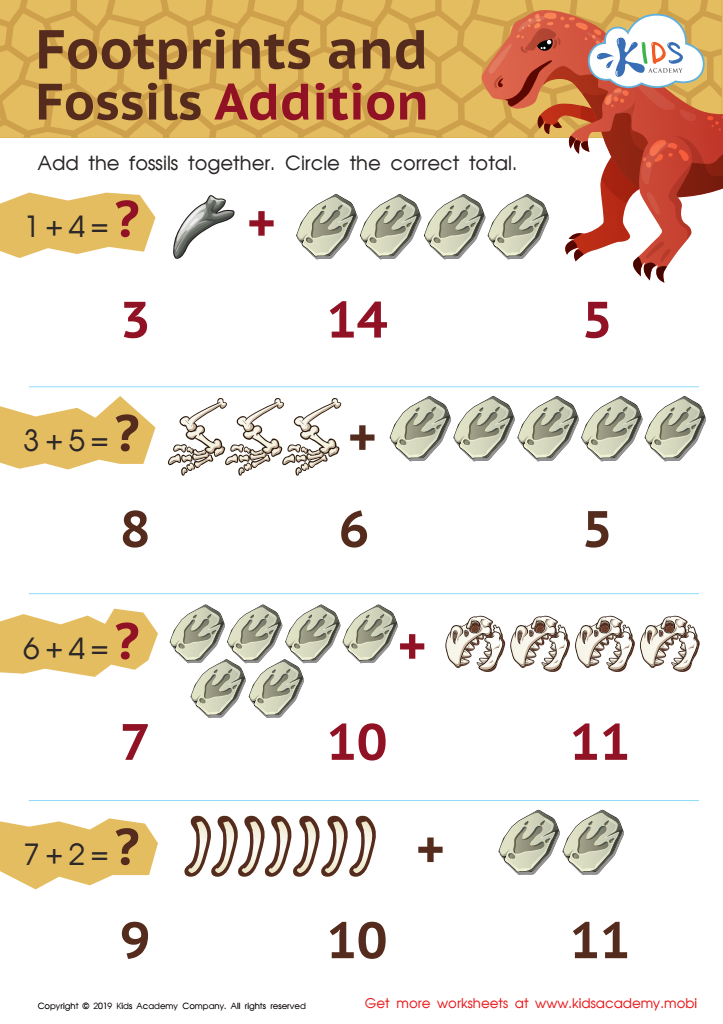
Footprints and Fossils Addition Worksheet
 Assign to My Students
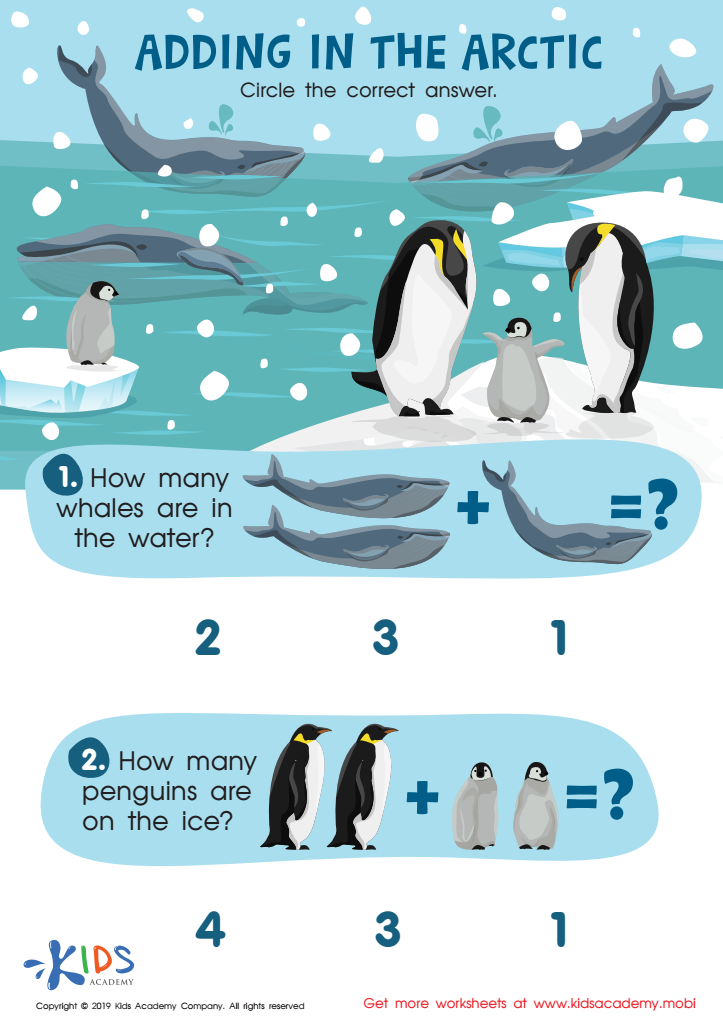
Adding in the Arctic Worksheet
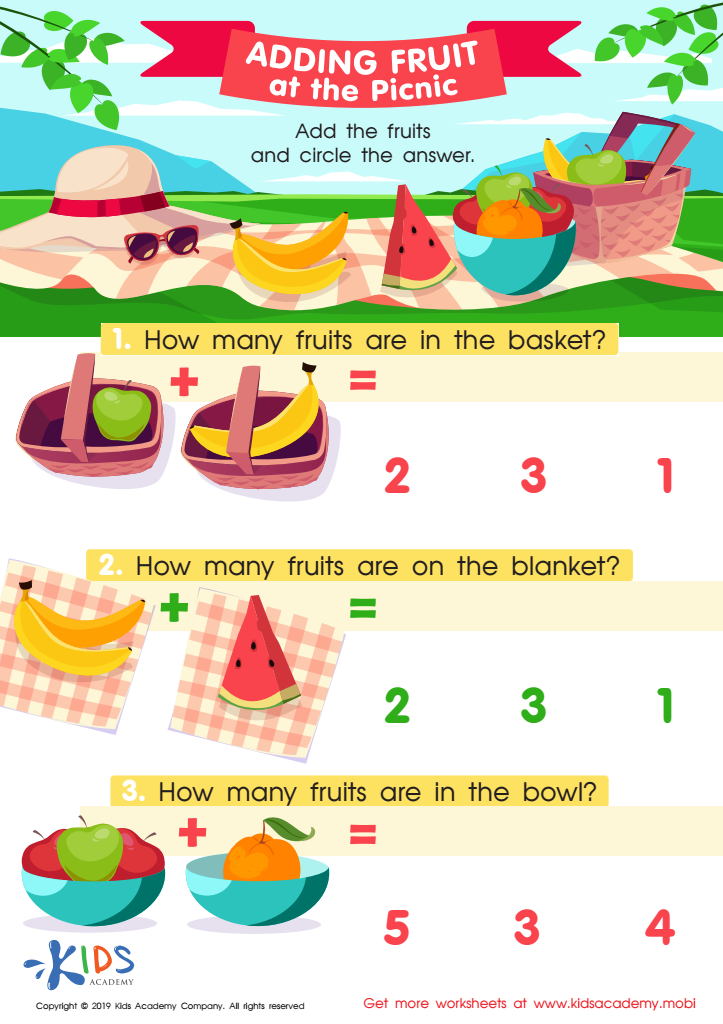
Adding Fruit at the Picnic Worksheet








Addition practice for children ages 3-7 is critical in laying the foundational skills necessary for future mathematical learning and overall cognitive development. At this tender age, children are in a prime stage of cognitive development where their brains are particularly malleable and adaptable. Early exposure to addition helps them adapt fundamental numeracy concepts, boosting their problem-solving skills and mental calculation abilities.
Visual aids and hands-on activities make addition practice enjoyable and enhance understanding. This engagement ensures that children aren’t just memorizing arithmetic facts, but comprehending basic number relationships and patterns. Moreover, mastering addition builds confidence in young learners. A child who feels competent in basic math is more likely to approach other subjects with enthusiasm and assurance.
Additionally, early proficiency in math has been linked to improved literacy skills. Math practice necessitates following instructions, understanding sequence, and fostering attention to detail; these are traits that benefit reading and writing as well. Parental or teacher involvement in addition practice also reinforces a positive learning environment. Praise and encouragement during learning activities promote a growth mindset, encouraging children to embrace challenges and persist in the face of difficulties.
Overall, early addition practice is not just about learning numbers; it’s about building a solid, positive foundation for lifelong learning.








