
Analytical skills Easy Worksheets for Ages 3-7
4 filtered results
Difficulty Level
Grade
Age
-
From - To
Subject
Activity
Standards
Discover our engaging "Analytical Skills Easy Worksheets" designed for children ages 3-7. These worksheets help young learners develop critical thinking, problem-solving, and reasoning abilities through fun and interactive activities. Each worksheet features colorful illustrations and age-appropriate exercises that challenge kids to identify patterns, categorize objects, and solve puzzles, all while enhancing their cognitive skills. Ideal for parents and educators alike, our worksheets offer a convenient way to support early learning at home or in the classroom. Foster your child's analytical thinking from an early age with these easy, effective resources that make learning an enjoyable adventure!
Favorites
With answer key
Interactive
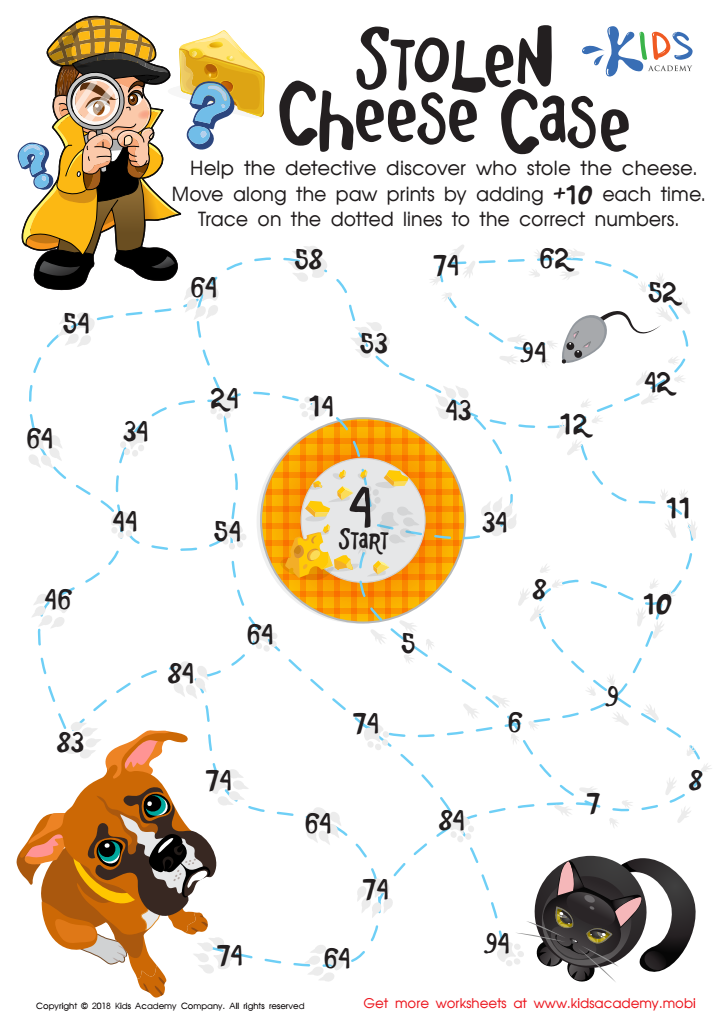
Stolen Cheese Case Maze Worksheet
Someone has stolen the cheese! Can your mathematician detective figure out who it is? Was it the dog, cat or mouse? Have them use traceable lines to skip count by 10 on this free PDF worksheet to solve the case. They'll be having fun and developing their skip-counting strategy at the same time!
 Assign to My Students
Stolen Cheese Case Maze Worksheet
Worksheet
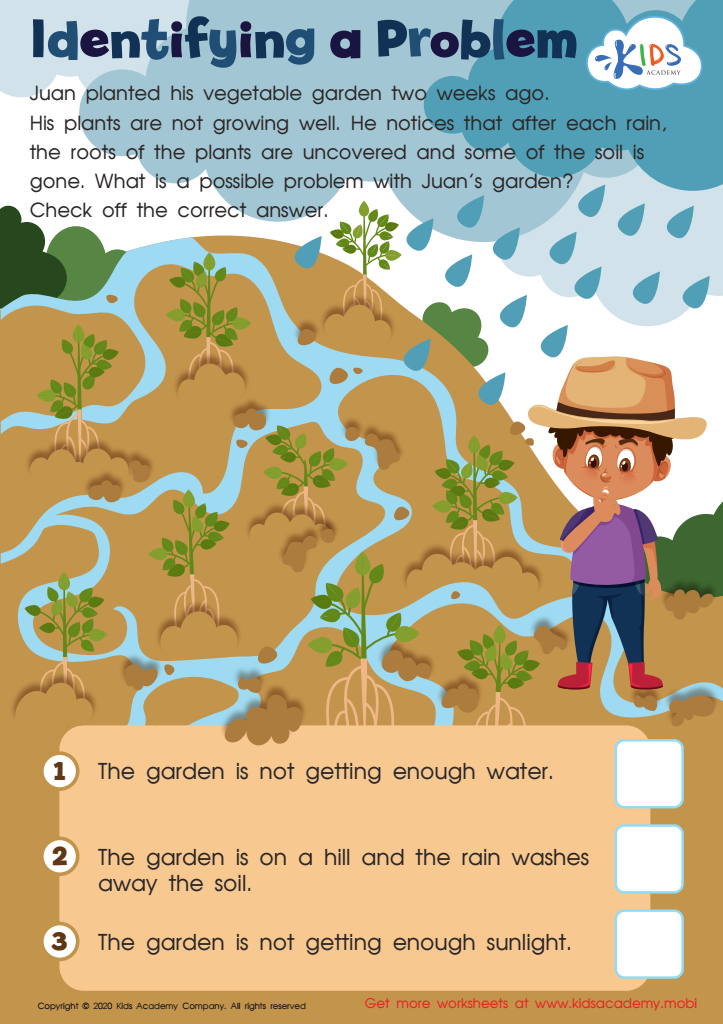
Identifying a Problem Worksheet
Help Juan figure out why his vegetable garden isn't doing well! Print this PDF science worksheet. Read the explanation and observe the scene. What could be causing the problem? Check off the correct answer to complete the challenge. Weather or soil conditions may be the cause – analyze to find out!
Identifying a Problem Worksheet
Worksheet
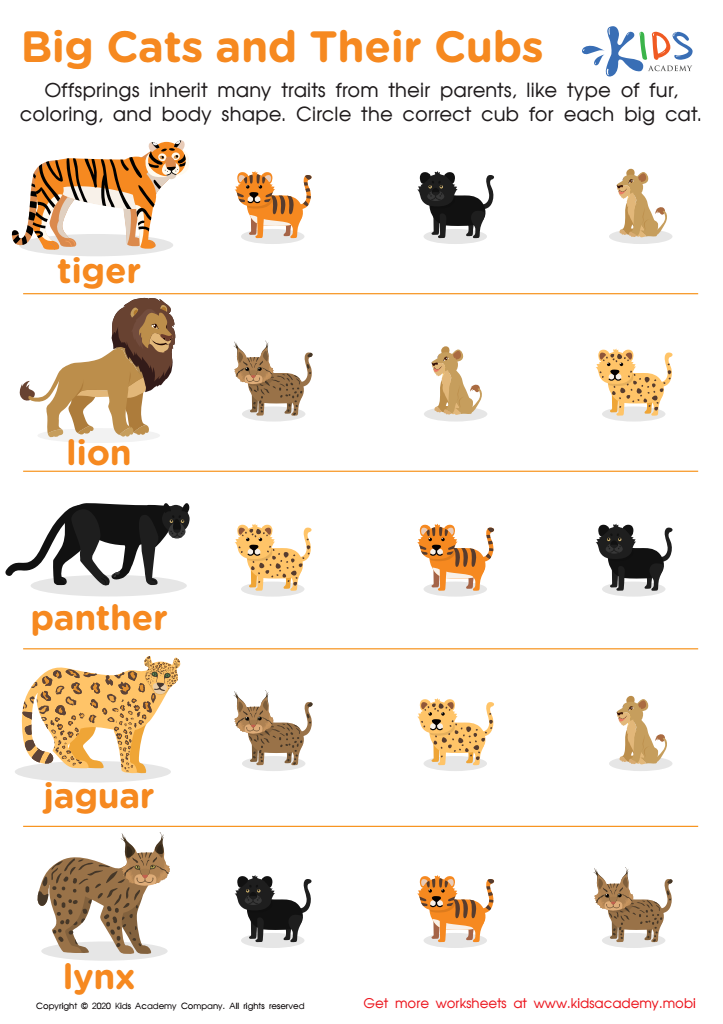
Big Cats and Their Cubs Worksheet
Kids are often like their parents, and the same is true for big cats and their cubs. Introduce your young scientists to genetics with this fun printable worksheet from Kids Academy! Observe the big cats and their cubs, then circle the right cub to complete! It's a great way to teach an early lesson in genetics.
Big Cats and Their Cubs Worksheet
Worksheet
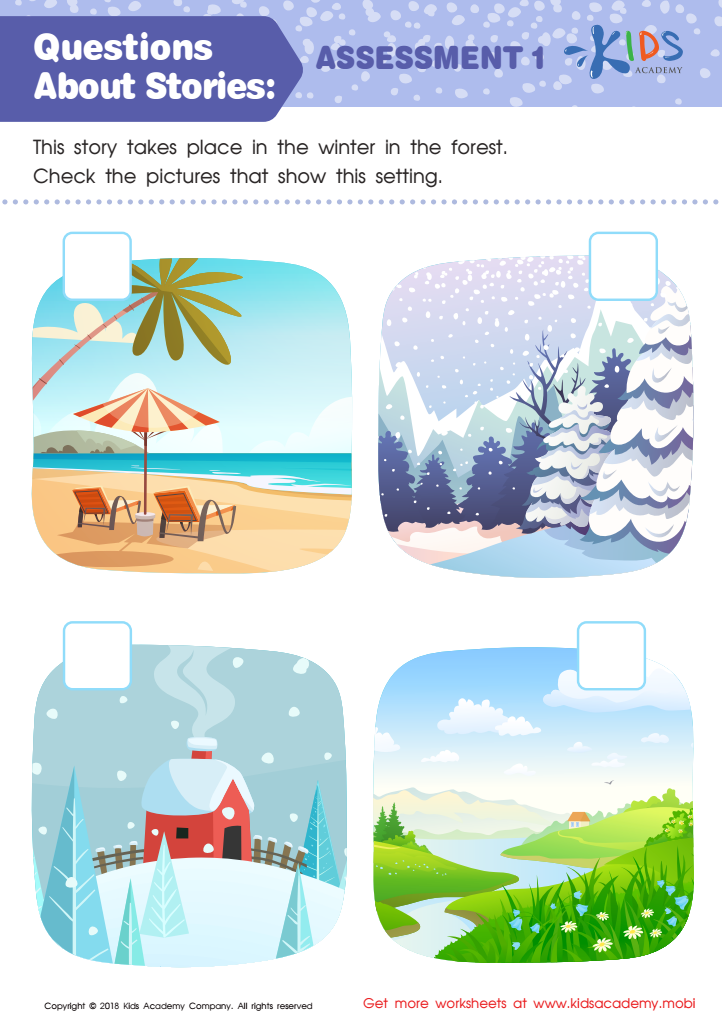
Questions About Stories: Assessment 1 Worksheet
Winter brings snow, cold, short days, and darkness. Schools can even close due to heavy snow. Ask your child what their favourite winter activities are and what color they associate with 'winter'. This worksheet takes place in a winter forest. Look at the 4 pictures with your child, and help them identify which one shows the correct setting.
Questions About Stories: Assessment 1 Worksheet
Worksheet
Join Kids Academy for Free
Who is primarily going to use this learning content?








Analytical skills are fundamental for children aged 3-7 as they form the foundation for critical thinking, problem-solving, and decision-making. During these formative years, children are naturally curious and eager to explore the world around them. By nurturing their analytical skills, parents and teachers can help children develop the ability to observe, categorize, and draw conclusions based on their experiences.
Fostering analytical skills also promotes cognitive development, enabling children to make connections and understand cause-and-effect relationships. This can improve their abilities in other areas, such as math and science, where logical reasoning is essential. Moreover, children with strong analytical skills are better equipped to tackle challenges and learn from their mistakes, encouraging resilience and independence.
In an increasingly complex world, these skills will empower young learners to navigate various situations, fostering confidence and adaptability. Notably, engaging children in activities like puzzles, sorting games, and open-ended questioning can make learning enjoyable while enhancing their analytical abilities.
By prioritizing the development of analytical skills, parents and teachers are not just preparing students for academic success; they are equipping them with essential tools for life-long learning and informed citizenship. Investing in these skills now will benefit children in the long run.








