Chess strategy understanding Easy Worksheets for Ages 3-7
3 filtered results
-
From - To
Unlock young minds with our "Chess Strategy Understanding Easy Worksheets" for ages 3-7! These engaging, printable resources transform chess into a fun, educational adventure. Designed specifically for early learners, our worksheets simplify complex chess strategies with vibrant visuals and age-appropriate exercises. Each activity promotes critical thinking, problem-solving, and fine motor skills, setting a foundation for lifelong learning and chess mastery. Perfect for parents, teachers, and caregivers, our easy-to-use worksheets make learning chess a rewarding experience for young children. Start your child's chess journey today and watch them develop strategic thinking while having loads of fun!
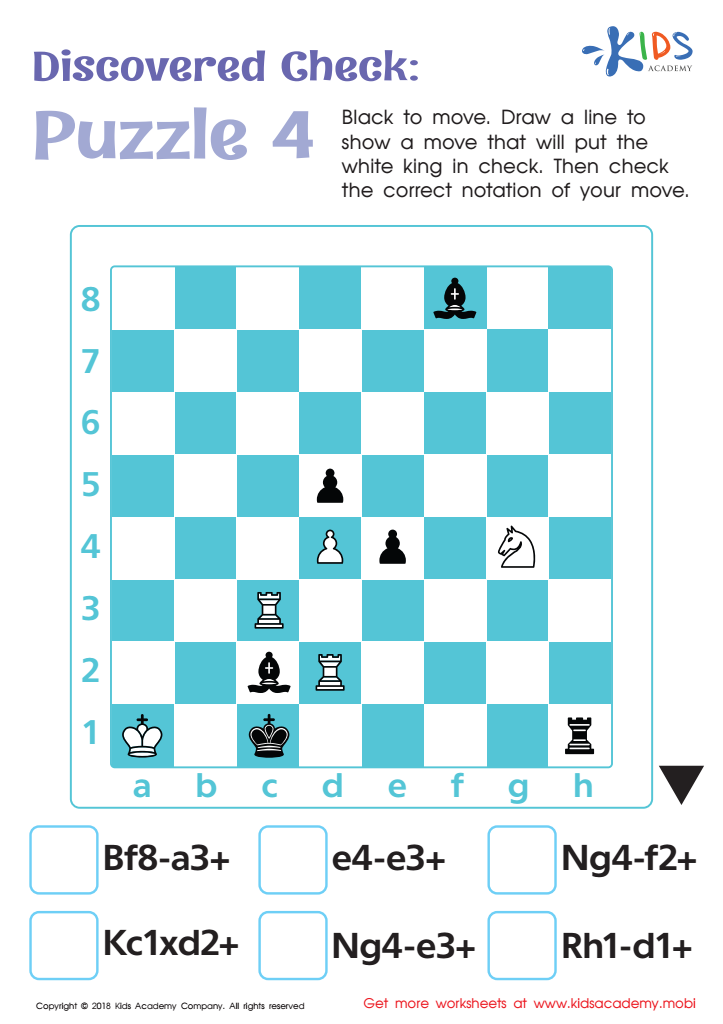
Discovered Check: Puzzle 4 Worksheet

Discovered Check: Puzzle 2 Worksheet
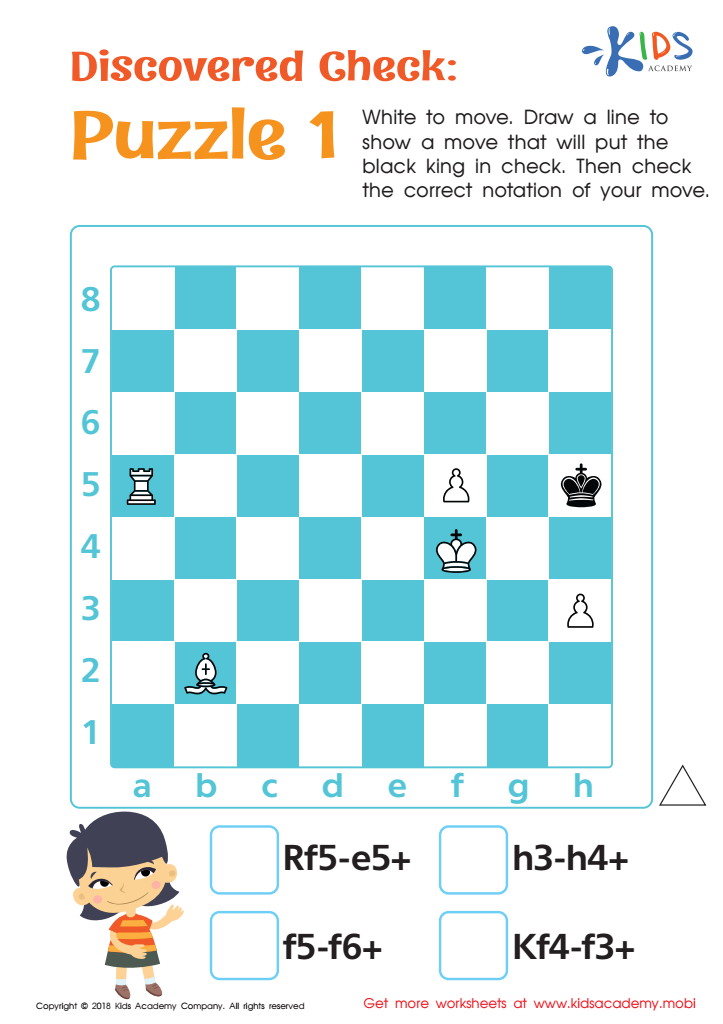
Discovered Check: Puzzle 1 Worksheet








Parents and teachers should value introducing basic chess strategy to children aged 3-7 because it fosters essential cognitive and social development skills at a critical time in their growth. Chess promotes critical thinking and problem-solving as children must plan ahead, consider different possibilities, and make strategic decisions. This kind of analytical thinking encourages intellectual curiosity and a love for learning.
Additionally, playing chess helps improve memory, concentration, and spatial reasoning, which are fundamental for success in both academic and everyday activities. Learning to recognize patterns and think abstractly are other cognitive benefits that can give children an edge in subjects like mathematics and reading comprehension.
From a social-emotional perspective, chess teaches patience, perseverance, and sportsmanship. Children learn to respect their opponents, cope with wins and losses gracefully, and understand the value of practice and effort. It fosters a sense of self-confidence and accomplishment.
Moreover, chess is a universal game that transcends cultural and language barriers, offering children a unique way to connect with peers and appreciate diverse perspectives. Introducing children to chess at an early age sets a strong foundation for lifelong learning and personal growth while cultivating a sense of enjoyment and challenge.








