Comparing heights Easy Worksheets for Ages 3-7
3 filtered results
-
From - To
Introduce young learners to the concept of comparing heights with our engaging worksheets designed for ages 3-7. Perfect for early childhood education, these easy-to-understand activities help children practice distinguishing between tall and short. Featuring fun illustrations and simple exercises, our worksheets encourage hands-on learning while developing critical thinking and observational skills. Ideal for classroom use or at-home practice, these printables make the fundamentals of measurement enjoyable and accessible. Boost your child's confidence and curiosity with our expertly crafted comparing heights worksheets and watch them grow in knowledge and ability!
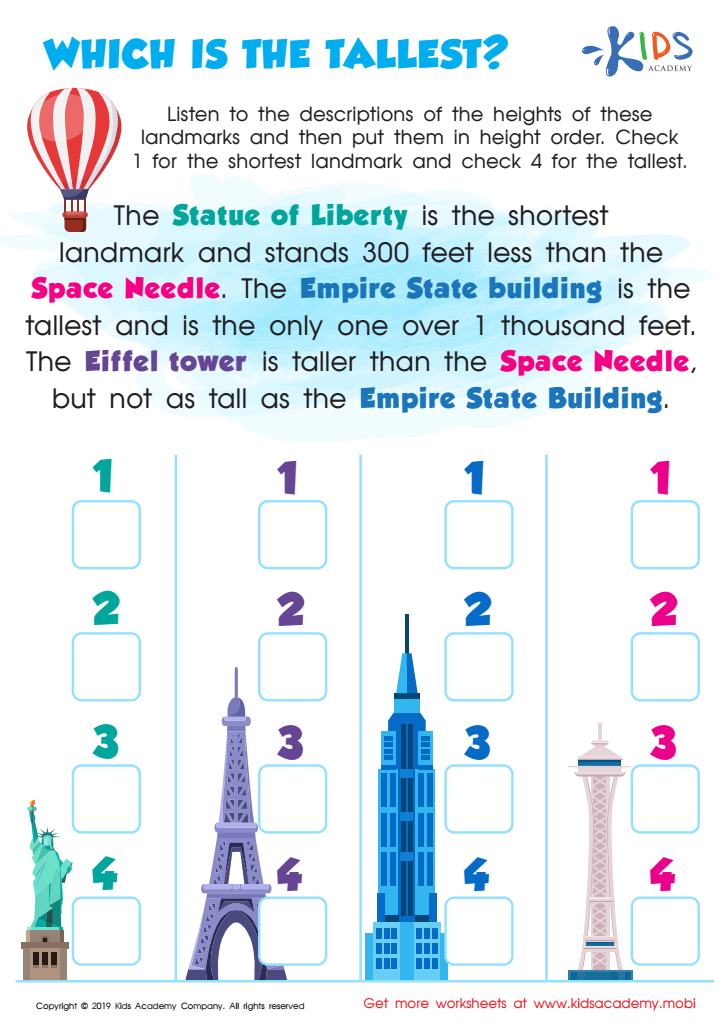
Which is the Tallest? Worksheet
 Assign to My Students
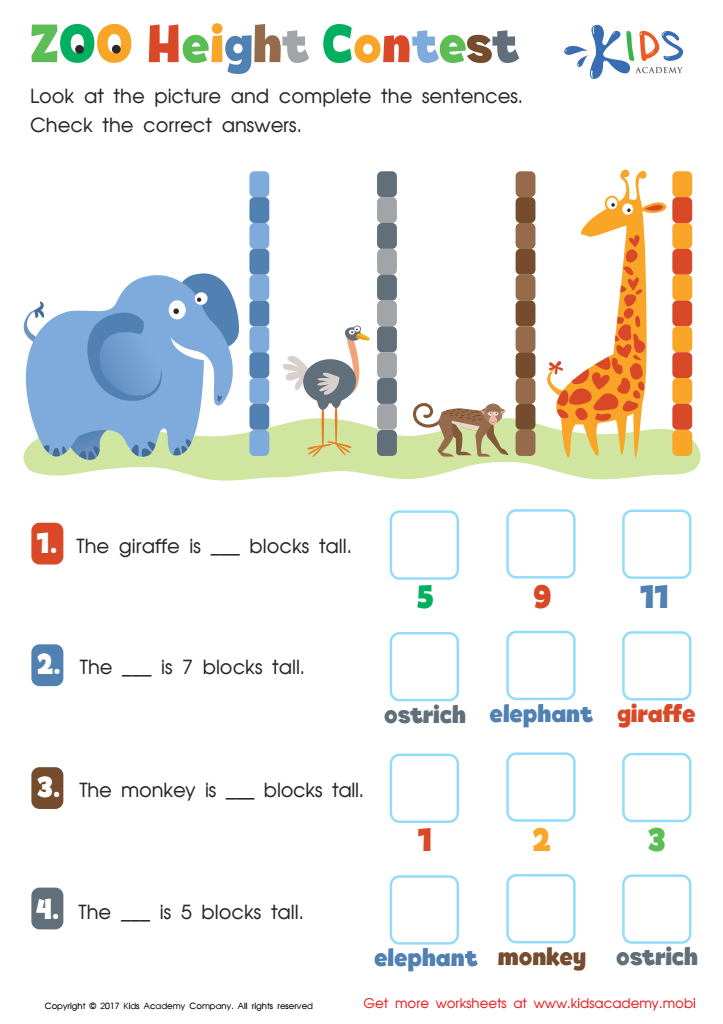
Zoo Height Contest Worksheet
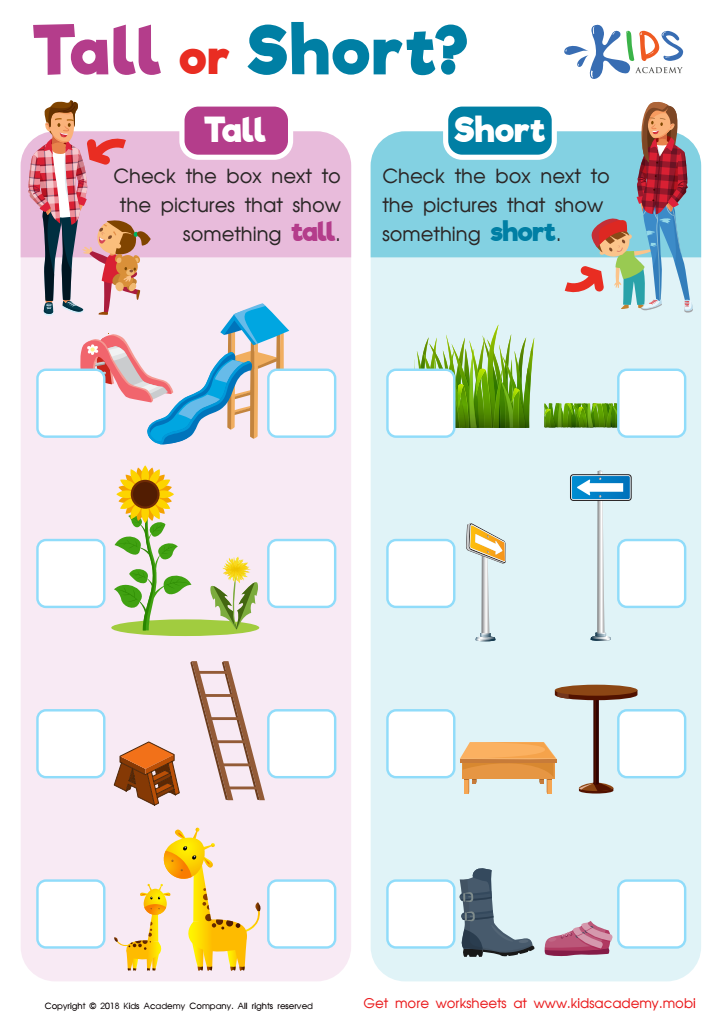
Tall or Short? Worksheet








Comparing heights at an early age is more than just a fun activity; it plays a vital role in a child's cognitive and social development. For children ages 3-7, engaging in height comparison introduces them to foundational mathematical concepts such as measurement, estimation, and spatial awareness. Understanding differences in height helps children grasp the concepts of "taller," "shorter," "longer," and "equal," which are fundamental in building early numeracy skills.
From a social perspective, comparing heights encourages cooperative learning and communication. When children stand back-to-back or place objects side by side, they initiate conversations and participate in teamwork. These interactions can foster social bonds and enhance their language skills as they describe what they see and reason through their observations.
Moreover, this activity also boosts self-esteem and identity. As children recognize their own physical characteristics relative to others, they develop an understanding of themselves in the context of their environment and peer group. This sense of identity is crucial for building confidence and self-awareness in young learners.
Parents and teachers should thus encourage these exercises as they integrate seamlessly into play, making learning joyful and effective. Helping children compare heights is a simple yet impactful way to support their holistic growth.








