Fine motor development Easy Worksheets for Ages 3-7
3 filtered results
-
From - To
Welcome to our "Fine Motor Development Easy Worksheets" page! Designed specifically for children aged 3 to 7, these engaging worksheets help enhance fine motor skills through fun, interactive activities. Our resources support early learners in developing vital hand-eye coordination, dexterity, and control with ease. From tracing and cutting practice to coloring and dot-to-dot exercises, each worksheet is tailored to make learning enjoyable and effective. These activities not only boost motor skills but also foster creativity and concentration. Explore our collection today and provide your child with the tools they need for successful learning and development!
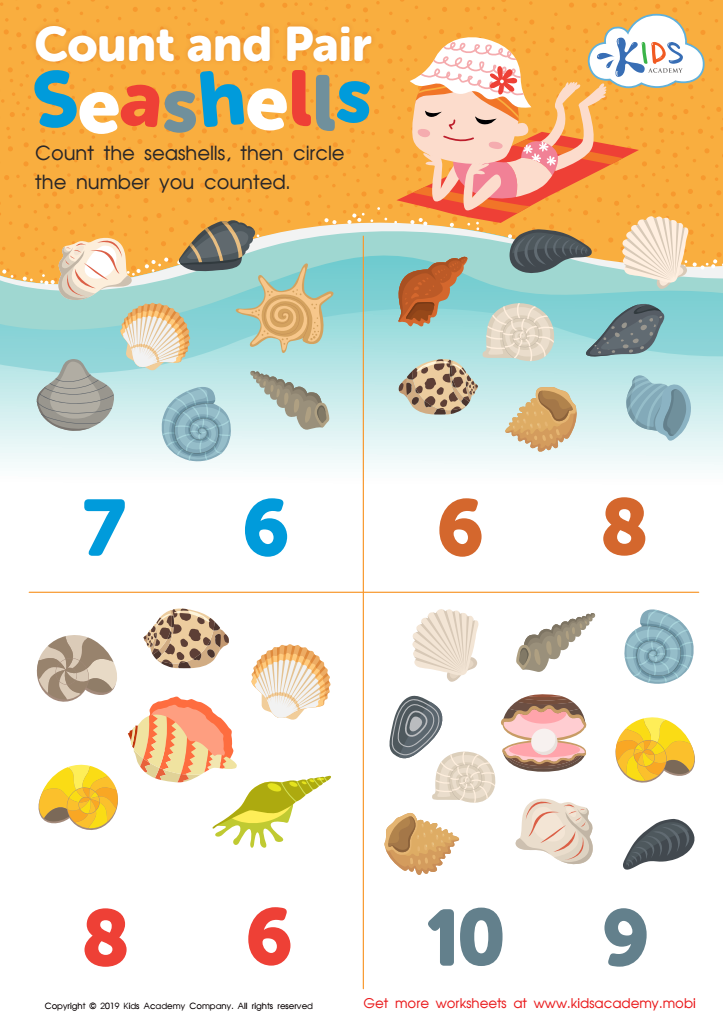
Count and Pair Seashells Worksheet
 Assign to My Students
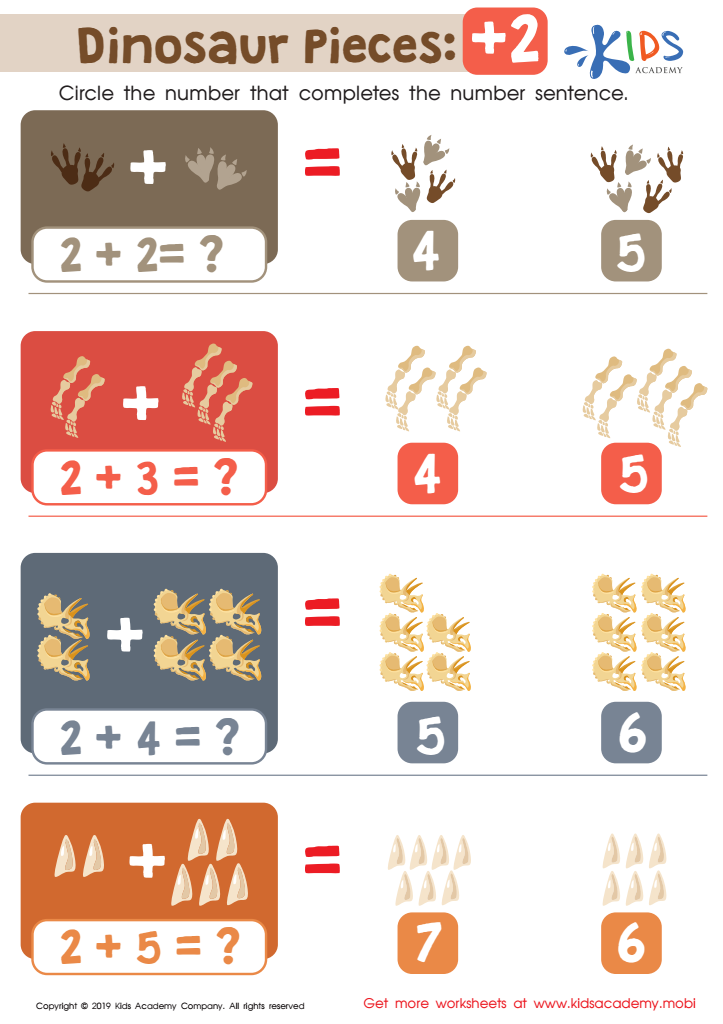
Dinosaur Pieces: +2 Worksheet








Fine motor development is critical for children aged 3 to 7 because it lays the groundwork for various essential life skills. Parents and teachers should care about this aspect of development as it influences a child's ability to perform important tasks, such as writing, drawing, buttoning shirts, and using utensils. These skills are vital for daily independence and classroom success.
Engaging in activities that promote fine motor skills—like cutting with scissors, playing with building blocks, or threading beads—enhances hand-eye coordination, dexterity, and spatial awareness. Furthermore, strong fine motor skills are linked to cognitive development as they stimulate nerve connections in the brain, enhancing problem-solving and critical thinking abilities.
Moreover, developing these skills at a young age can boost a child's confidence and self-esteem. When children can perform tasks independently, they feel accomplished, which encourages them to tackle new challenges. As a result, it is essential for parents and teachers to integrate fine motor activities into playtime and educational settings, ensuring children have the opportunities they need to grow and flourish. Supporting fine motor development sets a strong foundation for a child’s future.








