Mental arithmetic Easy Worksheets for Ages 3-7
3 filtered results
-
From - To
Introduce your child to the fun world of numbers with our "Mental Arithmetic Easy Worksheets for Ages 3-7"! Designed to build a strong math foundation, these worksheets help children enhance their mental math skills through engaging and enjoyable exercises. Perfectly suited for preschoolers and young learners, our worksheets cover basic addition, subtraction, and number recognition. Each activity is crafted to promote confidence and improve problem-solving abilities. Parents and teachers alike appreciate the clear, easy-to-follow instructions and captivating designs. Start your child’s math journey with engaging materials that are both educational and entertaining! Download now and watch them excel.
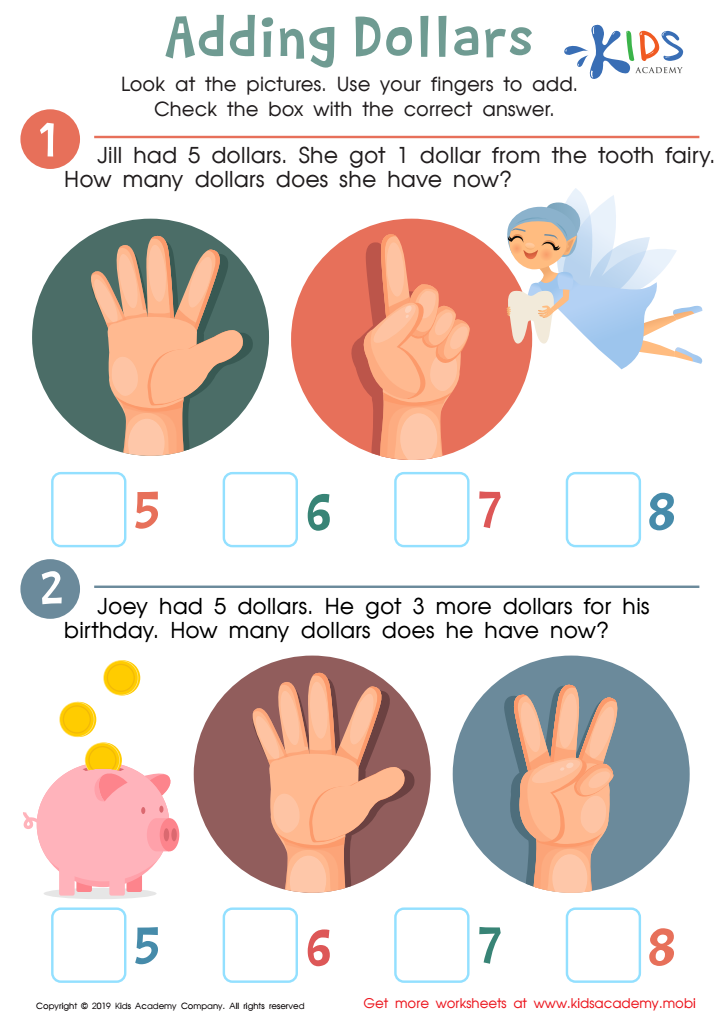
Tooth Fairy Addition Worksheet
 Assign to My Students
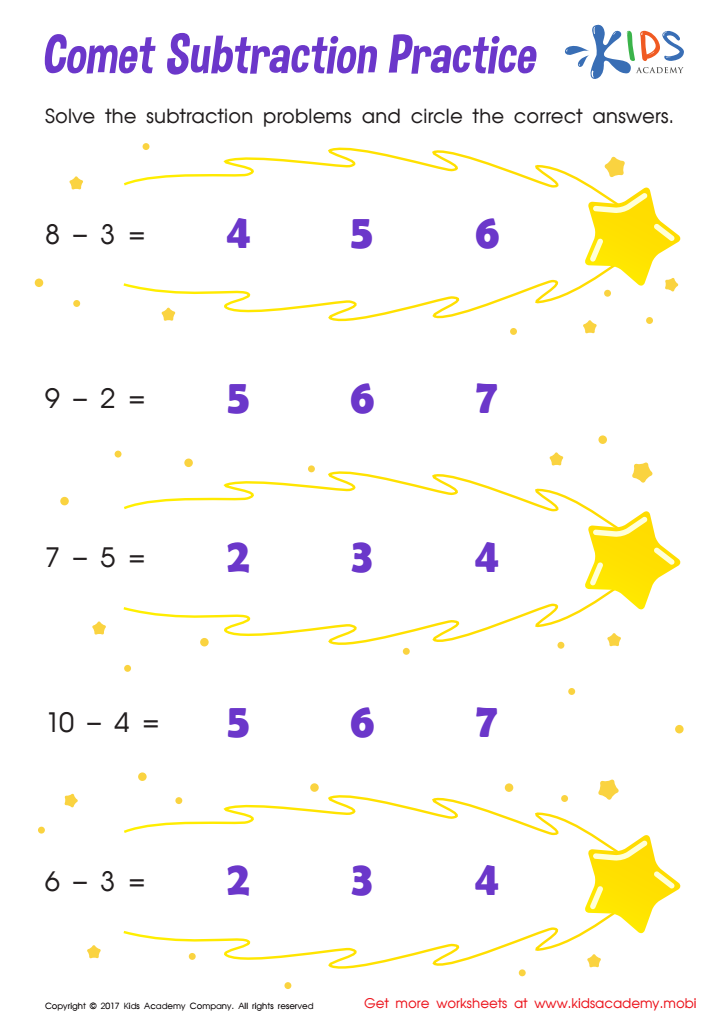
Comet Subtraction Practice Substraction Worksheet
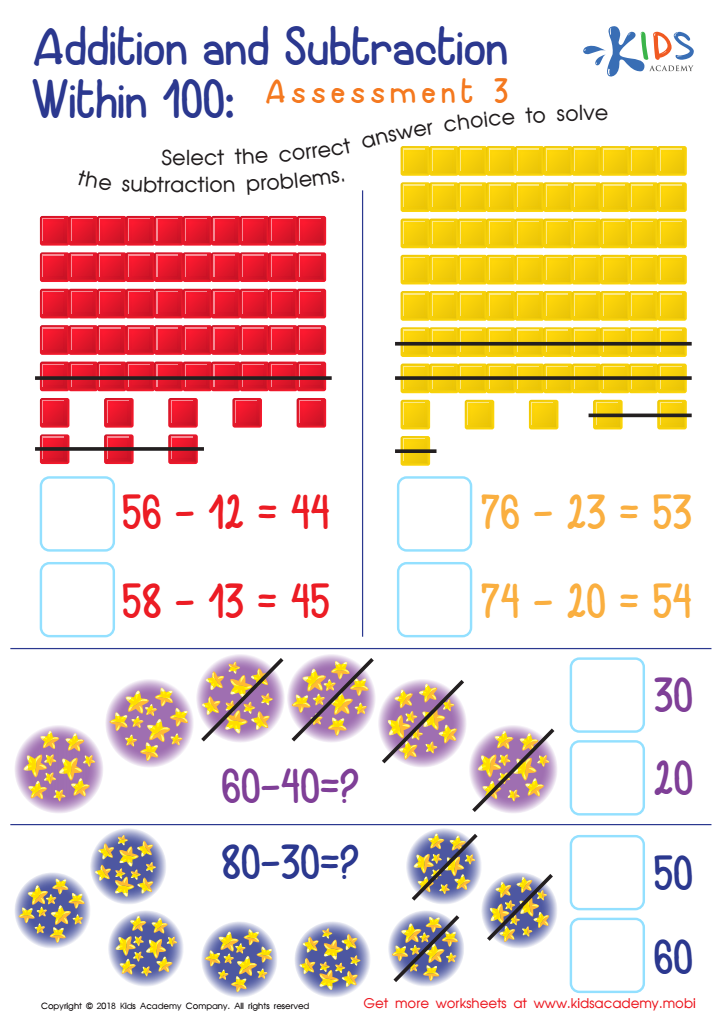
Addition and Subtraction Within 1: Assessment 3 Worksheet







Mental arithmetic plays a fundamental role in the cognitive and numerical development of children aged 3 to 7. At this crucial developmental stage, young minds are particularly receptive to new information and skills. Introducing mental arithmetic early imparts essential problem-solving abilities and enhances memory, concentration, and logical thinking.
Parents and teachers should care about mental arithmetic for several compelling reasons. First, it equips children with basic numeracy skills essential for their academic journey. Mental calculations without relying on paper or calculators build a solid mathematical foundation that benefits future learning.
Second, engaging in mental arithmetic activities fosters a love for mathematics by making learning fun and interactive. This positive attitude towards math can last a lifetime, making advanced mathematical concepts less intimidating as they grow older.
Third, the practice of mental arithmetic encourages quick thinking and stimulates cognitive brain development. It sharpens the mind, enabling children to handle daily tasks more efficiently and set the stage for advanced problem-solving skills.
In summary, parents and teachers should prioritize mental arithmetic for young children to nurture a solid mathematical foundation, foster a love for learning, and promote cognitive abilities that extend beyond the classroom.








