Phonics recognition Easy Worksheets for Ages 3-7
5 filtered results
-
From - To
Discover engaging "Phonics Recognition Easy Worksheets for Ages 3-7" on our site, tailored to nurture young learners’ reading skills. Our printable materials make mastering phonics fun and accessible, featuring vibrant visuals and interactive activities. These worksheets are crafted to boost letter recognition and sound association, fostering essential early literacy skills. Ideal for preschoolers and early elementary students, they support gradual learning progression through age-appropriate exercises. Whether for home, virtual, or classroom settings, our worksheets offer a solid foundation in phonics, setting your child on the path to reading success. Download now and watch their confidence soar!
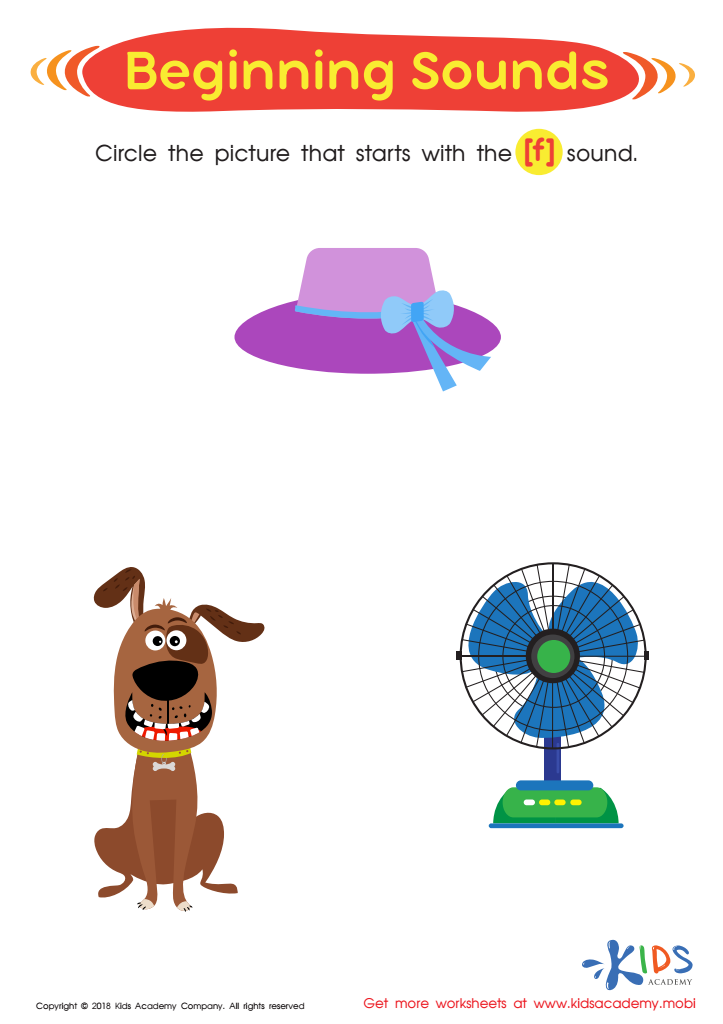
Beginning Sounds Assessment Printable
 Assign to My Students
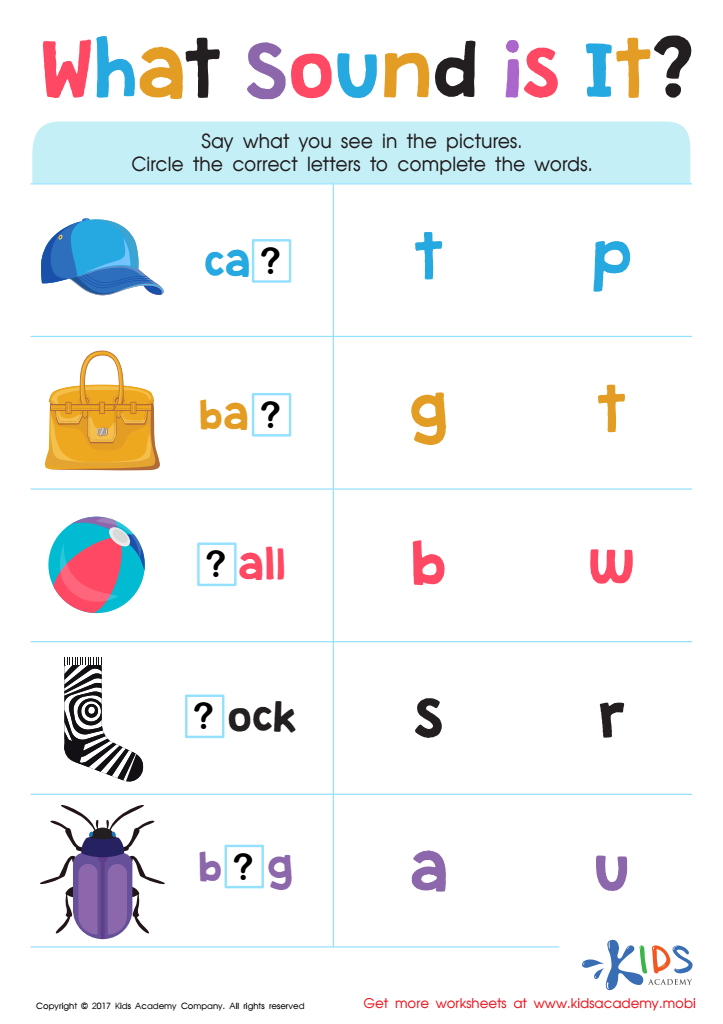
What Sound Is it? Worksheet
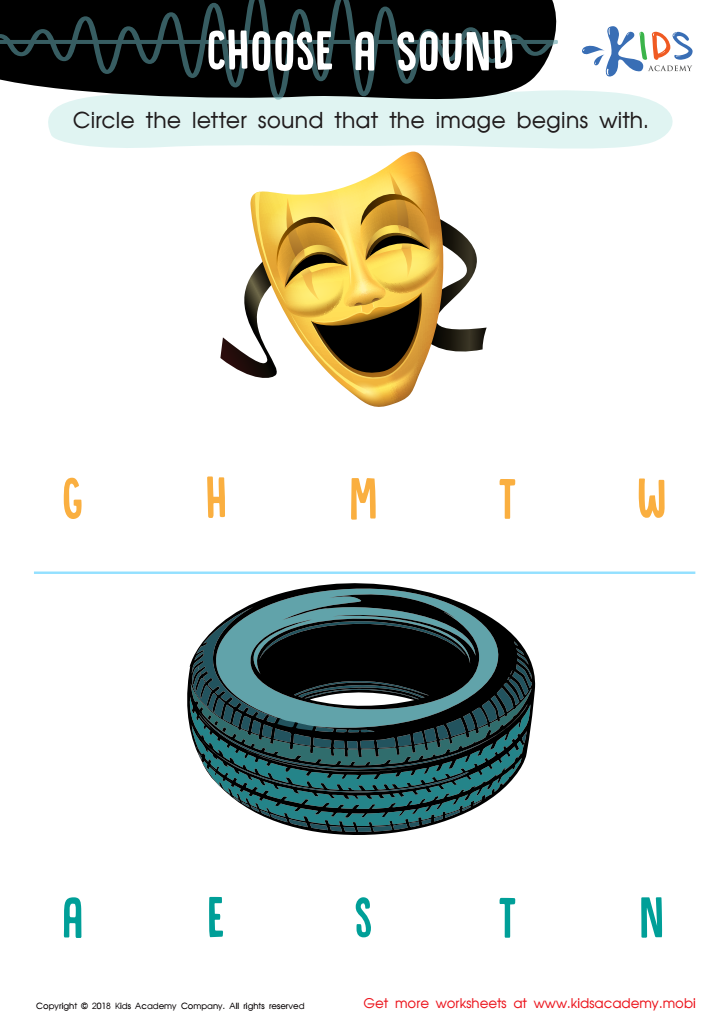
Choose a Sound Worksheet
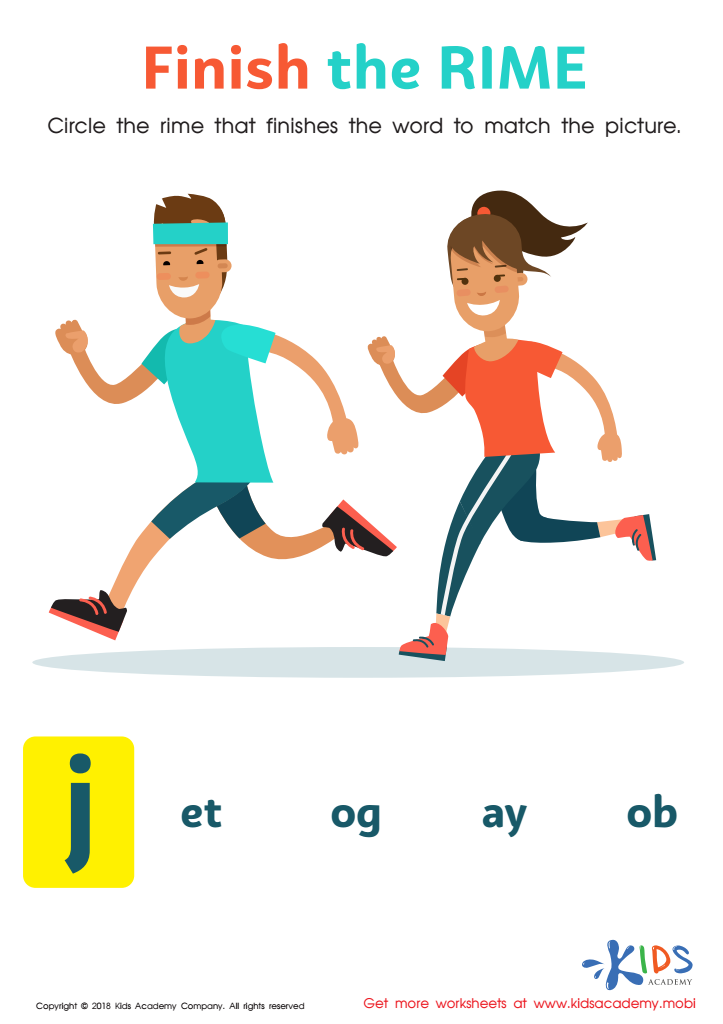
Finish the Rime Worksheet
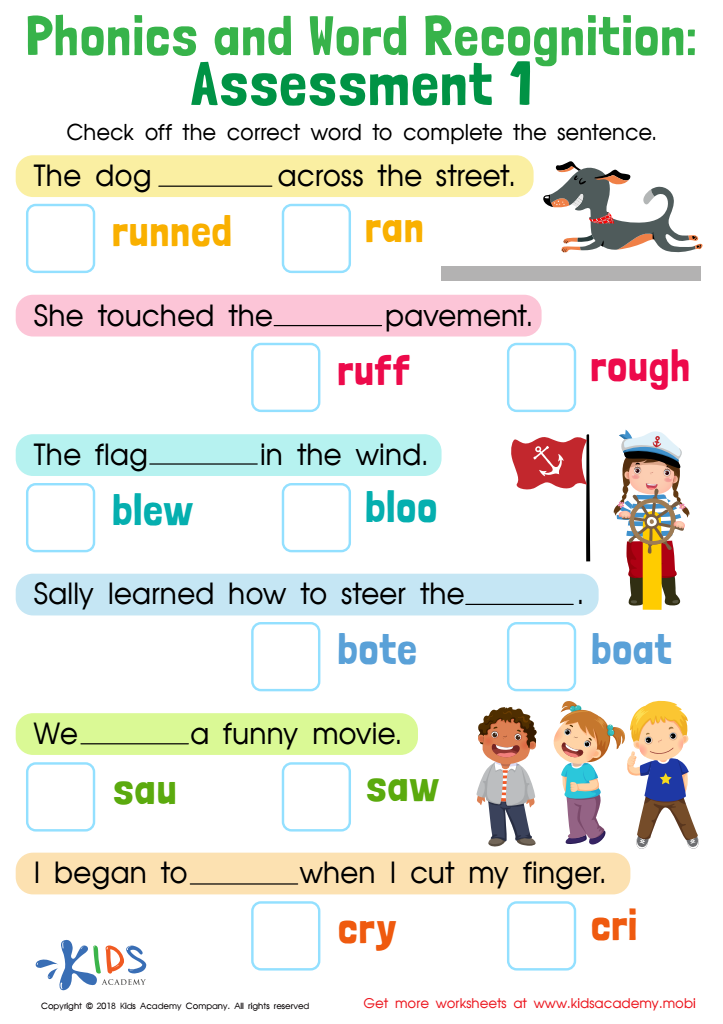
Phonics and Word Recognition: Assessment 1 Worksheet




.jpg)


Phonics recognition is essential for children aged 3-7 because it lays the foundation for effective reading and writing skills. Phonics is the system of relationships between letters and their corresponding sounds, allowing children to decode words, improve pronunciation, and understand reading materials better.
Parents and teachers should prioritize phonics instruction at this age because young brains are most receptive to learning new patterns of speech and writing. Early mastery of phonics correlated with better academic performance since children who read well access information more easily and are likely to enjoy learning. Additionally, phonics-driven teaching significantly helps in reducing future reading difficulties, including dyslexia.
By investing time in phonics exercises like recognizing letter sounds, blending them to form words, and segmenting words into individual sounds, teachers and parents can make learning to read an easier, less stressful, and more enjoyable experience. Furthermore, a solid grasp of phonics facilitates enhanced vocabulary and strengthens communication skills. Therefore, nurturing phonics skills during these formative years equips children with essential tools for literacy success, promotes lifelong learning, and boosts their self-confidence in academic and social settings.








