Time reading skills Easy Worksheets for Ages 3-7
4 filtered results
-
From - To
Discover our engaging "Time Reading Skills Easy Worksheets" designed specifically for children ages 3-7! These colorful, interactive sheets make learning to tell time fun and exciting. With a variety of activities, including clock matching, hour and minute identification, and time-related games, young learners will develop essential skills at their own pace. Each worksheet promotes critical thinking and enhances understanding of both digital and analog clocks. Perfect for parents and educators, these resources support early childhood education while catering to diverse learning styles. Start your child's journey to mastering time-telling today with our user-friendly worksheets and watch their confidence grow!
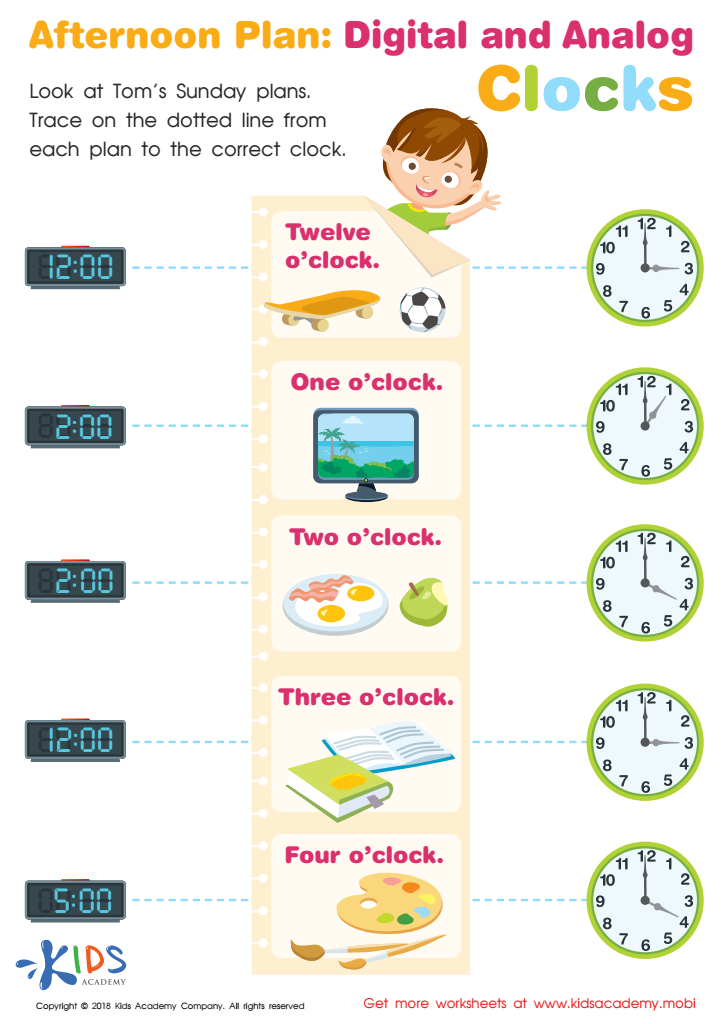
Afternoon Plan: Digital and Analog Clocks Worksheet
 Assign to My Students
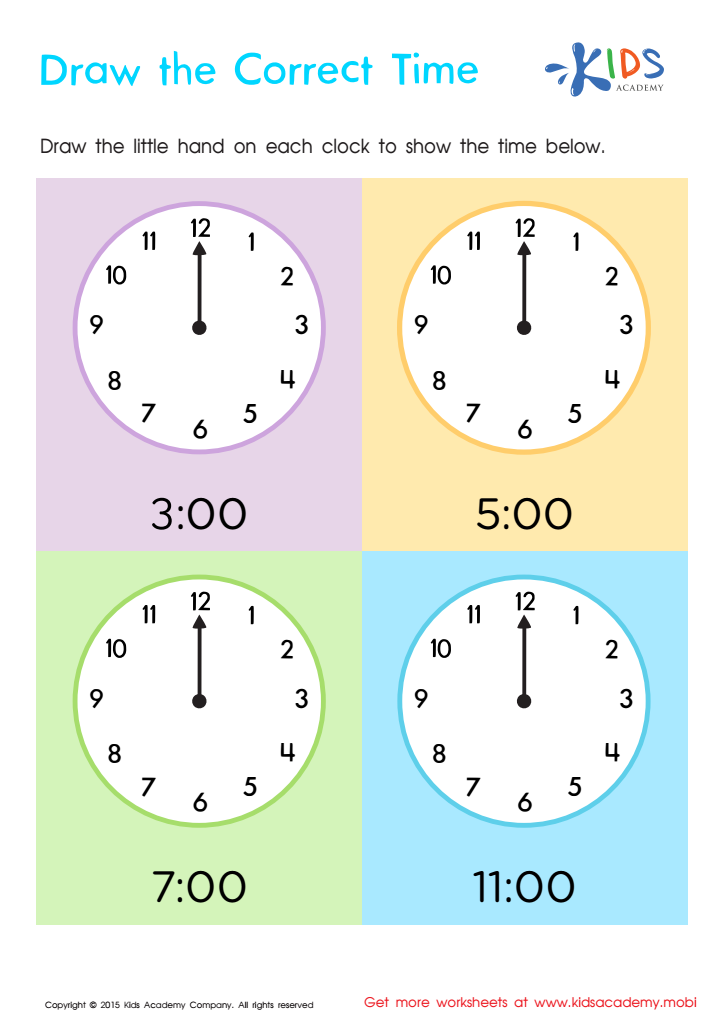
Telling The Time Worksheet: Part 1
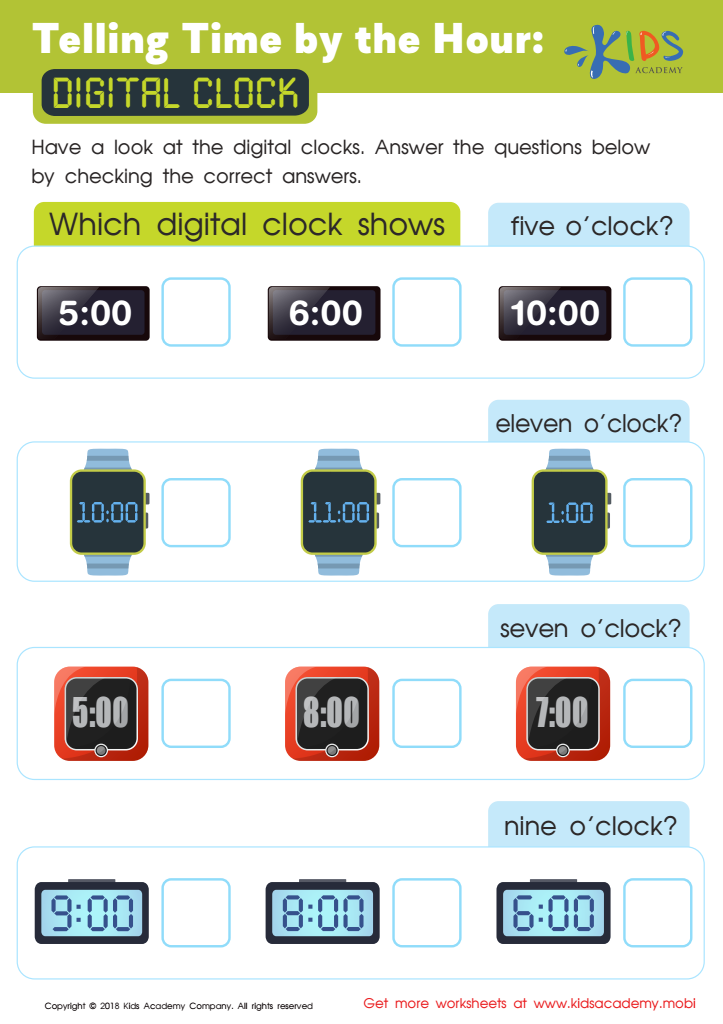
Telling Time by the Hour: Digital Clock Worksheet
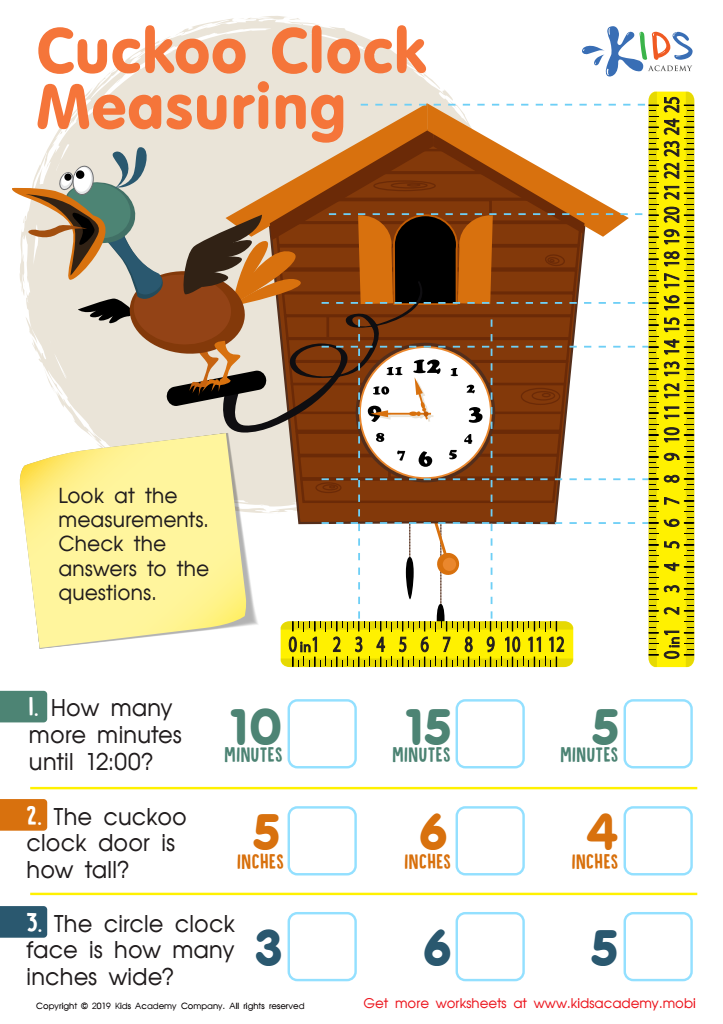
Cuckoo Clock Measuring Worksheet




.jpg)

.jpg)

Parents and teachers should care about time reading skills for ages 3-7 because these skills form the foundation for a child's understanding of time management and daily routines. In this formative stage, children are naturally curious, and learning how to read clocks helps them make sense of their world. By teaching kids to recognize and understand different time intervals, we empower them to develop better organizational abilities and a sense of responsibility.
Moreover, effectively reading time contributes to academic success. It prepares children for following a schedule in school and managing their homework and playtime. Developing these skills early on sets the stage for more complex concepts in math, helping children understand concepts such as intervals, counting, and sequencing.
Additionally, time reading supports social interactions. Children learn to cooperate and engage in sharing activities when they understand time, making it easier for them to participate in playdates and group activities, fostering collaboration and teamwork.
Overall, instilling these skills at an early age promotes independence, boosts confidence, and enhances problem-solving abilities. Fostering time-reading skills early encourages children to develop a structured approach to their day, benefiting multiple aspects of their growth.








