Visual discrimination skills Easy Worksheets for Ages 3-7
3 filtered results
-
From - To
Enhance your child's visual discrimination skills with our Easy Worksheets designed for ages 3-7! These engaging and educational resources help young learners develop essential abilities to identify differences and similarities in shapes, colors, and patterns. Our worksheets are carefully curated to promote critical thinking while providing a fun learning experience. Ideal for homeschooling or classroom settings, these activities encourage children to sharpen their observation skills, paving the way for success in reading, math, and everyday tasks. With vibrant visuals and age-appropriate challenges, these worksheets are the perfect tool to support your child's educational journey in an enjoyable way!
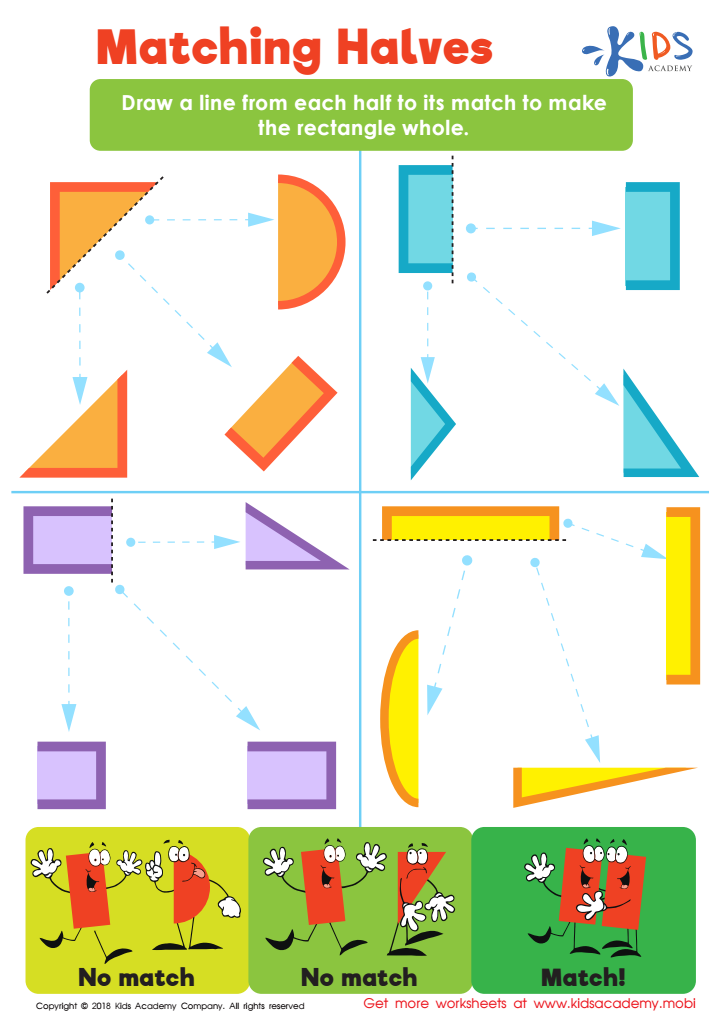
Matching Halves Worksheet
 Assign to My Students
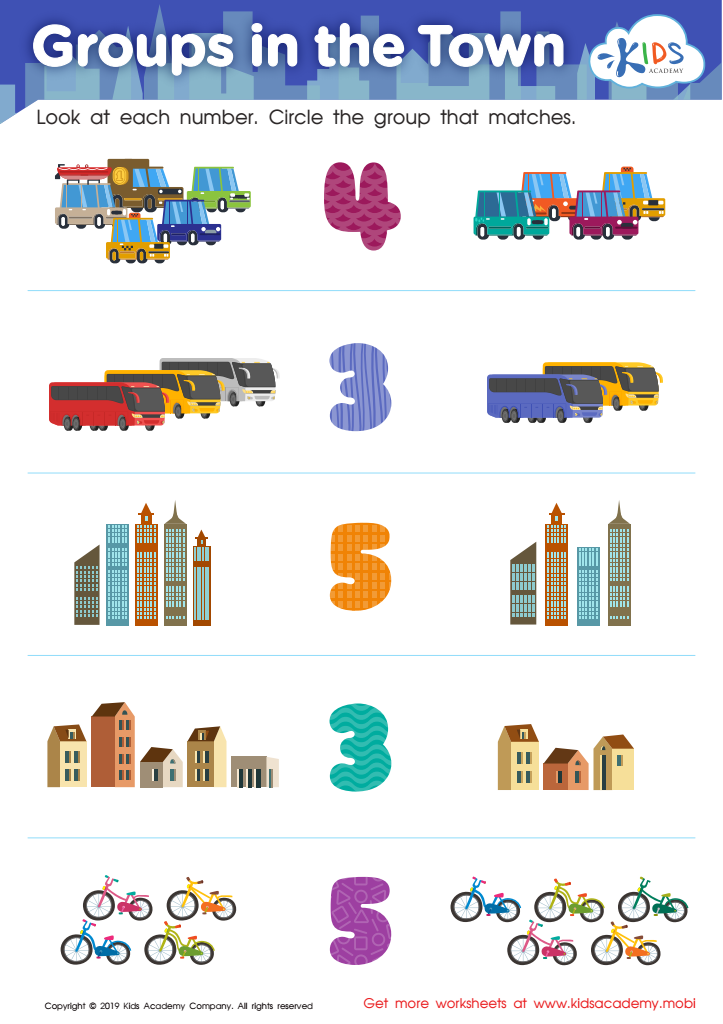
Groups in the Town Worksheet
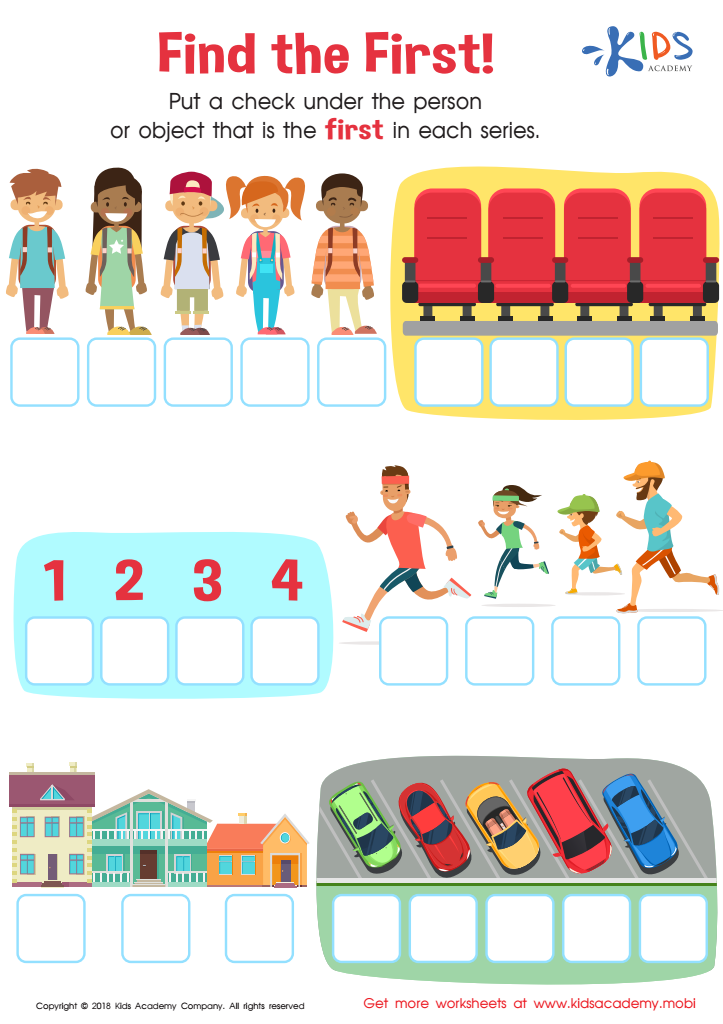
Find the First! Worksheet







Visual discrimination skills are crucial for children ages 3-7 as they form the foundation for essential learning processes. These skills help children distinguish between different shapes, sizes, colors, and patterns, enabling them to identify similarities and differences. Developing strong visual discrimination improves their ability to recognize letters and numbers, which is vital for reading and math skills.
Teachers and parents should care about these skills because they significantly impact academic performance and everyday tasks. Children with strong visual discrimination can follow instructions more effectively, compare objects, and solve problems with greater ease. For example, when learning to read, visual discrimination allows children to distinguish between letters like ‘b’ and ‘d’ or 'p' and 'q.'
Moreover, these skills enrich a child’s overall cognitive development, promoting attention to detail and critical thinking. Activities that foster visual discrimination, such as puzzles, matching games, and sorting tasks, can also be enjoyable, making learning fun and engaging.
By nurturing these abilities early on, parents and teachers help create a solid educational foundation, paving the way for successful lifelong learners who can tackle complex challenges both in school and in daily life.








