Reading comprehension Easy Addition and Subtraction Word Problems Worksheets for Ages 3-7
3 filtered results
-
From - To
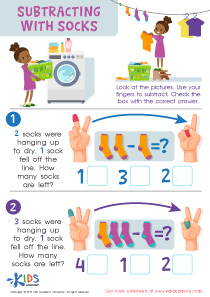
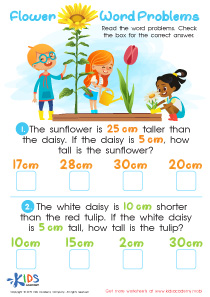
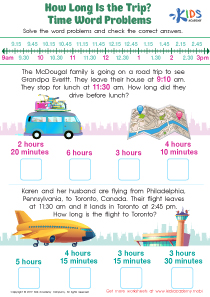
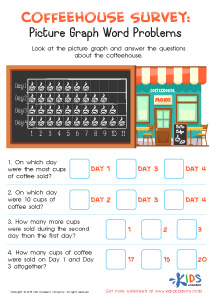
Enhance your child’s reading comprehension and basic math skills with our Easy Addition and Subtraction Word Problems Worksheets for Ages 3-7. These engaging worksheets combine simple arithmetic problems with captivating stories, making learning fun and interactive. Designed especially for young learners, each worksheet promotes critical thinking and problem-solving abilities while reinforcing foundational math concepts. Perfect for preschoolers through 1st graders, these worksheets foster a love for learning through playful scenarios and colorful illustrations. Download now to give your child a head start in mastering addition and subtraction in an enjoyable, educational manner.
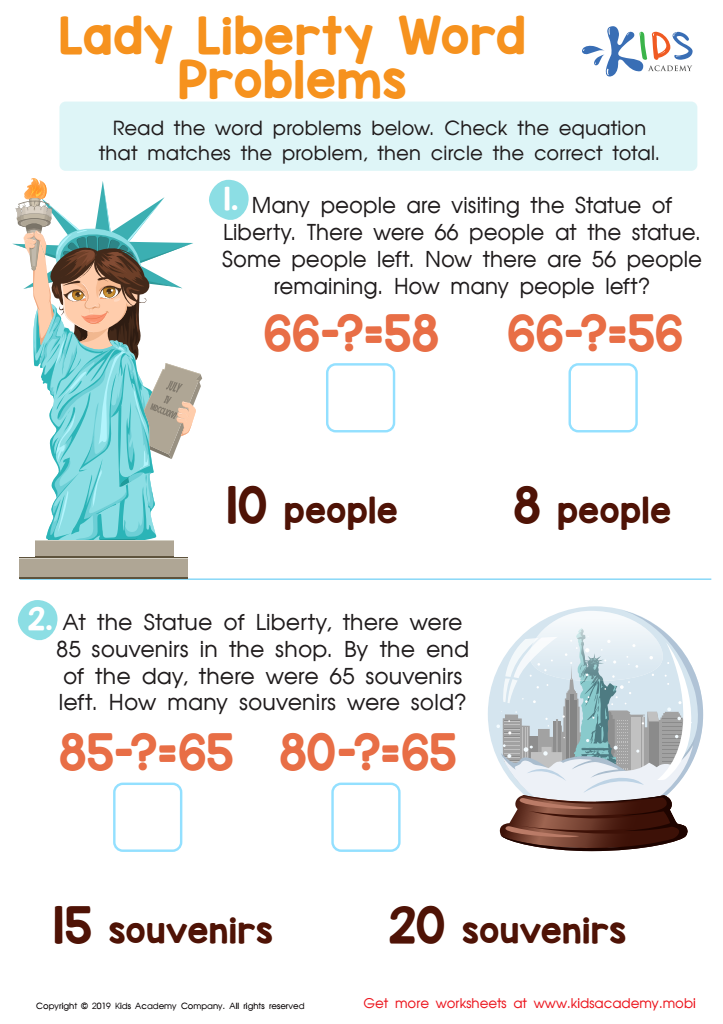
Lady Liberty Worksheet
 Assign to My Students
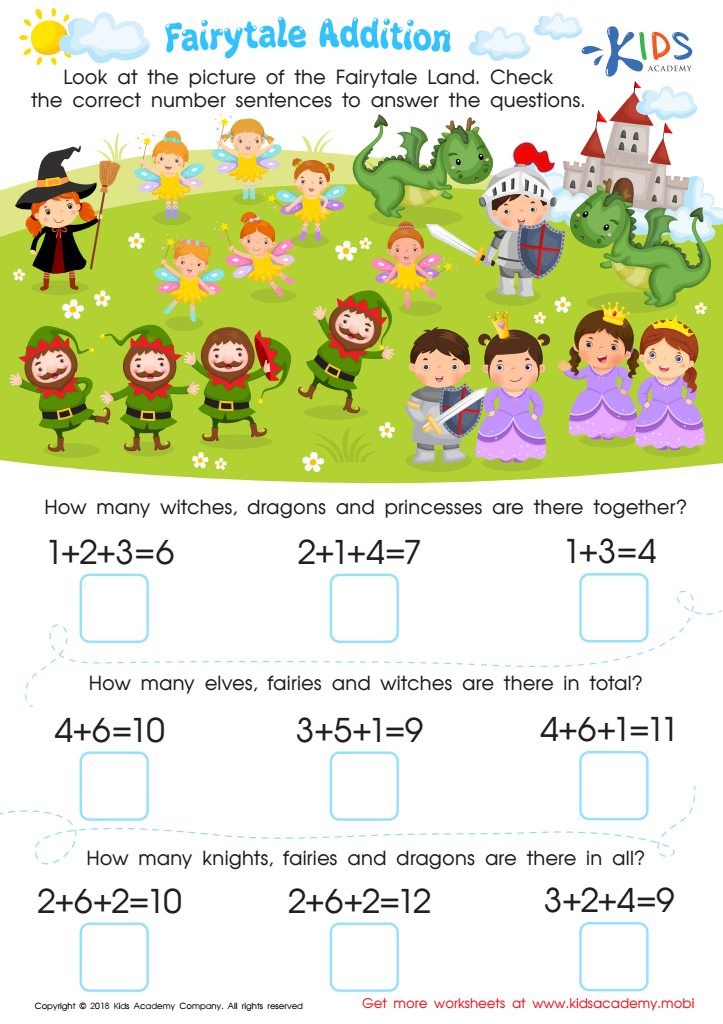
Fairytale Addition Worksheet
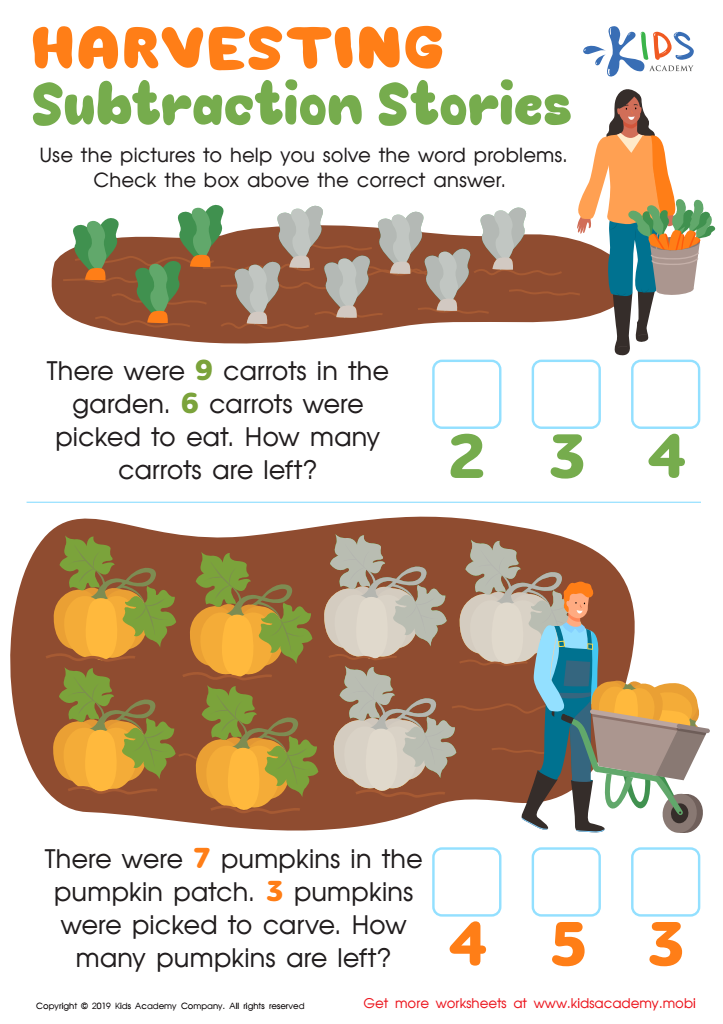
Harvesting Subtraction Stories Worksheet








Reading comprehension for easy addition and subtraction word problems is foundational for children ages 3-7 for several key reasons. Firstly, integrating reading with math enhances cognitive development by linking numerical operations with language skills. This early synergy between subjects fosters a more well-rounded intellect.
Understanding word problems requires children to grasp the context and narrative, encouraging critical thinking and problem-solving skills. They learn to determine what details are important, what the question asks, and which operations to apply. This process not only enhances mathematical proficiency but also improves language comprehension—a dual benefit.
Engaging with word problems from a young age also helps children develop patience and persistence. As they encounter more complex problems, their perseverance in solving them strengthens. Furthermore, it nurtures a sense of achievement and confidence in their abilities.
Additionally, early exposure to such problems prepares children for more advanced subjects. Schools often base their curriculum progression on foundational skills acquired in the early grades. By ensuring children are proficient in comprehending and solving basic word problems, we set them up for continued academic success.
Parents and teachers thus play a crucial role in encouraging practice and providing diverse problem scenarios. This holistic approach supports cognitive, linguistic, and emotional development essential for lifelong learning and adaptation.