Basic Addition Skills Easy Addition & Subtraction Worksheets for Ages 3-7
6 filtered results
-
From - To
Introducing our "Basic Addition Skills Easy Addition & Subtraction Worksheets" designed specifically for children ages 3-7. These engaging worksheets help little learners grasp essential math concepts through fun and interactive activities. Perfectly suited for early learners, the worksheets emphasize basic addition and subtraction, promoting critical thinking and problem-solving skills. Parents and teachers will appreciate the progressive difficulty that caters to individual learning paces, ensuring fundamental understanding and confidence in math. Ideal for at-home practice or classroom use, these worksheets are an excellent resource to kick-start your child's math journey in a joyful, stress-free manner. Empower young minds with math today!
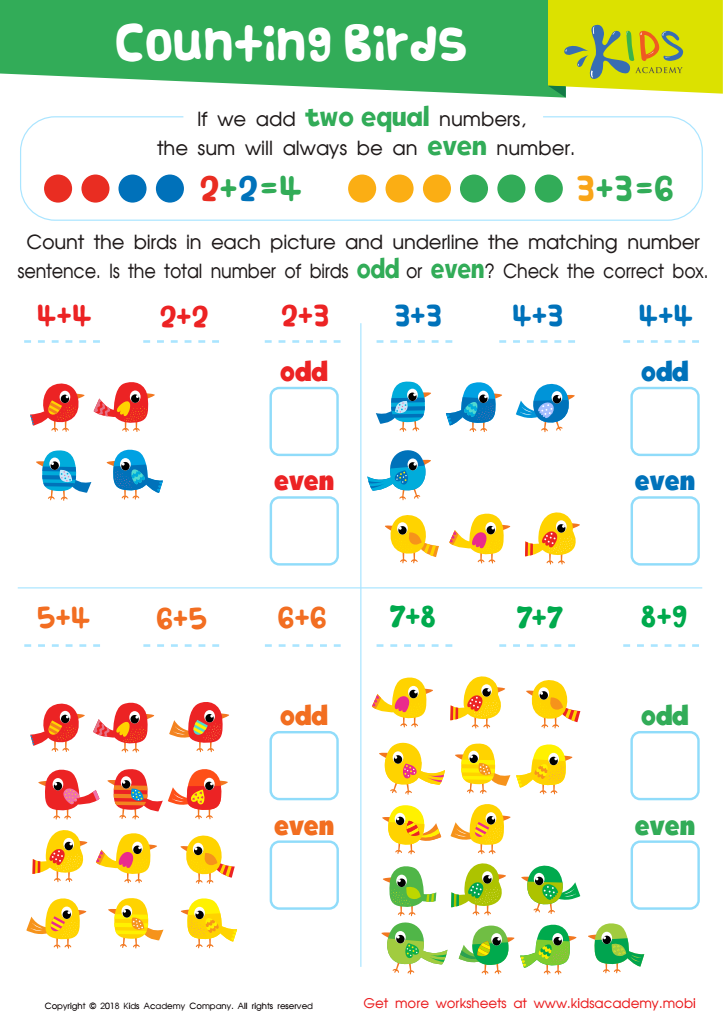
Counting Birds Worksheet
 Assign to My Students
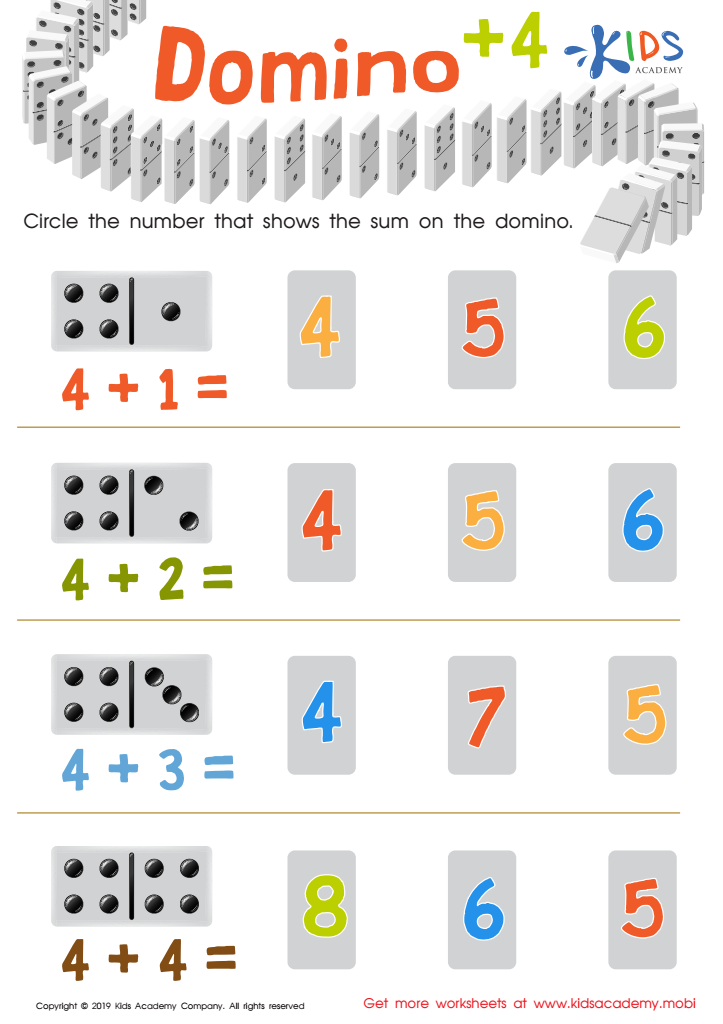
Domino +4 Worksheet
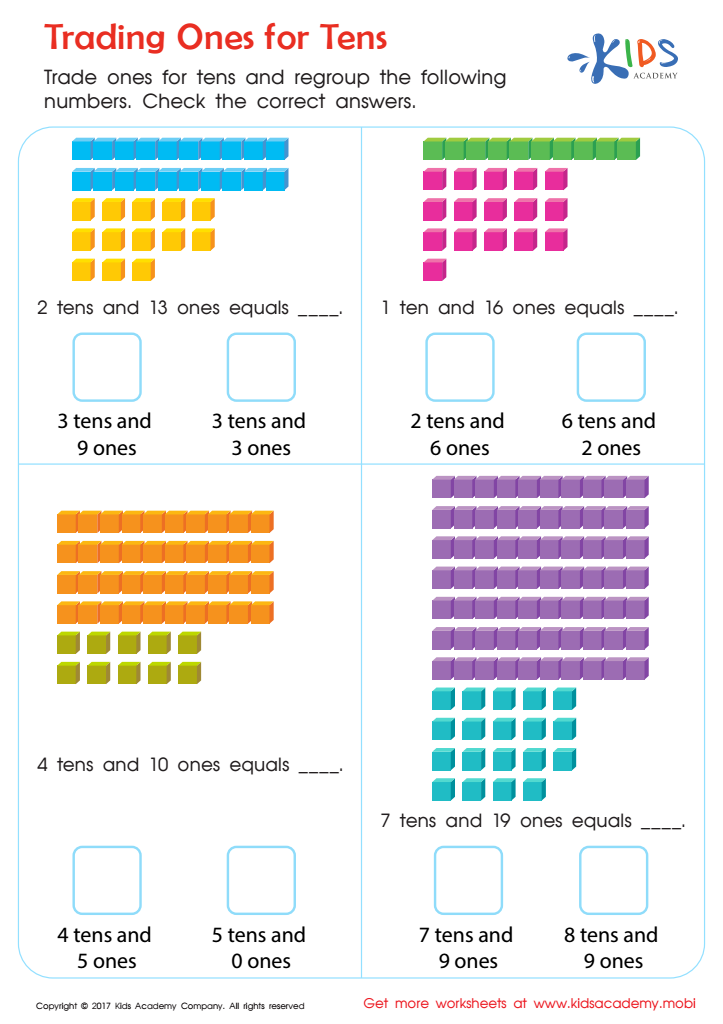
Trading Ones for Tens Worksheet
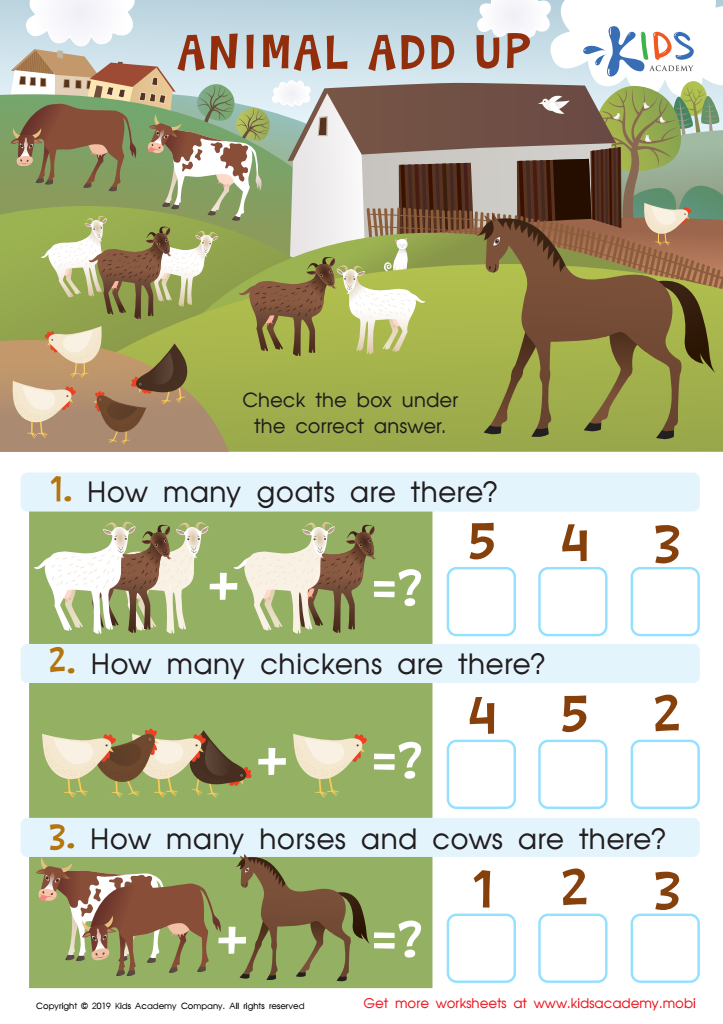
Animal Add Up Worksheet
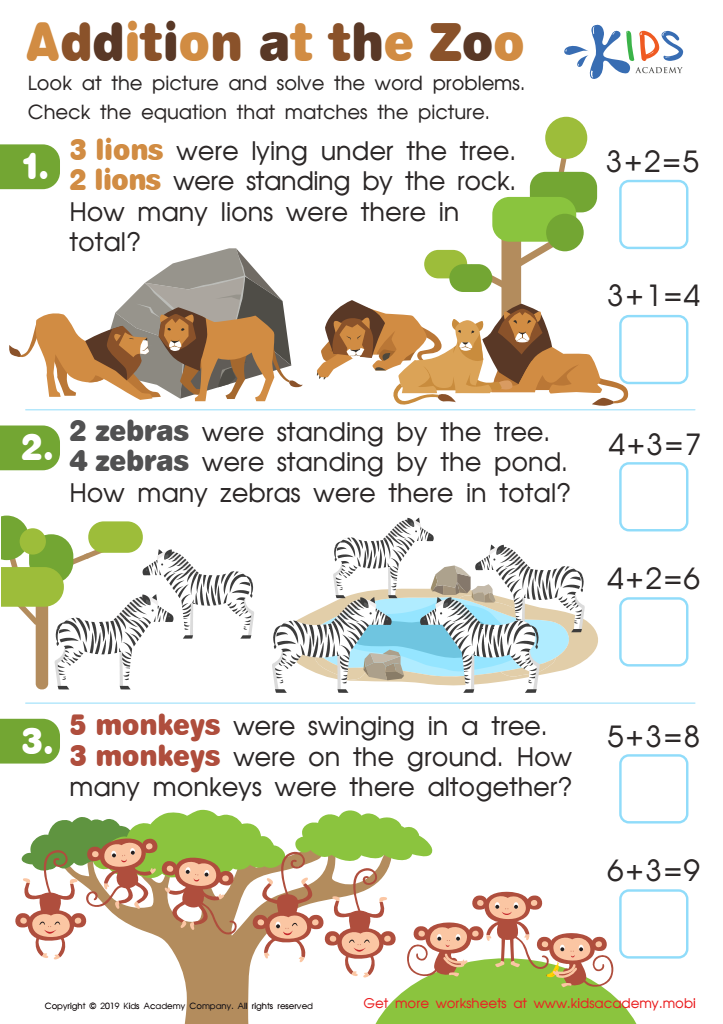
Addition at the Zoo Worksheet
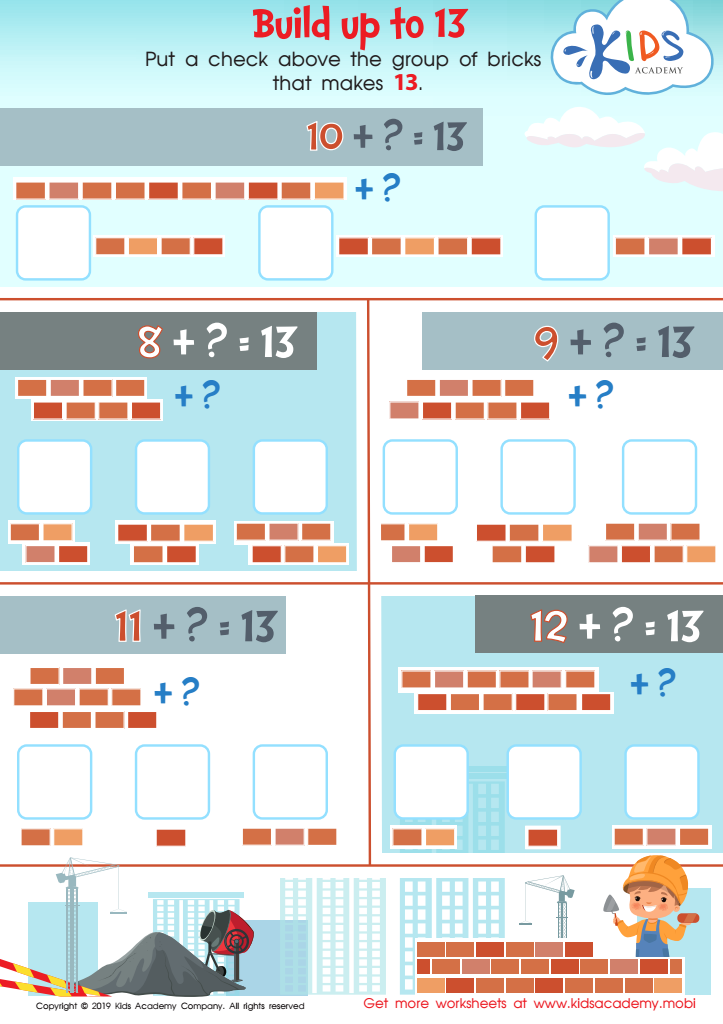
Build up to 13 Worksheet








Parents and teachers should prioritize basic addition and subtraction skills for children aged 3-7 because these fundamental mathematical abilities lay the groundwork for future academic success. During these early years, young minds are exceptionally moldable and ready to absorb foundational concepts that will support more advanced learning in the future.
Developing basic counting and number sense through easy addition and subtraction activities helps children understand the world around them. Simple math operations foster logical thinking, problem-solving skills, and critical thinking. For instance, understanding that 2 plus 3 equals 5 is not just about numbers, it also involves recognizing patterns and relationships.
Additionally, confidence in math at an early age can prevent the development of “math anxiety,” which often arises from skills gaps and can hinder overall academic performance. Establishing a positive, encouraging learning environment increases the likelihood that children will approach more complex mathematical concepts with confidence.
Early proficiency in addition and subtraction also extends beyond the classroom, aiding children in practical, everyday tasks such as sharing items, understanding time, and managing small amounts of money. By caring about and nurturing these basic math skills, parents and teachers equip children with essential tools for lifelong learning and daily functioning.








