Data interpretation Easy Numbers Worksheets for Ages 3-7
3 filtered results
-
From - To
Discover the perfect resources for young learners ages 3-7 with our Data Interpretation Easy Numbers Worksheets. These engaging and fun worksheets at Kids Academy are designed to develop critical math skills and comprehension in early childhood. Through colorful and interactive activities, children will learn to interpret simple data, recognize patterns, and understand basic graphs and charts. Each worksheet is crafted to make learning enjoyable, fostering confidence and numerical literacy. Empower your little ones to master numbers and data interpretation effortlessly with our expertly designed educational materials. Download today and watch them excel through play-based learning!
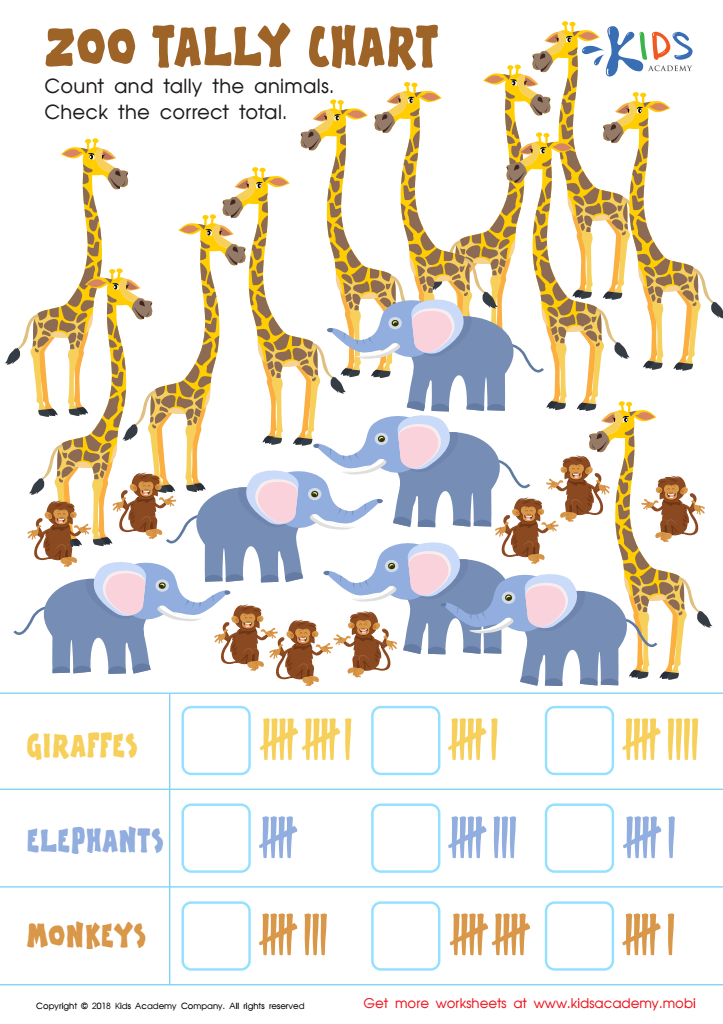
Zoo Tally Chart Worksheet
 Assign to My Students

Pets Tally Chart Worksheet
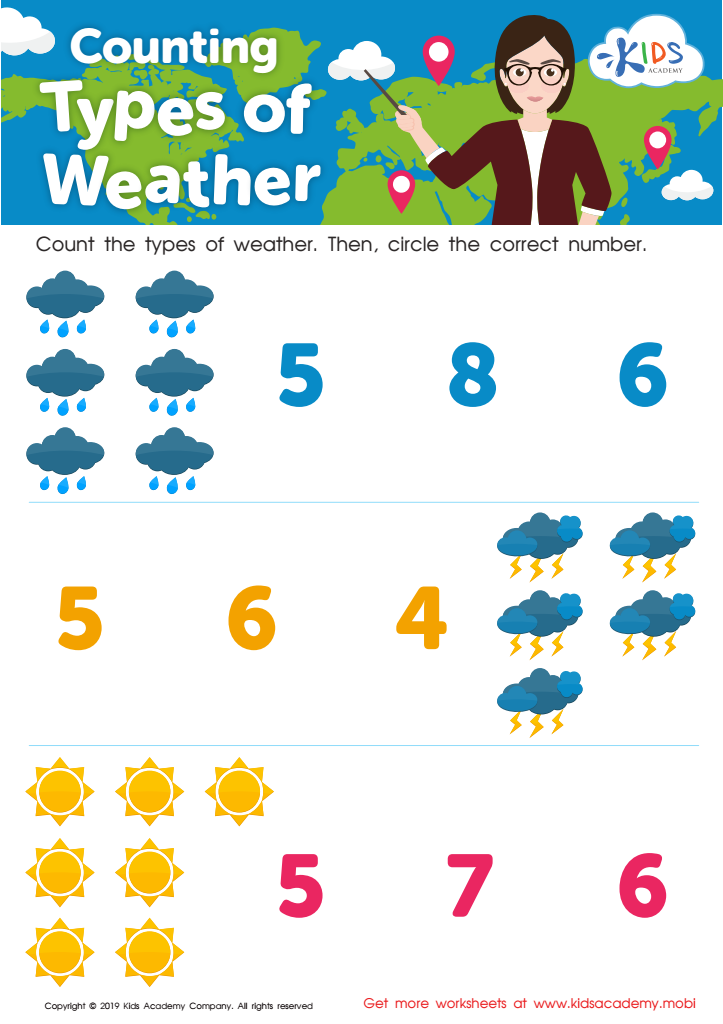
Counting Types of Weather Worksheet








Understanding data interpretation is foundational for young children, as it equips them with essential skills for academic success and everyday decision-making. For children ages 3-7, engaging with easy numbers and basic data set the stage for more complex mathematical and analytical tasks they will encounter later.
Firstly, early exposure to data interpretation helps children develop critical thinking and problem-solving skills. When they learn to understand and organize information, such as counting objects or identifying patterns, they build a basis for logical reasoning.
Secondly, it promotes curiosity and questioning, enabling children to make observations about their world. For example, through simple activities such as sorting different colored toys or comparing quantities, they learn to analyze information and draw conclusions.
Thirdly, fostering these skills at a young age aligns with STEM (Science, Technology, Engineering, Math) education principles, contributing to long-term academic readiness. Comprehending numbers helps with subjects beyond math, enhancing literacy in science by interpreting charts or following sequences.
Lastly, early practice in data handling builds confidence. As children experience success in these small tasks, they develop a positive attitude towards learning and enrich their cognitive abilities. Therefore, parents and teachers play a crucial role in integrating data interpretation activities in early education to pave the way for their future educational journeys.








