
Counting proficiency Easy Math Worksheets for Ages 3-7
3 filtered results
Difficulty Level
Grade
Age
-
From - To
Subject
Activity
Standards
Introduce your child to the joy of counting with our Counting Proficiency Easy Math Worksheets, designed specifically for ages 3-7. Our worksheets offer engaging exercises to build foundational counting skills, enhancing number recognition and improving mathematical understanding. Each activity features colorful, kid-friendly illustrations and interactive tasks that make learning fun and effective. Perfect for parents and educators, our worksheets support early math advancement, preparing children for future academic success. With a focus on consistency and enjoyment, our collection is the ideal tool to foster a love for numbers in young learners. Download and start counting together today!
Favorites
With answer key
Interactive
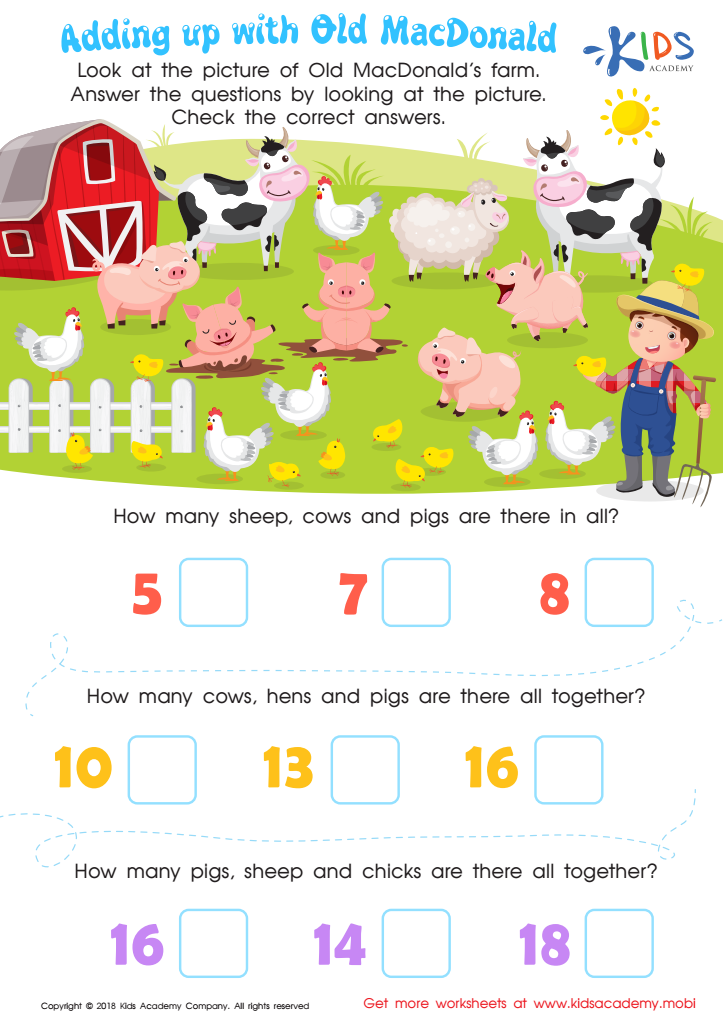
Adding Up with Old MacDonald Worksheet
Old MacDonald needs help counting his animals! Give your little math whiz a fun challenge with a free PDF worksheet. They'll love counting the animals and doing basic addition with two or three addends. Who knew math could be so much fun on the farm?
 Assign to My Students
Adding Up with Old MacDonald Worksheet
Worksheet
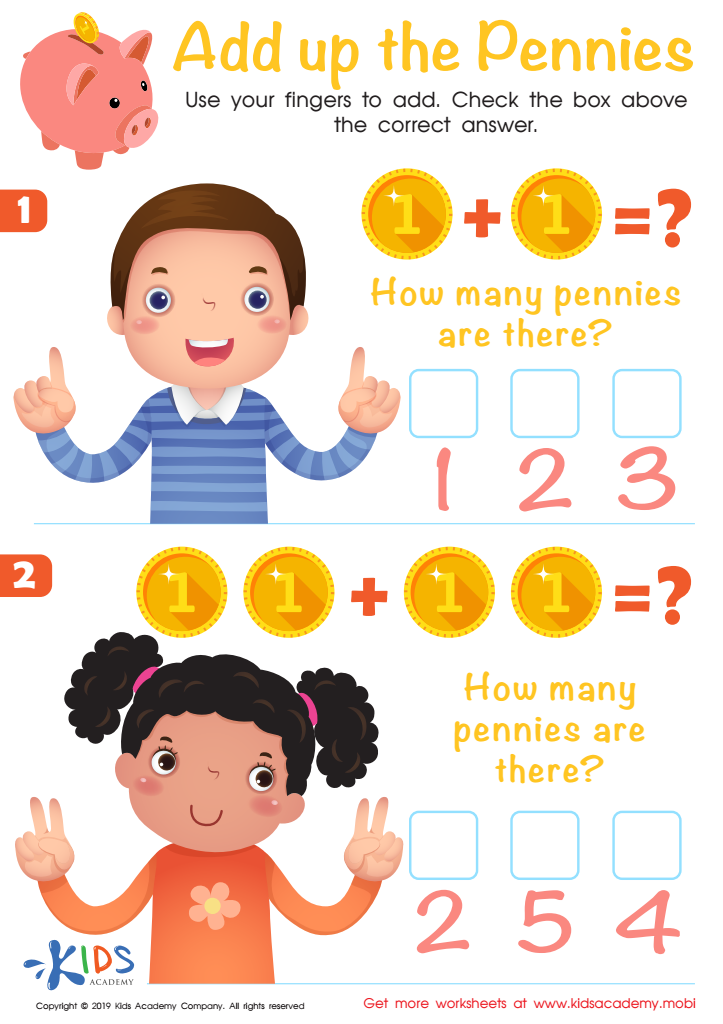
Add up the Pennies Worksheet
Help your kids ace their math skills with this simple worksheet! You can guide them to use their fingers to add numbers and then check the box above the correct answer. With practice and your support, they can become faster and better at adding numbers. No sweating required!
Add up the Pennies Worksheet
Worksheet
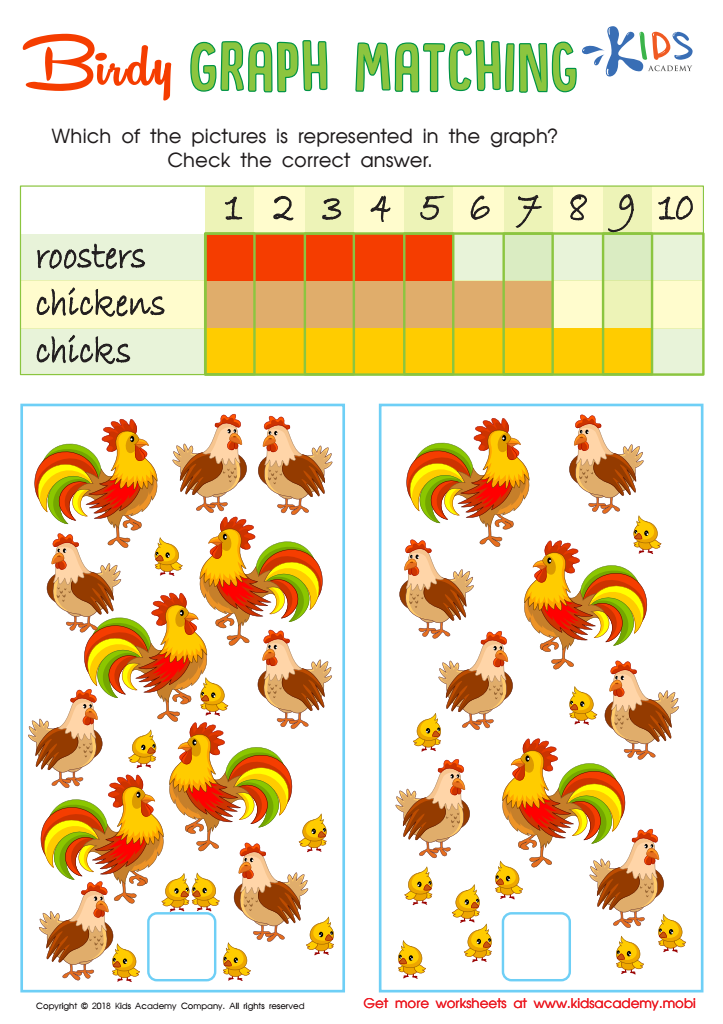
Birdy Graph Matching Worksheet
Treat your little one to a fun worksheet to practice visual discrimination, counting, graphing and tallying! They will sort the birds, count and assign values and use graph reading to answer the questions. They'll be so busy enjoying the counting that they won't even realize they are honing their skills!
Birdy Graph Matching Worksheet
Worksheet
Join Kids Academy for Free
Who is primarily going to use this learning content?






Counting proficiency is a foundational skill for young children, setting the stage for all future mathematics learning. For ages 3-7, acquiring the ability to count accurately is not just about understanding numbers; it helps develop critical cognitive skills. When children learn to count, they are also grasping concepts such as sequencing, one-to-one correspondence, and basic number sense—all crucial for more complex mathematical problem-solving later in life.
For parents and teachers, investing time in nurturing counting abilities helps bolster children's confidence in their mathematical skills. Demonstrating proficiency in counting can lead to a positive attitude towards math, reducing anxiety and increasing enjoyment of the subject. It’s noticeable in everyday activities as well—accurate counting skills assist children in tasks like distributing snacks, organizing toys, and understanding time.
Additionally, early counting proficiency has been linked to success in other academic areas. Skills such as patterned thinking, logical reasoning, and the ability to follow multi-step instructions can transcend subject areas, contributing to overall academic performance.
Therefore, establishing a solid counting foundation between the ages of 3 and 7 can significantly influence a child's future educational trajectory, making it a crucial area for attention by both parents and teachers.








