Fine motor skills (writing) Easy Math Worksheets for Ages 3-7
3 filtered results
-
From - To
Welcome to our collection of easy math worksheets designed to enhance fine motor skills through writing for children ages 3-7. These engaging worksheets focus on developing critical skills for early learners, such as pencil grip, control, and coordination while introducing basic math concepts. Your child will enjoy colorful activities that promote both creativity and learning, ensuring a fun and effective educational experience. Perfect for home or classroom use, our worksheets encourage practice in number writing, pattern creation, and shape recognition. Explore our curated resources to support your child's growth in fine motor skills while making math a joyful adventure!
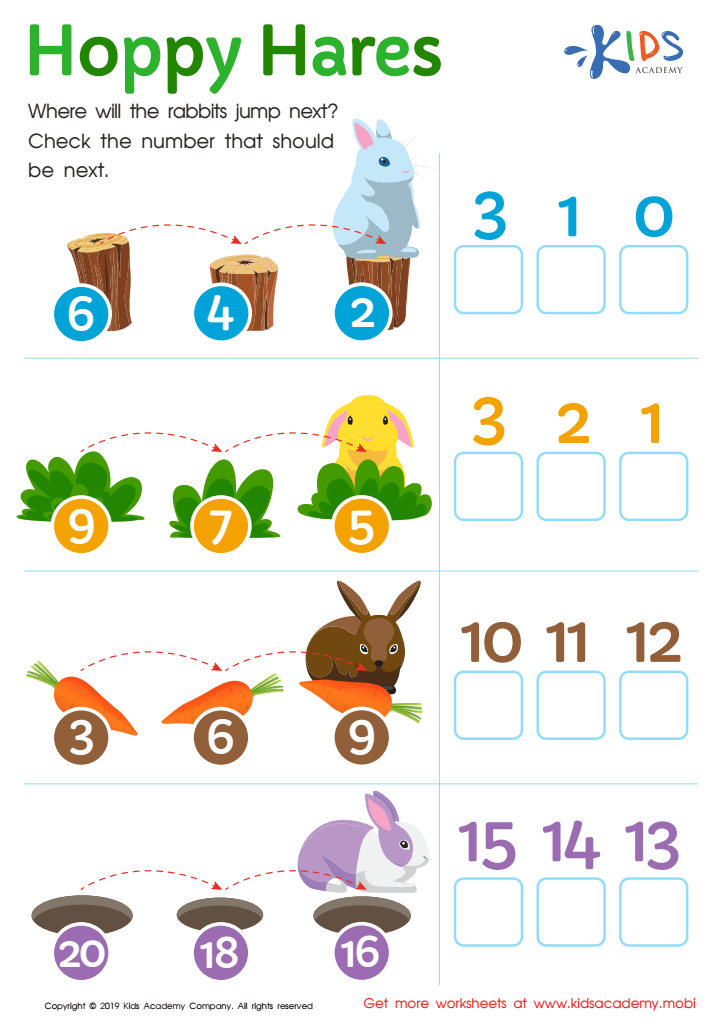
Hoppy Hares Worksheet
 Assign to My Students
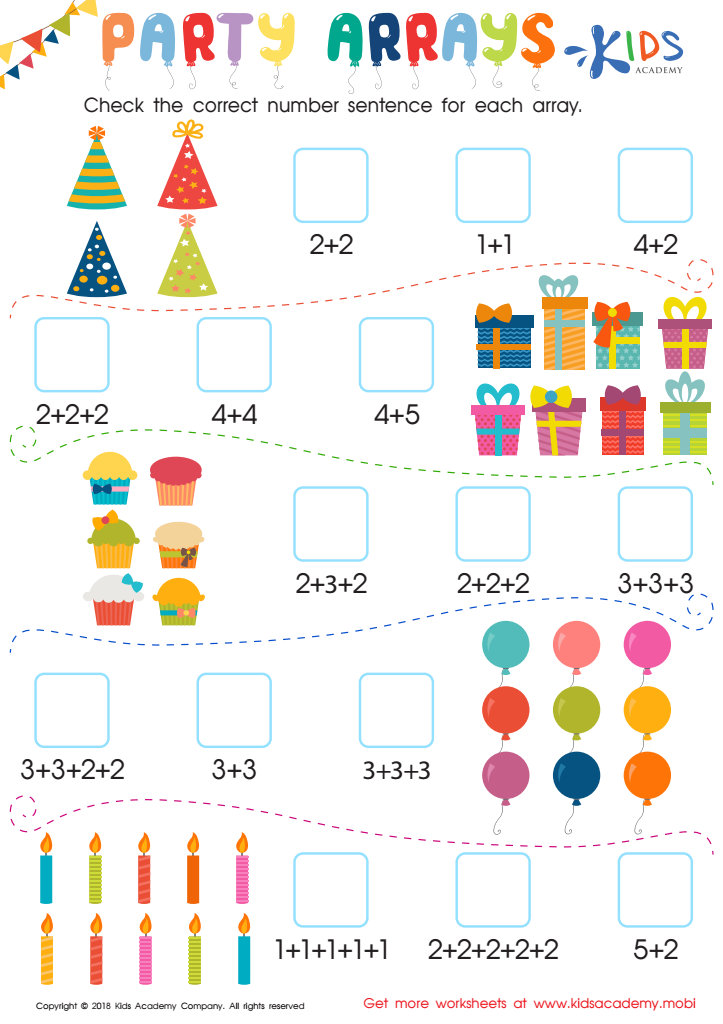
Party Arrays Worksheet
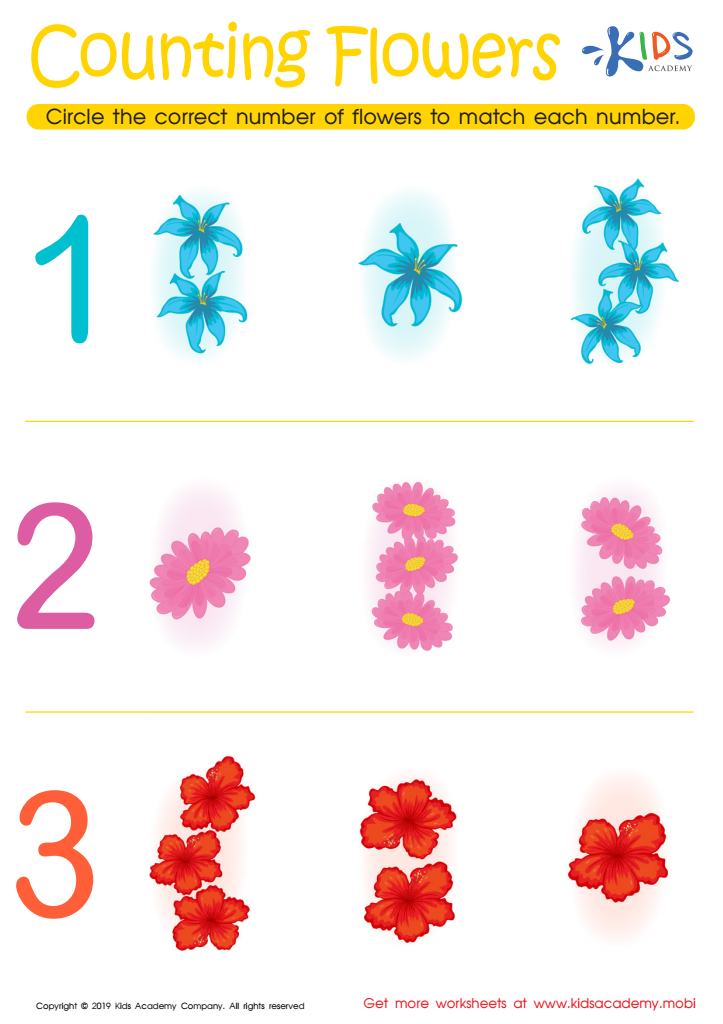
Counting Flowers Worksheet




.jpg)


Fine motor skills are essential for young learners aged 3 to 7, as they form the foundation for writing and many other academic tasks. As children develop these skills, they learn to grasp pencils, manipulate scissors, and engage with various materials, which enhances their hand-eye coordination and dexterity. This development not only supports their ability to write but also lays the groundwork for problem-solving and creativity in future tasks.
Additionally, engaging in easy mathematics activities encourages children to use fine motor skills in practical applications. Activities like counting with small objects, using building blocks, or completing puzzles help intertwine the development of fine motor abilities with math concepts. This dual approach fosters a holistic learning experience for children.
By focusing on these skills early, parents and teachers set children up for future academic success, confidence, and independence. Mastery in fine motor skills can lead to a smoother transition into more complex subjects and help children feel more comfortable as they progress in school. Investing time in fine motor skill development and easy math can significantly enhance a child's cognitive and physical abilities, promoting a love for learning and exploration. Thus, these skills should be prioritized in early childhood education settings.








