Visual discrimination Easy Math Worksheets for Ages 3-7
3 filtered results
-
From - To
Discover our Visual Discrimination Easy Math Worksheets, specifically designed for children ages 3-7! These engaging and fun worksheets help young learners enhance their visual skills while developing essential math concepts. Incorporating colorful visuals, children will improve their ability to differentiate shapes, sizes, and patterns, laying a solid foundation for problem-solving. Our worksheets are tailored to support early math learning in a stress-free environment, allowing kids to explore and navigate numbers with confidence. Perfect for homeschooling or classroom use, our Vivid Visual Discrimination worksheets make math exciting and accessible for young minds. Let’s make learning enjoyable—one worksheet at a time!
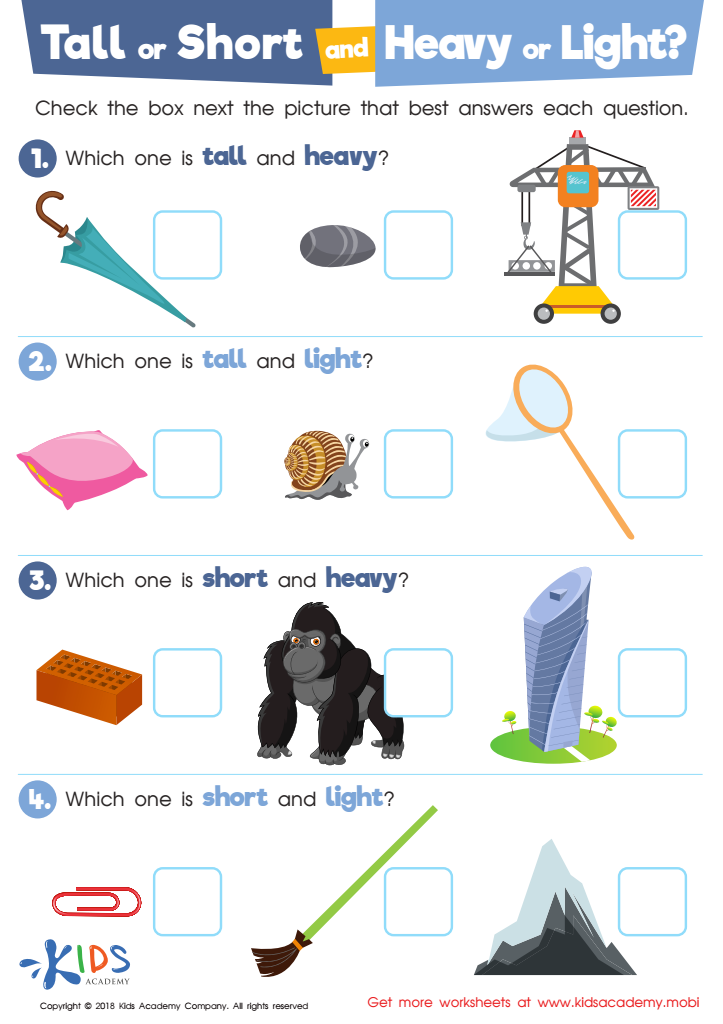
Tall or Short and Heavy or Light? Worksheet
 Assign to My Students
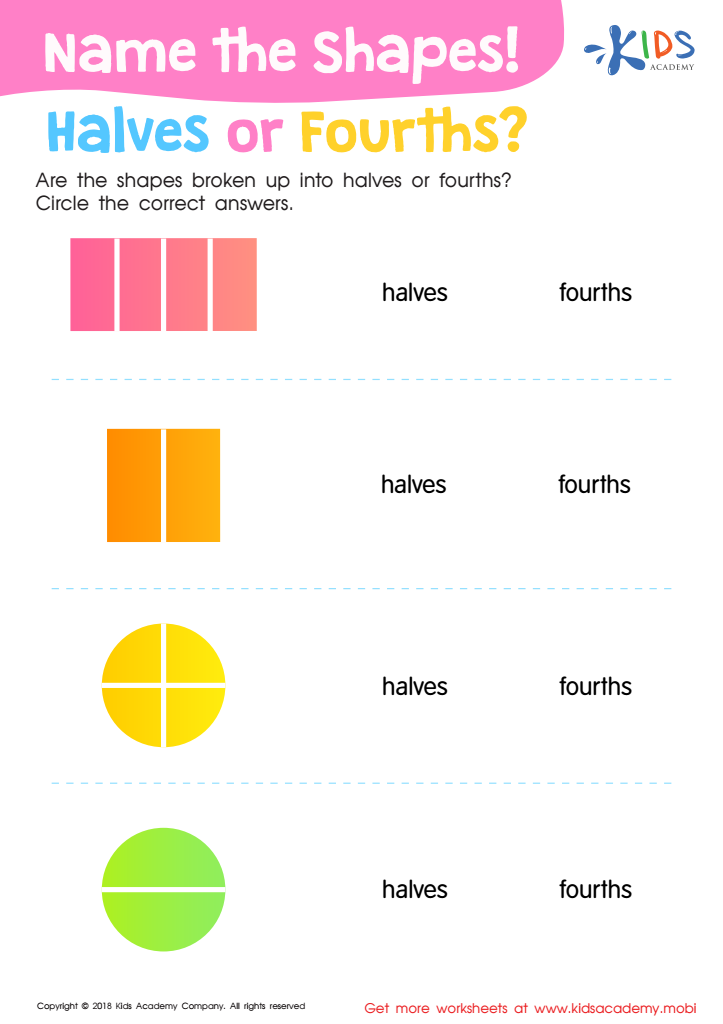
Name the Shapes Halves or Fourths? Worksheet
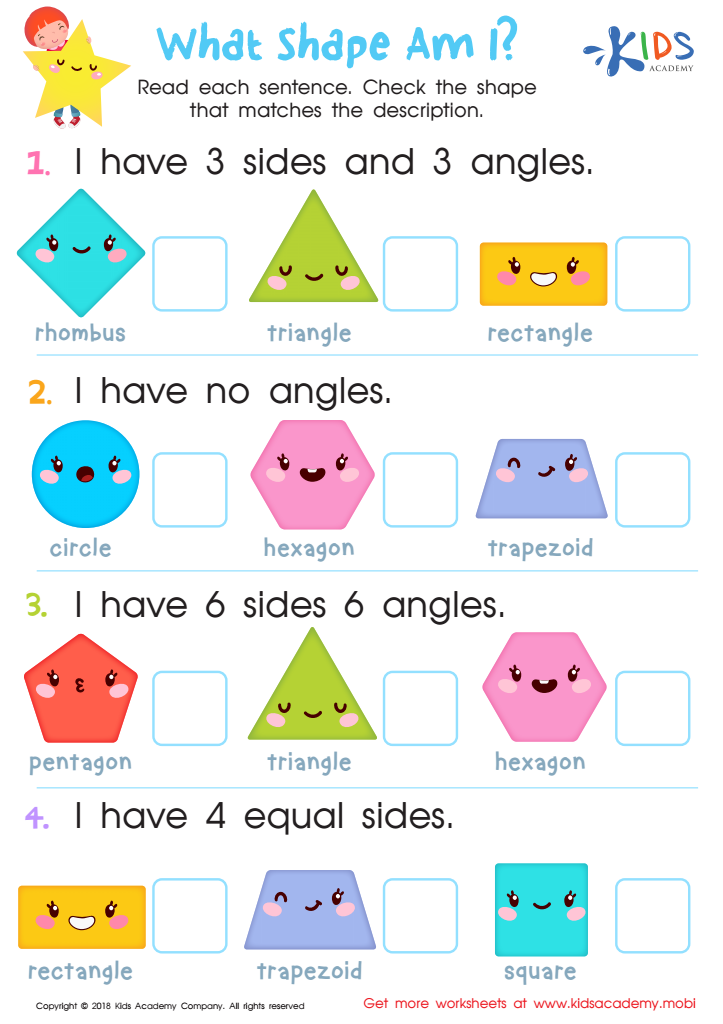
What Shape Am I? Worksheet








Visual discrimination is crucial for young learners, especially in the early ages of 3 to 7, as it forms the foundation for effective problem-solving and critical thinking skills. This skill involves the ability to notice differences and similarities in shapes, sizes, colors, and patterns, which is essential for understanding math concepts. When children develop strong visual discrimination skills, they can more easily recognize numbers, understand mathematical symbols, and manage spatial relationships—all fundamental components of mathematical learning.
Parents and teachers should care about this because easy math activities that foster visual discrimination promote cognitive development and prepare children for future academic success. Engaging children in fun and interactive visual discrimination games not only enhances their math understanding but also improves their overall attention to detail and observational skills.
Additionally, early exposure to visual math activities helps minimize potential learning gaps, ensuring that all children build a solid mathematical foundation. By nurturing these skills in young learners, parents and teachers are investing in their future educational journeys, empowering them with the tools needed to tackle more complex subjects as they grow. Ultimately, fostering visual discrimination contributes not just to math competency, but also to a child's overall confidence in learning.








