
Counting skills Easy Matching Worksheets for Ages 3-7
4 filtered results
Difficulty Level
Grade
Age
-
From - To
Subject
Activity
Standards
Discover our "Counting Skills Easy Matching Worksheets" designed specifically for children aged 3-7! These engaging and printable worksheets help young learners build essential counting skills through fun and interactive activities. Each worksheet features colorful illustrations and age-appropriate challenges that promote number recognition and one-to-one correspondence. Your child will enjoy matching items, connecting numbers with visual aids, and developing foundational math skills in an enjoyable way. Perfect for at-home practice or classroom use, these worksheets stimulate learning and enhance cognitive abilities. Set your child on the path to math success with these delightful and effective matching worksheets! Start exploring today!
Favorites
With answer key
Interactive
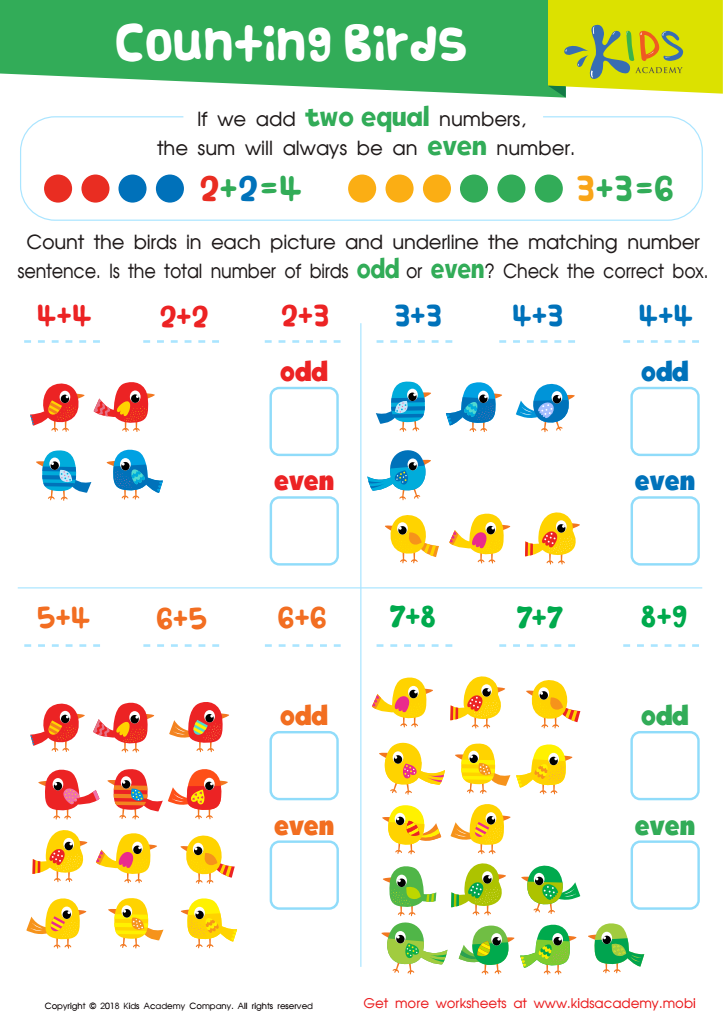
Counting Birds Worksheet
Help your child count and underline the matching number sentence in the worksheet. Ask them if the total number of birds in each picture is odd or even, then check the correct box. When two equal numbers are added, the sum is always an even number (e.g. 2+2=4, 4+4=8, both divisible by 2).
 Assign to My Students
Counting Birds Worksheet
Worksheet
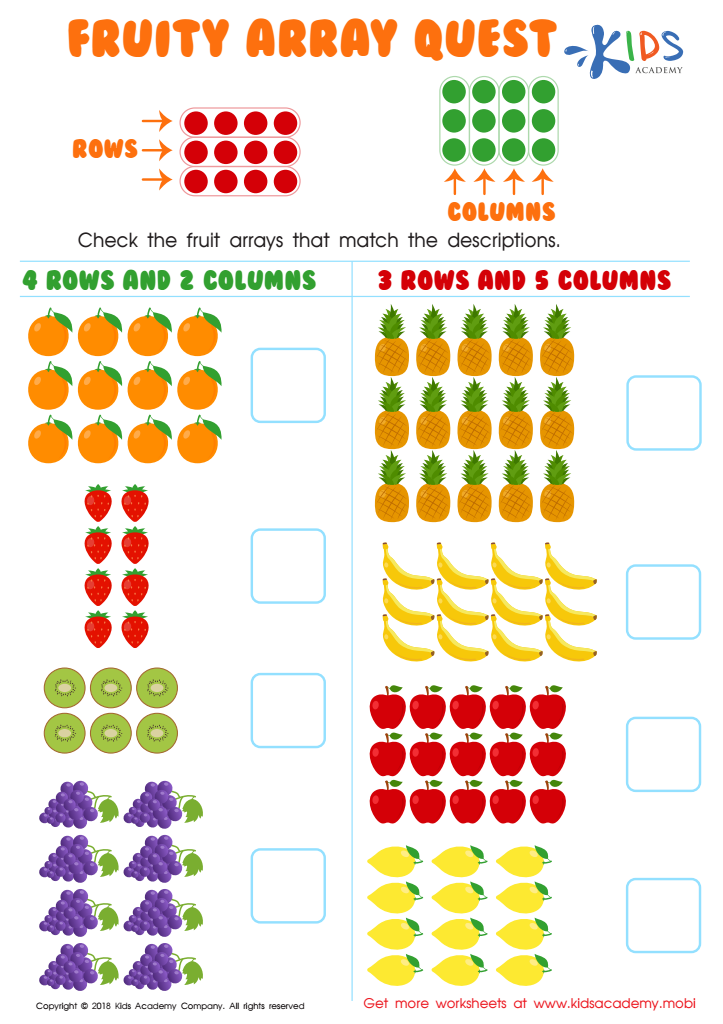
Fruity Array Quest Worksheet
Explain rows (horizontal) and columns (vertical) to your child before starting the worksheet. Show them the picture and the arrows indicating direction. Your child should be able to answer the questions easily after that. Help them match the fruit arrays that match the descriptions.
Fruity Array Quest Worksheet
Worksheet
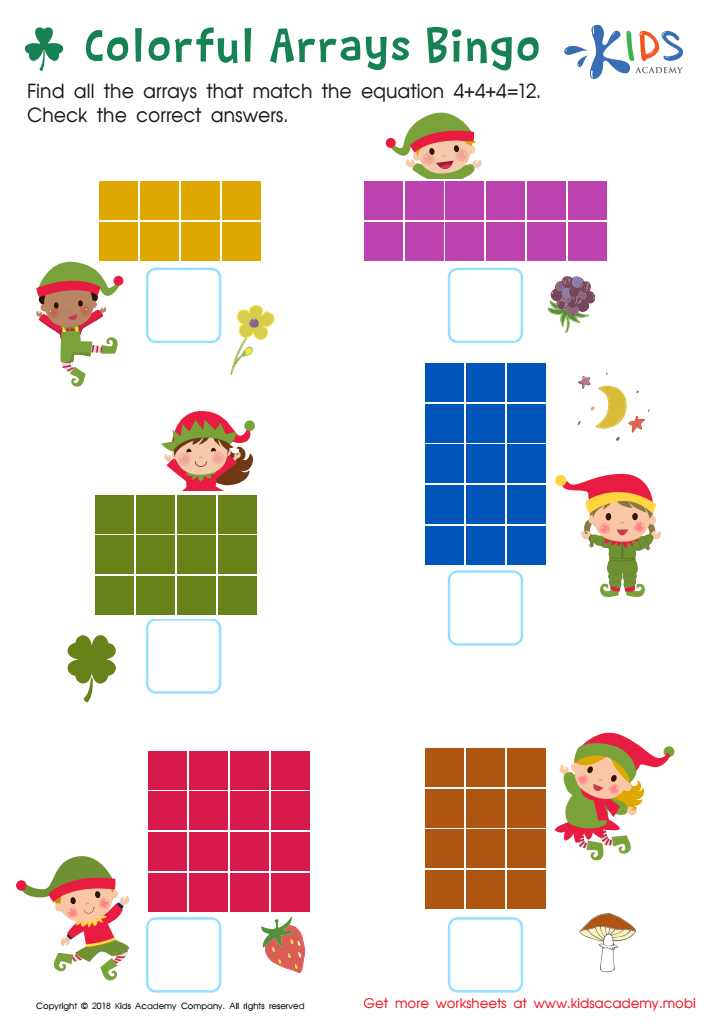
Colorful Arrays Bingo Worksheet
This worksheet stimulates thinking about arrays and how to represent them. Instruct students to count the 6 arrays and find which ones sum up to 12. Ask them to check the answers for accuracy.
Colorful Arrays Bingo Worksheet
Worksheet
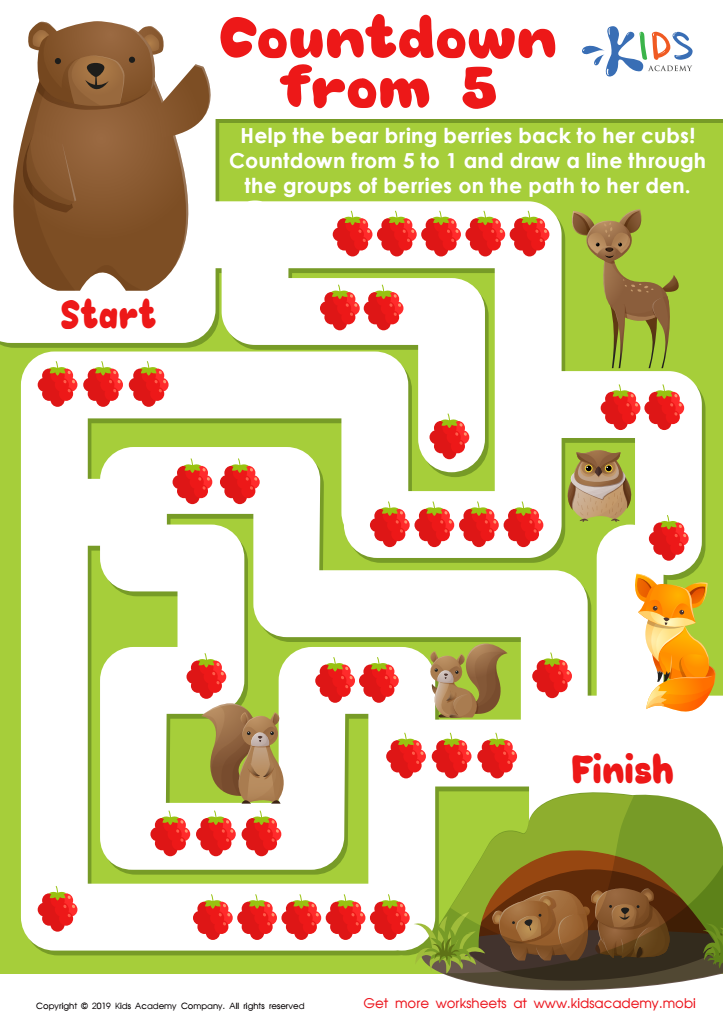
Countdown from 5 Worksheet
Encourage your kids to help Mama Bear find her way to her den! Ask them to count down from 5 to 1 and draw a line through the groups of berries on the path. Point them to the picture of the friendly bears. A fun and safe way to enjoy these cute animals!
Countdown from 5 Worksheet
Worksheet
Join Kids Academy for Free
Who is primarily going to use this learning content?








Counting skills and easy matching activities are essential building blocks for children aged 3-7, laying the foundation for later mathematical understanding. Parents and teachers should care about these skills for several reasons.
Firstly, early exposure to counting helps children develop number sense, an understanding of quantity and numerical relationships. This skill is crucial as it influences future mathematical concepts such as addition, subtraction, and basic arithmetic. Engaging children in counting activities can promote cognitive and social development, enhancing their problem-solving and critical thinking abilities.
Easy matching activities also play a significant role in a child's development. They help deepen visual discrimination skills, teaching children to recognize similarities and differences between objects. This is vital not just for math but for reading and writing as well. Ensuring that children experience both counting and matching activities fosters their ability to categorize and organize information, crucial for lifelong learning.
Overall, parents and educators should prioritize these early activities, as they not only support mathematical understanding but also enrich various areas of a child's development, making learning both engaging and effective. By fostering a positive relationship with numbers and patterns at this early stage, children gain confidence and curiosity in their learning journey.








