Counting skills Easy Measurement Worksheets for Ages 3-7
5 filtered results
-
From - To
Enhance your child's early math skills with our easy measurement worksheets designed for ages 3-7. These engaging resources focus on counting skills, making math enjoyable and accessible. Each worksheet is crafted to help young learners practice counting and develop their understanding of measurements in a fun way. With vibrant illustrations and interactive activities, your child will build a strong mathematical foundation while exploring concepts of length, weight, and volume. Perfect for teachers and parents, our materials are tailored to inspire young minds and encourage confidence in their counting abilities. Start your child's learning journey today with our exciting worksheets!
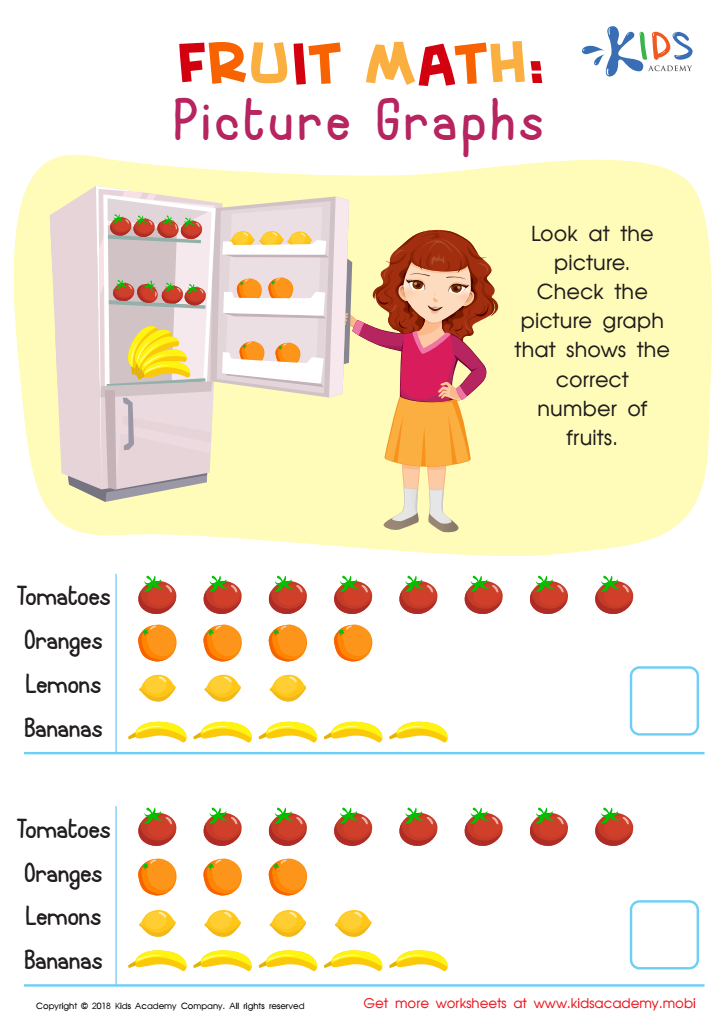
Fruit Math: Picture Graphs Worksheet
 Assign to My Students
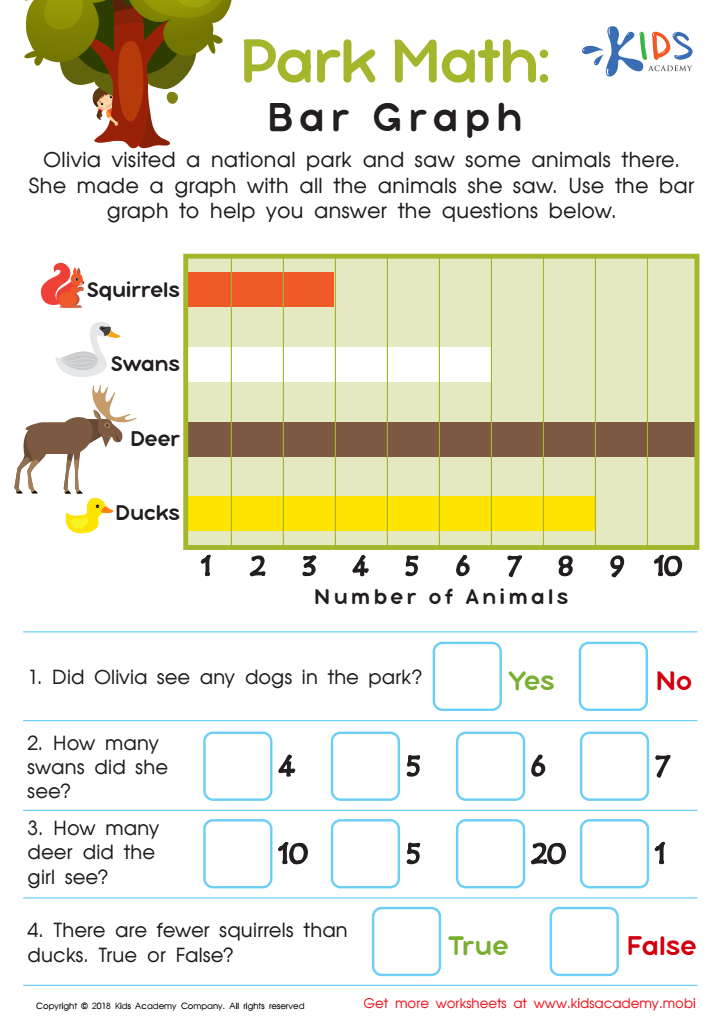
Park Math: Bar Graph Worksheet
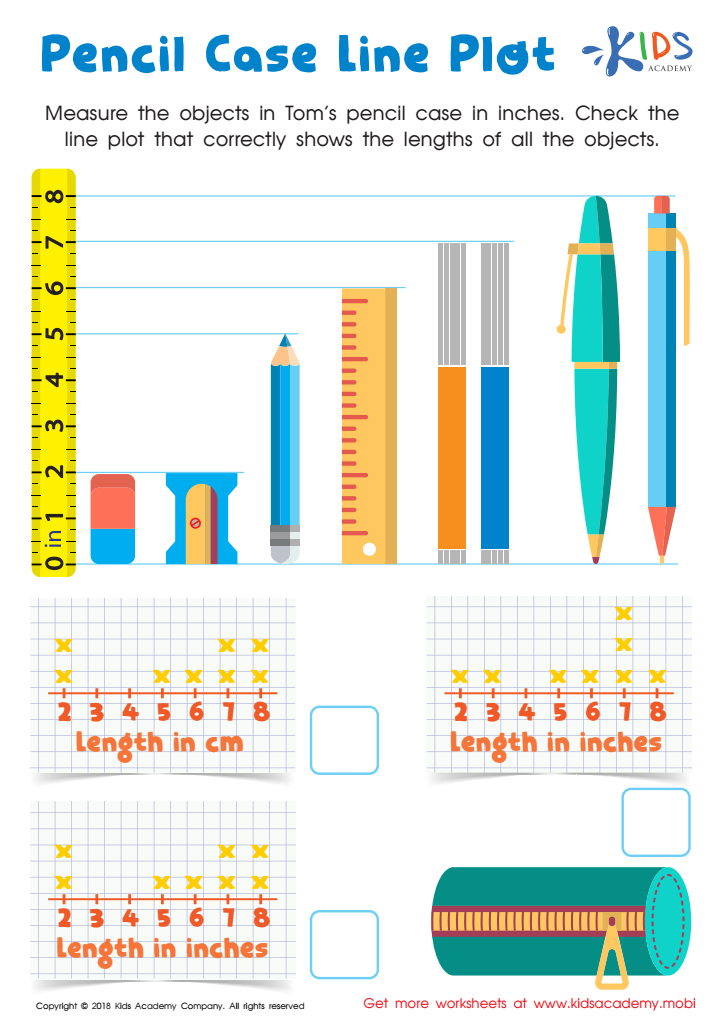
Pencil Case Line Plot Worksheet
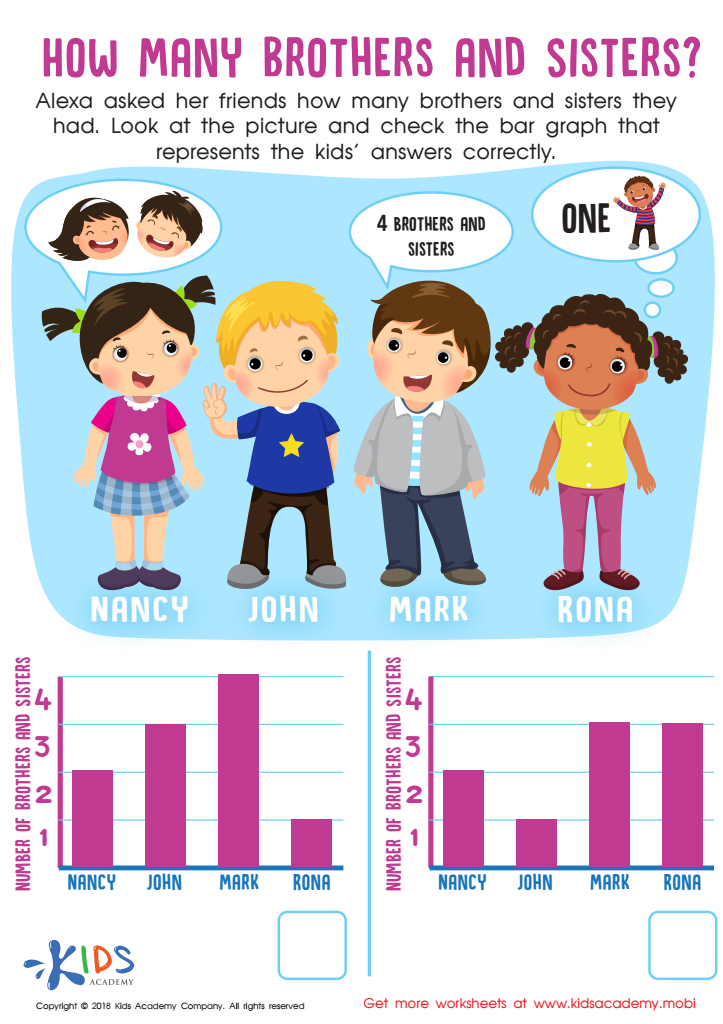
How Many Brothers and Sisters? Worksheet
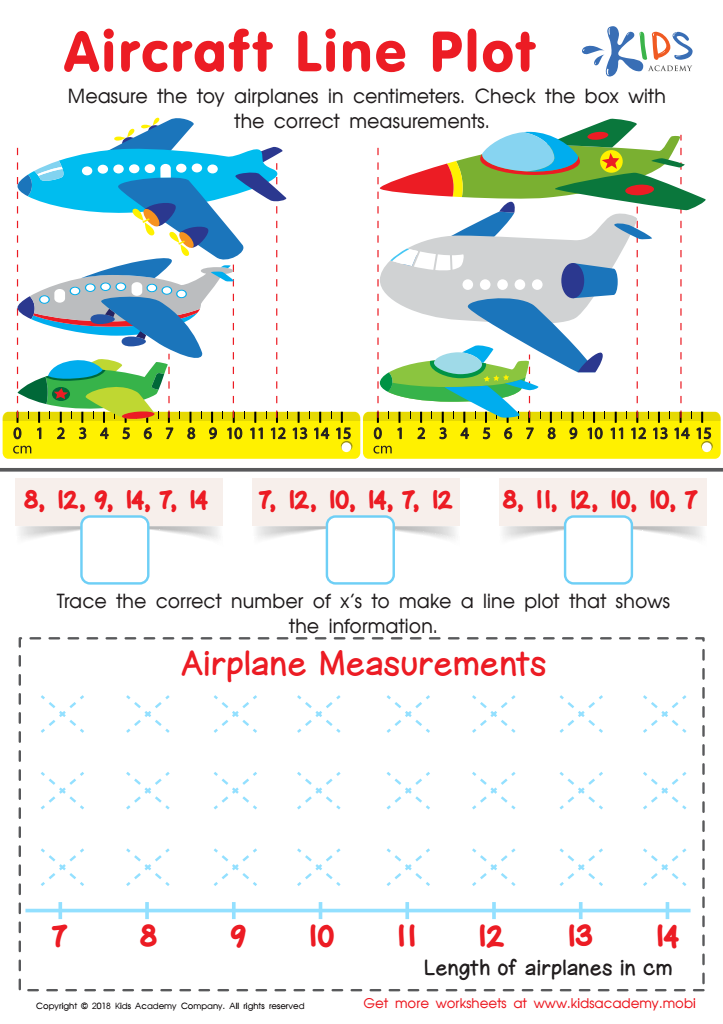
Aircraft Line Plot Worksheet








Counting skills and measurement concepts are foundational components of early mathematics education, crucial for children's cognitive development. For parents and teachers, understanding why these skills matter starts with recognizing their everyday applicability. Children aged 3-7 are naturally curious, and fostering counting and measurement skills aids in enhancing their problem-solving abilities and mathematical fluency.
Developing counting skills helps children establish a strong number sense, which is essential for understanding more complex mathematical concepts later on. Measurement, on the other hand, introduces comparisons and relationships between objects, further increasing spatial awareness and critical thinking.
Moreover, engaging children in fun and interactive counting and measurement activities can boost their confidence and encourage a love for learning. These skills also play a vital role in supporting literacy and language development, as children learn to communicate numbers, sizes, and quantities with their peers and caregivers.
Finally, these foundational skills prepare children for successful academic careers and equip them for everyday life experiences, fostering abilities such as budgeting, cooking, and planning. Therefore, it is imperative for parents and teachers to prioritize counting skills and easy measurement activities as integral parts of early childhood education.








