Discover our engaging Data Interpretation Easy Measurement Worksheets designed specifically for children aged 3-7! These fun, interactive worksheets help young learners develop essential math skills through exciting activities that focus on data interpretation and measurement. By using charts, graphs, and simple visual aids, children will gain confidence as they learn to compare, analyze, and draw conclusions from data sets. Perfect for parents and educators seeking to enhance early math education, these worksheets promote critical thinking while keeping kids entertained. Explore our collection today and watch your child's understanding of measurements and data soar! Ideal for home practice or classroom use.

Check out this FREE Trial Lesson on Measurement for age 3-7!

Picture Graphs Word Problems

Favorites
With answer key
Interactive
  • 3-7
  • Data interpretation
  • Measurement
  • Easy
Fruit Math: Picture Graphs Worksheet

Fruit Math: Picture Graphs Worksheet

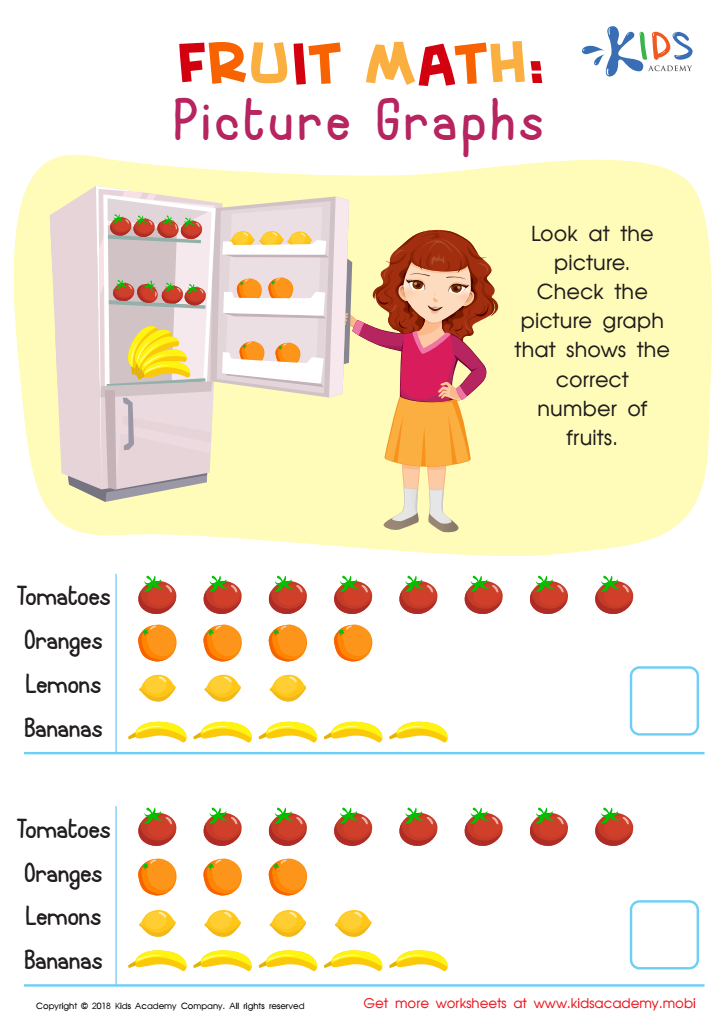
Help your child learn to draw graphs by having them look at pictures. Ask them to identify a graph that accurately portrays the data and have them explain why. This will prepare them to easily draw more complex graphs in the future. For example, have them look at the picture with the number of fruits in the colorful worksheet and explain why the graph is accurate.
Fruit Math: Picture Graphs Worksheet
Worksheet
Students Line Plot Worksheet

Students Line Plot Worksheet

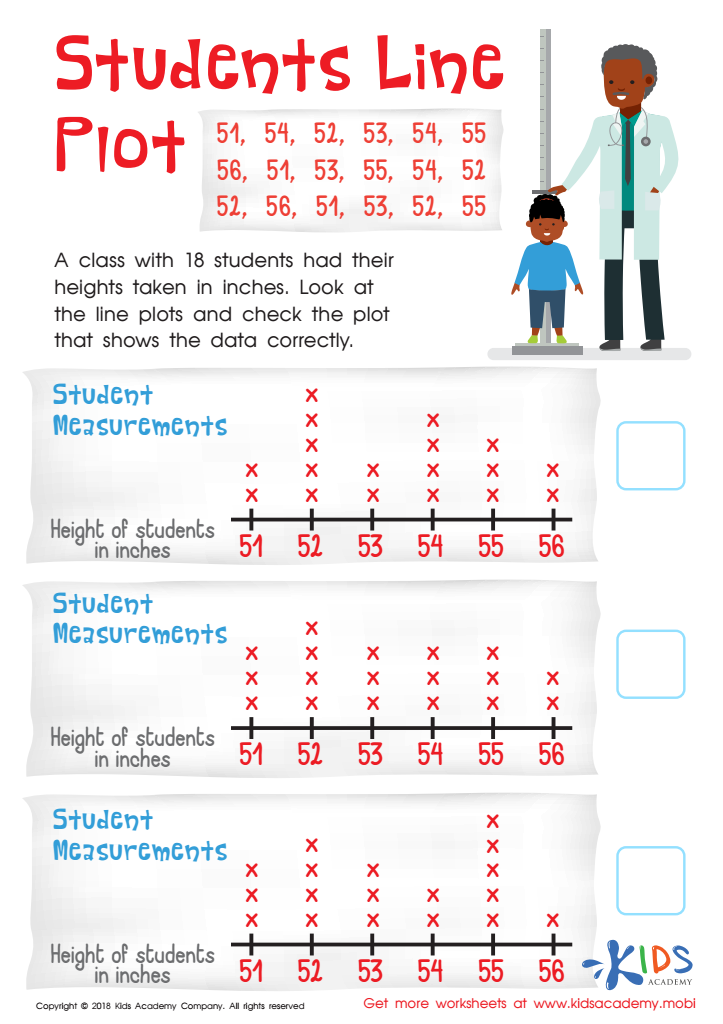
Help your students learn to draw a line plot correctly by giving real examples. In this exercise, they must check the data of a class of 18 students' heights (in inches). Have them compare two line plots and figure out which one is correct.
Students Line Plot Worksheet
Worksheet
Dog Math: Line Plots Worksheet

Dog Math: Line Plots Worksheet

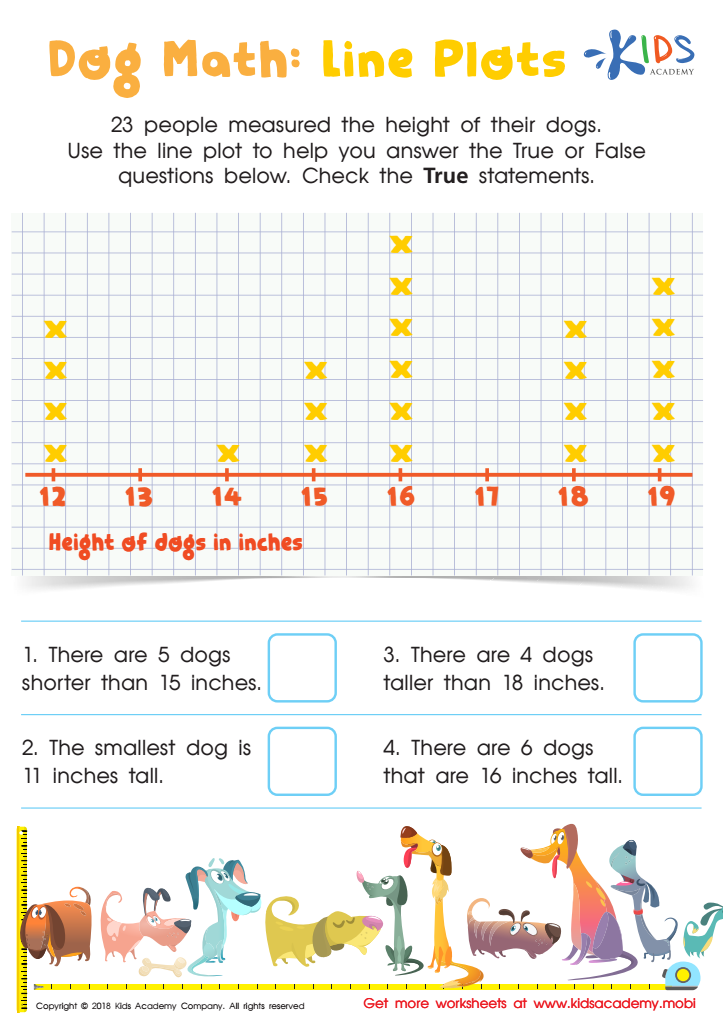
Do your kids love dogs? If you have family pets, your kids may be excited to do this worksheet. It involves a line plot and True/False questions about 23 people measuring their dogs' heights. Assist your kids in verifying the statements that are True.
Dog Math: Line Plots Worksheet
Worksheet
Coffeehouse Survey: Picture Graph Word Problems Worksheet

Coffeehouse Survey: Picture Graph Word Problems Worksheet

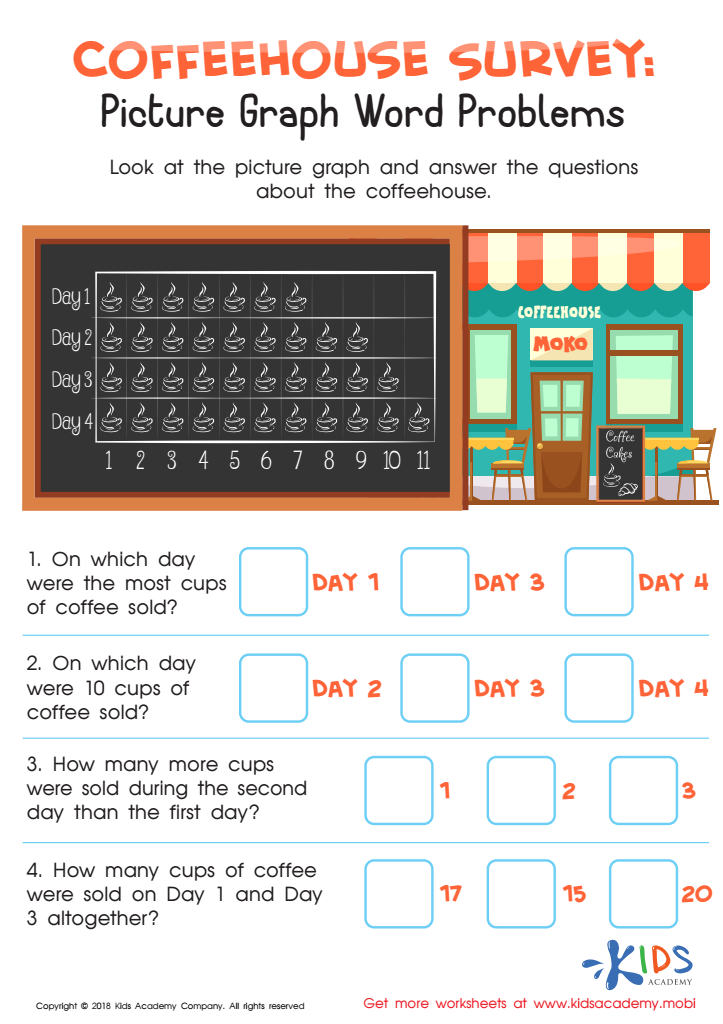
This coffeehouse survey helps children interpret pictures and answer questions. Your child will look at a picture graph displaying daily coffee cup sales from Day 1 to Day 4. Aid them in answering questions on the number of cups sold and which day had the most sales.
Coffeehouse Survey: Picture Graph Word Problems Worksheet
Worksheet
Pencil Math: Line Plots Worksheet

Pencil Math: Line Plots Worksheet

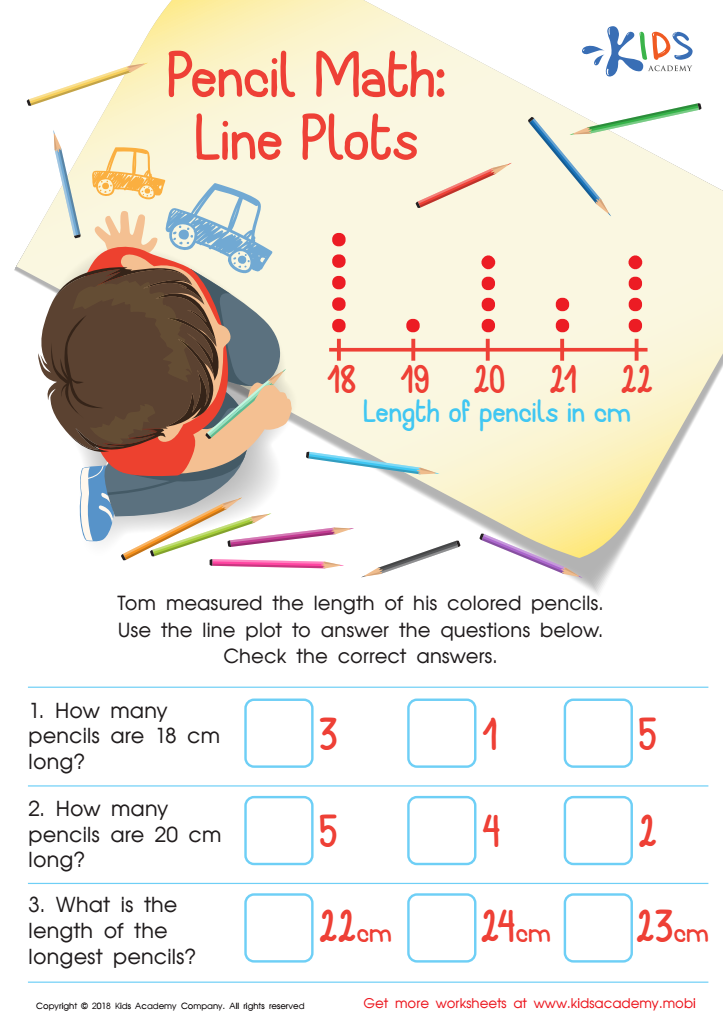
Your child will meet Tom in this worksheet, helping him find the length of his colored pencils. Tom has written the lengths in cm, and the line plot will help your kids answer the questions. Check the correct answers for each, including how many pencils are of a certain length. The line plot makes it easy to find the answers.
Pencil Math: Line Plots Worksheet
Worksheet
Pet Survey Worksheet

Pet Survey Worksheet

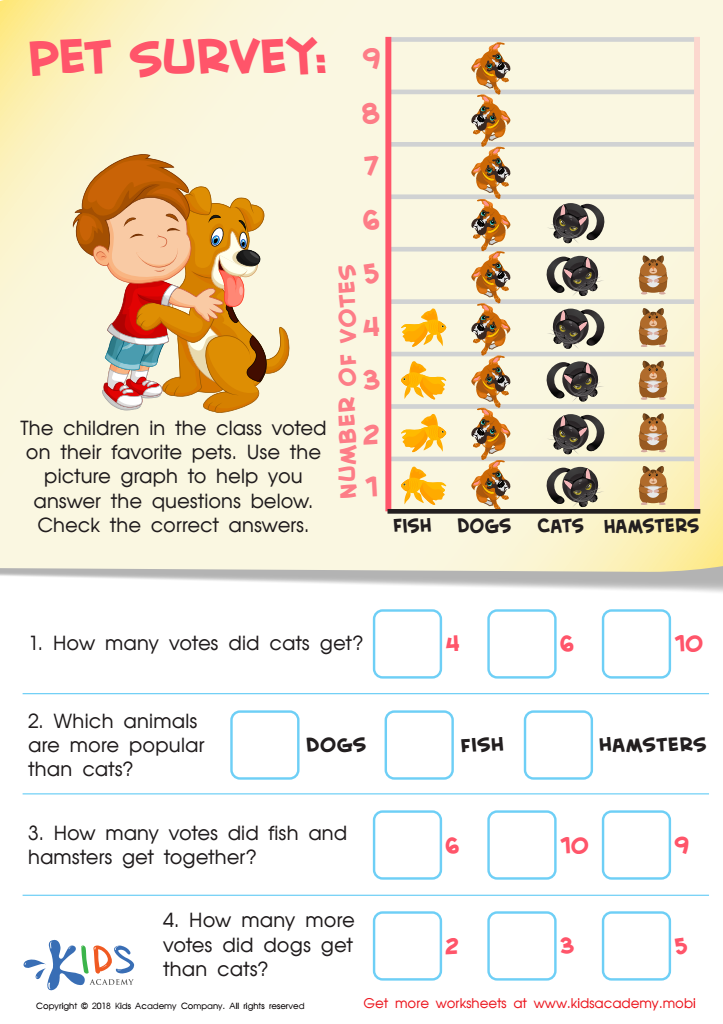
Do you have a furry family member? If the answer is yes and your kids love animals, they'll enjoy this worksheet. The picture graph shows the children's votes for their favorite pet - fish, dog, cat and hamster. Ask your child to use the graph to answer the questions. Guide them to check the right answer.
Pet Survey Worksheet
Worksheet
Farm Math: Line Plots Worksheet


Farm Math: Line Plots Worksheet

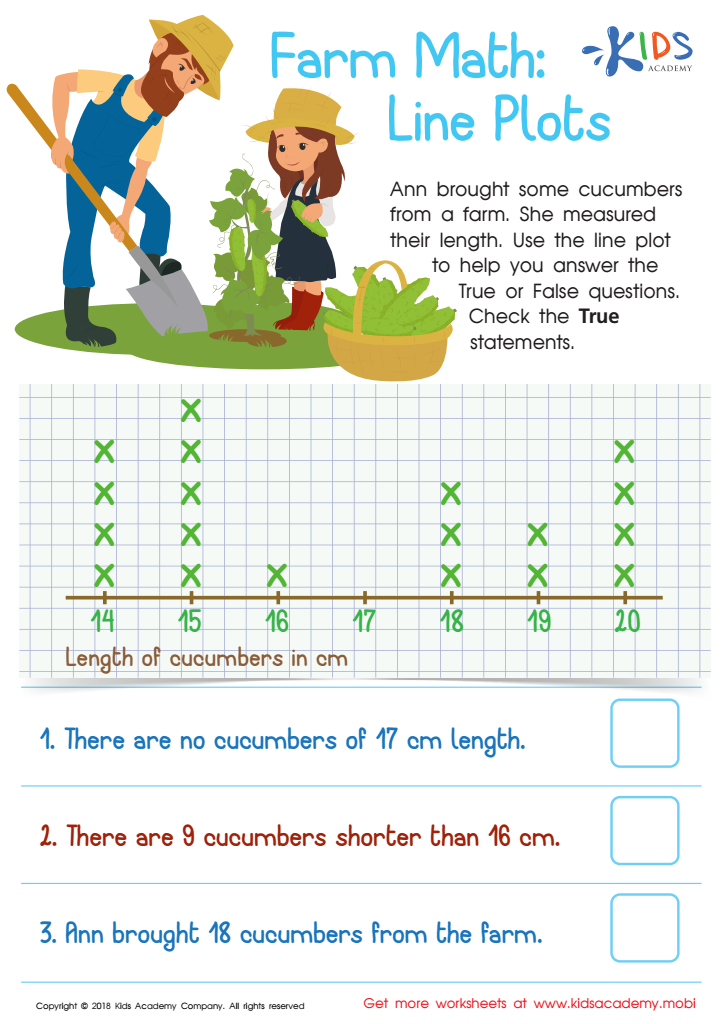
Ann brought cucumbers from a farm and measured their length. She drew a line plot for your students to use to answer True/False questions about the number and length of the cucumbers. Ask your students to check only the True statements. (80 words)
Farm Math: Line Plots Worksheet

Worksheet


Parents and teachers should prioritize data interpretation and easy measurement skills for children aged 3-7 as these foundational abilities are crucial for their overall cognitive development. During these formative years, children begin to understand numerical concepts and the world around them. Teaching data interpretation encourages critical thinking; children learn to analyze information, recognize patterns, and make informed decisions based on their observations.

Easy measurement activities enhance their understanding of size, volume, length, and time. Engaging children in practical measurement tasks, such as comparing heights of objects or measuring ingredients for a simple recipe, fosters a hands-on learning experience. This not only makes math fun and relatable but also helps develop their fine motor skills and hand-eye coordination.

Moreover, early exposure to these concepts lays the groundwork for future academic success in subjects like math, science, and even social studies, where data literacy is essential. By focusing on data interpretation and easy measurement, adults help cultivate curious, analytical thinkers who are better equipped to navigate a data-driven world. Ultimately, supporting children in these areas nurtures essential life skills that will serve them well into adulthood.