
Time reading skills Easy Time Worksheets for Ages 3-7
3 filtered results
Difficulty Level
Grade
Age
-
From - To
Subject
Activity
Standards
Enhance your child's time-reading skills with our Easy Time Worksheets for Ages 3-7! Designed for young learners, these engaging and interactive worksheets make mastering the concept of time fun and enjoyable. Your child will explore clock reading, learning to identify hours and minutes through colorful visuals and captivating activities. Our worksheets cater to various skill levels, ensuring a personalized learning experience. Ideal for homeschooling or classroom use, they encourage independent practice while building confidence in time-telling abilities. Get started today and watch your little one shine as they develop essential life skills with these delightful time worksheets!
Favorites
With answer key
Interactive
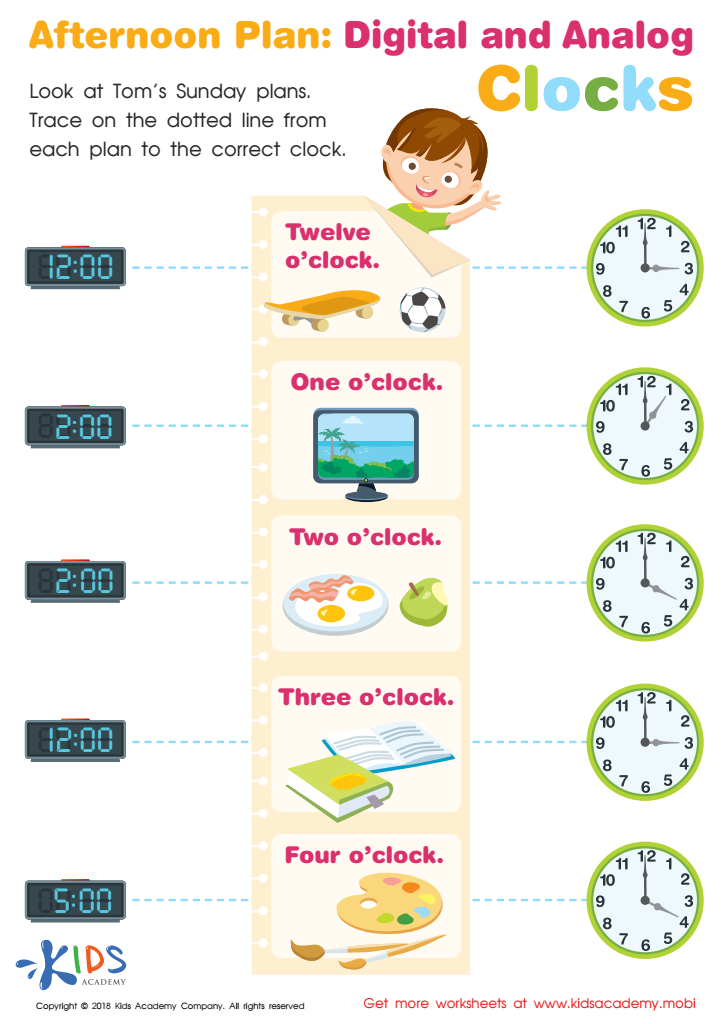
Afternoon Plan: Digital and Analog Clocks Worksheet
Tom's got Sunday plans and your kids can use this worksheet to help them learn how to tell the time. With tracing dotted lines from plans to the correct clock, they'll gain the skills to accurately convert digital time to analog. It'll be a great way to get them better at telling the time.
 Assign to My Students
Afternoon Plan: Digital and Analog Clocks Worksheet
Worksheet
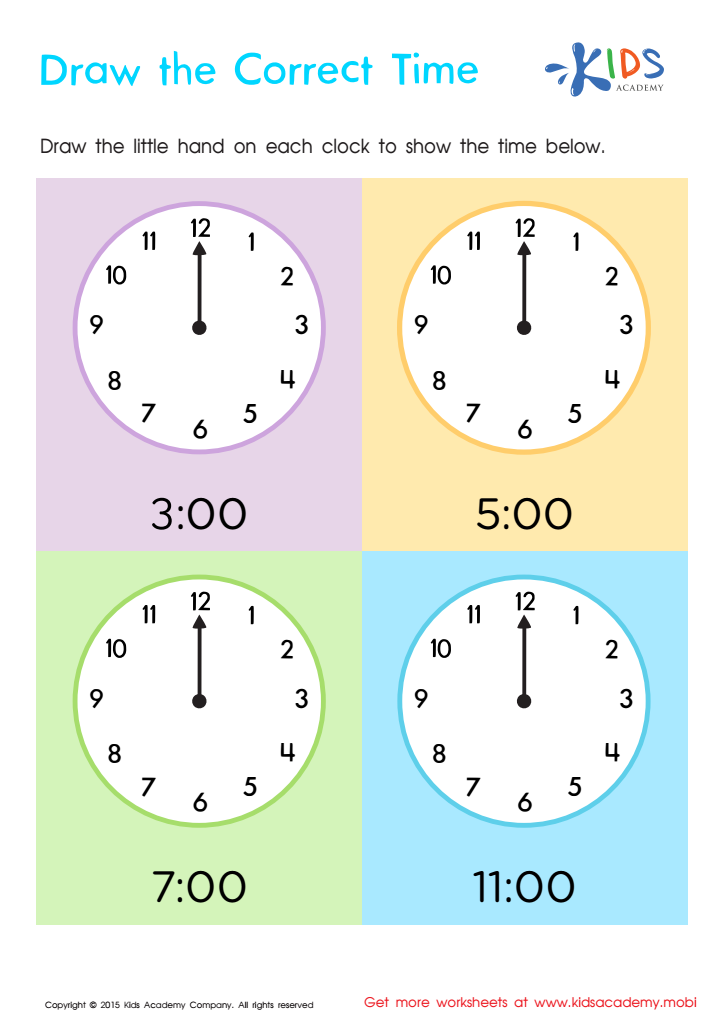
Telling The Time Worksheet: Part 1
Practice telling the time with Kids Academy. Our worksheets make it fun for kindergarteners to learn about clocks and reading the time. Find our free math worksheets on telling the time and draw the little hand on the clock faces to show the time. Let's learn together!
Telling The Time Worksheet: Part 1
Worksheet
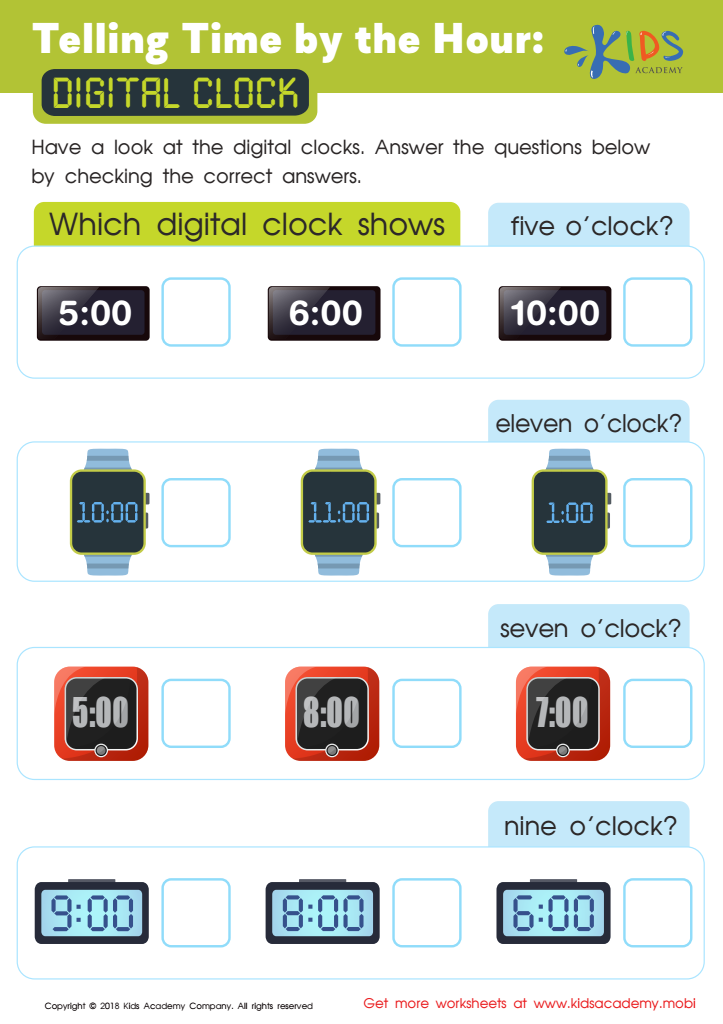
Telling Time by the Hour: Digital Clock Worksheet
Introduce your students to digital clocks. This worksheet will help them become familiar with them. Guide them through answering the questions - they're simple and stimulating. Encourage their young minds to explore the digital clocks in the exercise.
Telling Time by the Hour: Digital Clock Worksheet
Worksheet
Join Kids Academy for Free
Who is primarily going to use this learning content?






.jpg)
Parents and teachers should prioritize time reading skills for children aged 3-7 because these foundational skills are essential for successful learning and daily living. Understanding time aids children in developing a sense of routine and responsibility, which is crucial during early childhood when they are learning to navigate their day-to-day activities. Mastery of time concepts helps foster independence; children who recognize when to transition from one activity to another can manage their time effectively, enhancing their self-regulation skills.
Additionally, time reading skills lay the groundwork for advanced mathematical concepts like addition and subtraction by reinforcing the idea of sequences and intervals. It also enriches language skills, as discussing time encourages vocabulary development around both numbers and descriptive terms (e.g., "quarter past," "half an hour").
Moreover, being able to tell time can enhance social interactions. For example, children can engage more deeply during play dates or group activities when they can understand and communicate schedules. Encouraging time reading skills aligns with educational standards and prepares children for future academic challenges. Promoting this skill strengthens their cognitive development and contributes to a smooth transition into school, instilling confidence and empowering them to take control of their learning environment.








