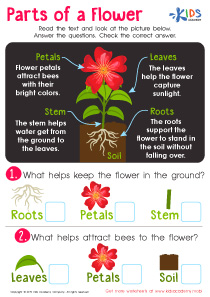
Story sequencing Easy Reading Fiction Worksheets for Ages 3-7
3 filtered results
-
From - To
Unlock your child's imagination with our "Story Sequencing Easy Reading Fiction Worksheets" designed specifically for ages 3-7. These engaging worksheets provide a fun way for young learners to enhance their reading comprehension and storytelling skills. Through interactive exercises, children will practice putting narratives in order, helping them understand plot development and character actions. Each worksheet features colorful illustrations and age-appropriate texts to captivate early readers. Perfect for teachers and parents alike, these resources foster critical thinking and creativity while making learning enjoyable. Download now and give your little ones a head start in their reading journey!
Folktales Printable PDF Worksheet: The 3 Little Pigs
 Assign to My Students
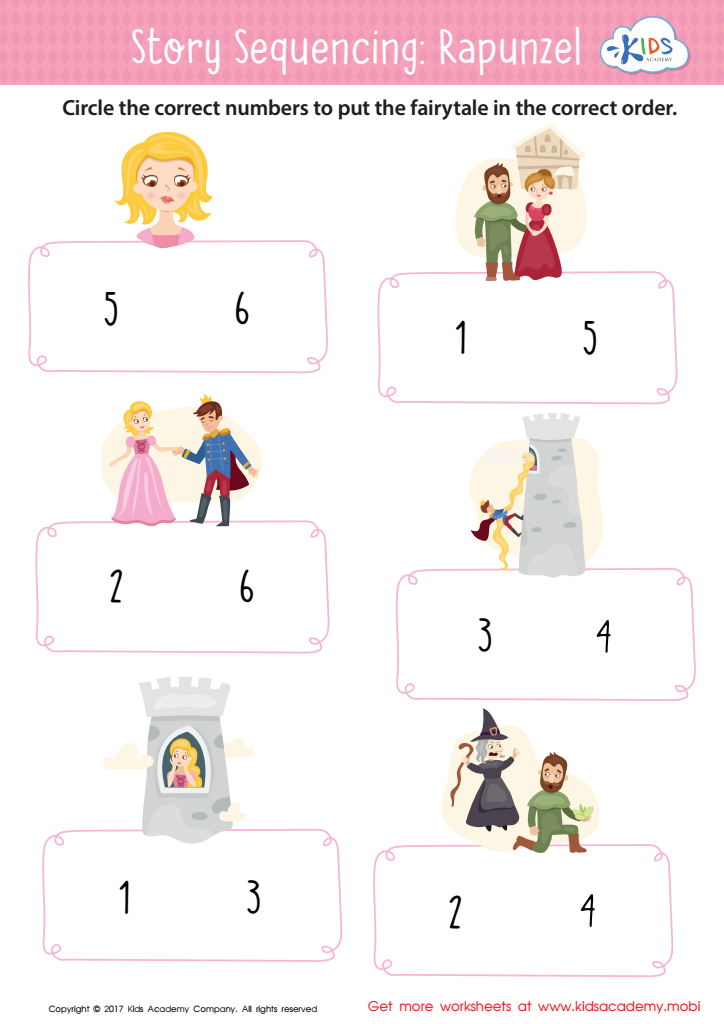
Rapunzel Story Sequencing Worksheet
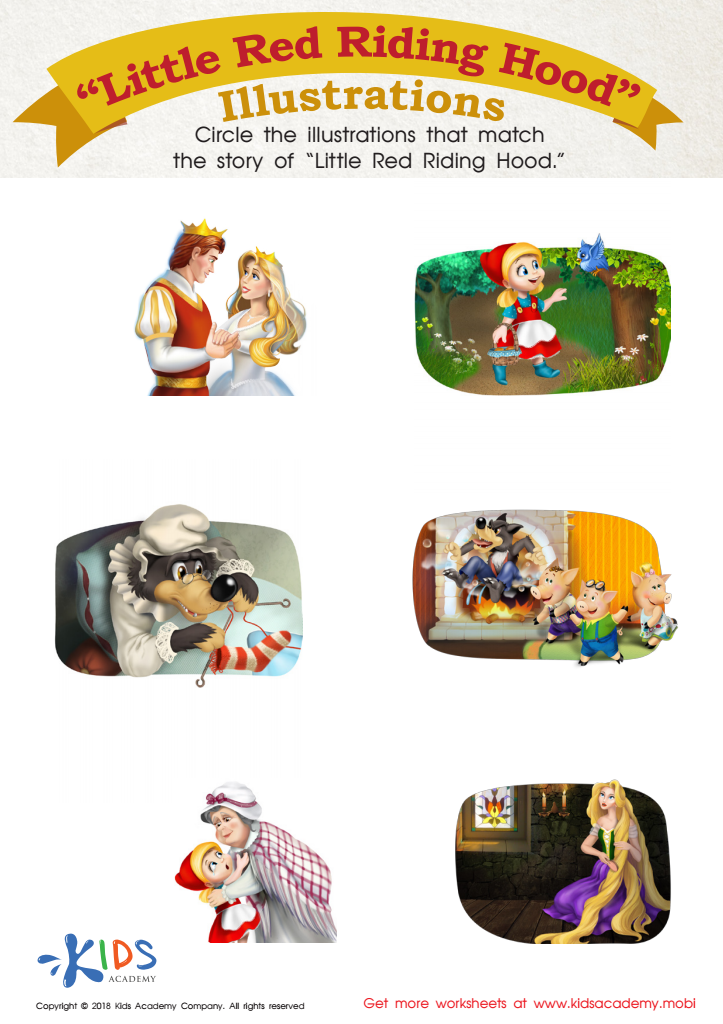
Little Red Riding Hood: Illustrations Worksheet








Parents and teachers should care about story sequencing in easy reading fiction for children ages 3-7 because it plays a critical role in early literacy development. Story sequencing helps young learners understand the structure of narratives, which is fundamental for reading comprehension. By following the order of events, children learn how stories unfold, building their ability to summarize and predict outcomes, both key skills as they progress in their reading journey.
Moreover, engaging with story sequencing enhances cognitive skills, such as critical thinking and problem-solving. Children learn to identify beginnings, middles, and ends, which aids in organizing their thoughts and improving their ability to communicate effectively. Understanding sequence also promotes creativity as children imagine and retell stories in their own way, fostering a love for reading.
Additionally, story sequencing activities can cultivate social skills. When children work in pairs or groups to discuss and arrange story elements, they practice collaboration and empathy, valuable skills for their future interactions.
In essence, prioritizing story sequencing in early fiction reading equips students with foundational literacy skills, nurtures their cognitive and social development, and fosters a lifelong love of reading—benefits that enrich their overall growth and educational experience.