Understanding life cycles Easy Science Worksheets for Ages 3-7
4 filtered results
-
From - To
Our "Understanding Life Cycles" easy science worksheets are perfect for young learners ages 3-7. Through engaging and interactive activities, children explore the stages of life for various plants and animals. These worksheets, designed to captivate young minds, foster early learning skills and a love for science. Your child will discover how animals grow from eggs to adults and how seeds transform into flowering plants. Ideal for preschool and early elementary students, these materials aid in developing observation and critical thinking skills while making learning fun. Dive into the wonders of life cycles with age-appropriate, hands-on science activities!
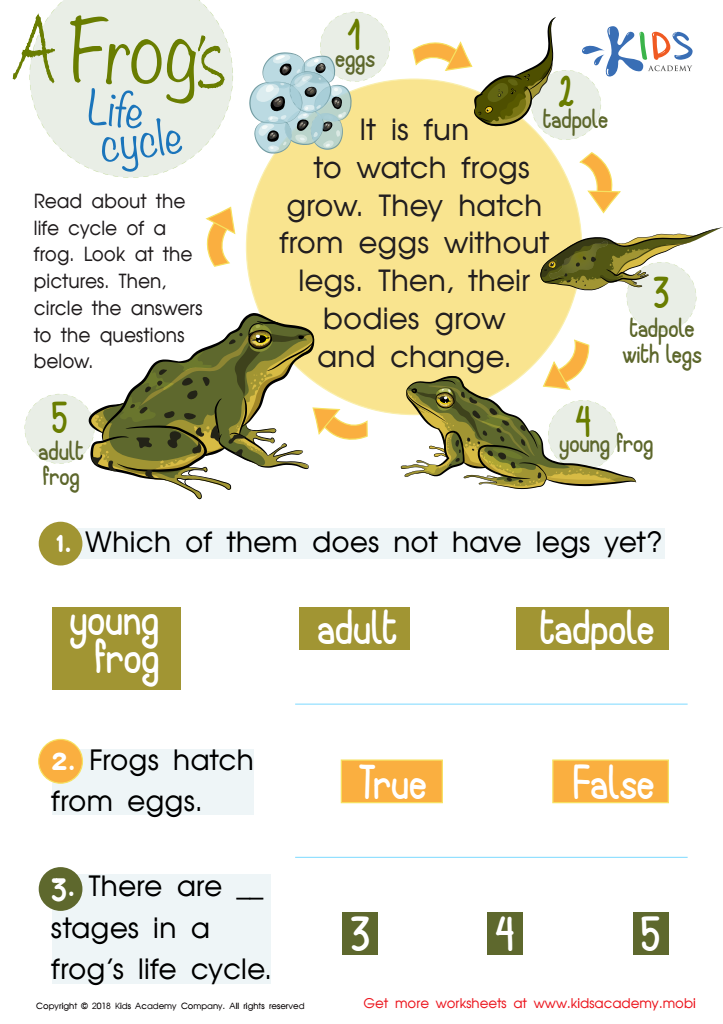
A Frog’s Life Cycle Worksheet
 Assign to My Students
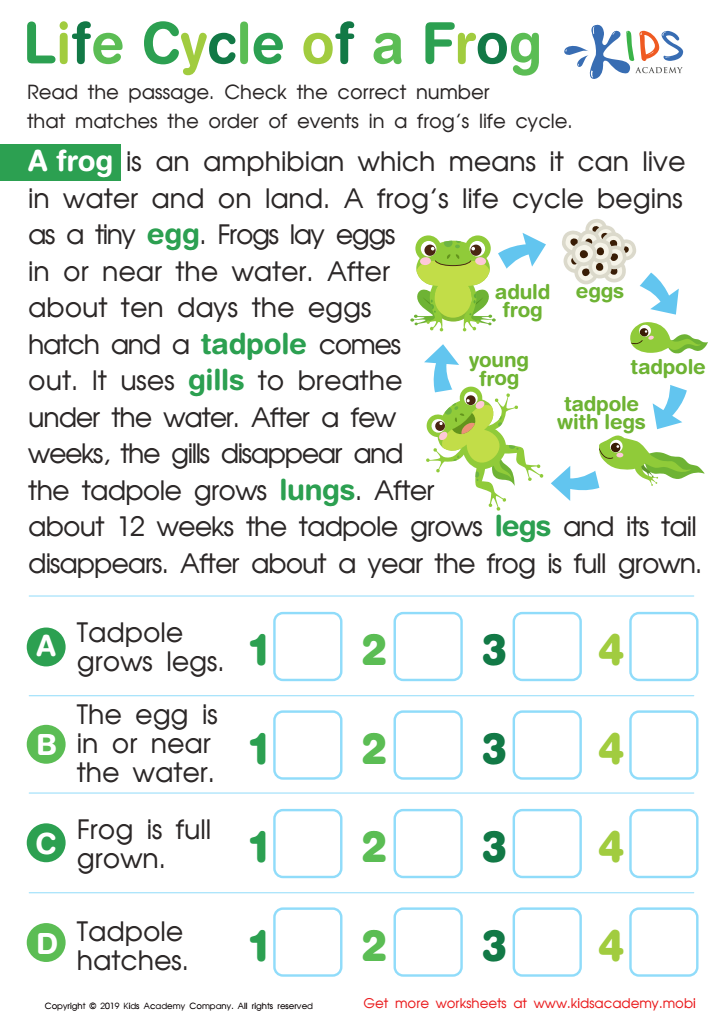
Life Cycle of a Frog Worksheet
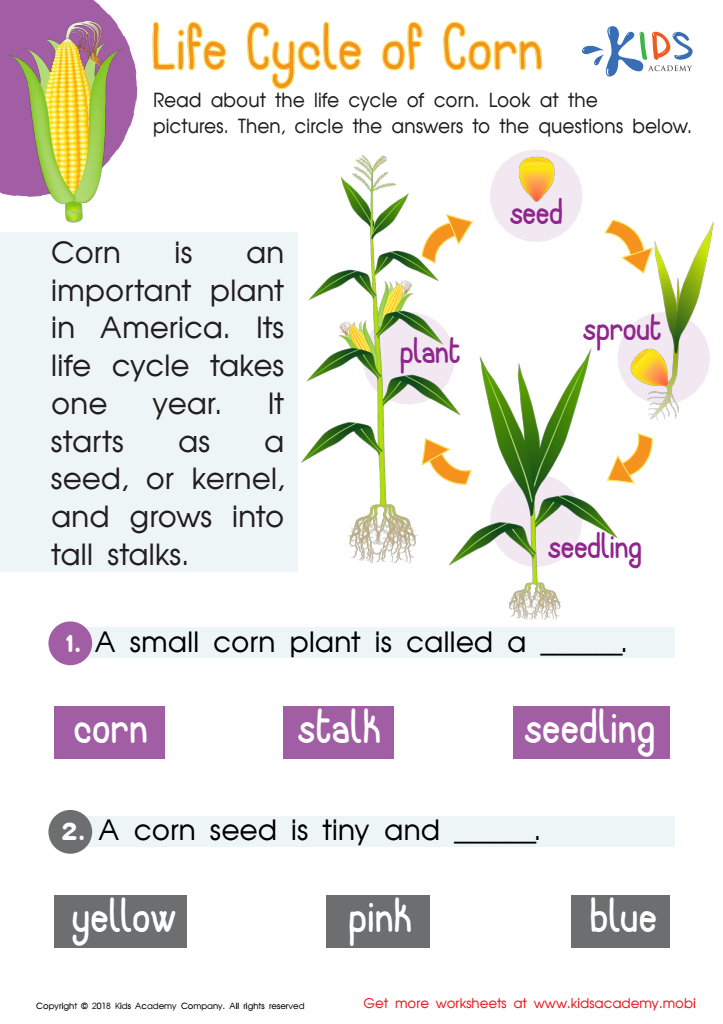
Life Cycle of Corn Worksheet
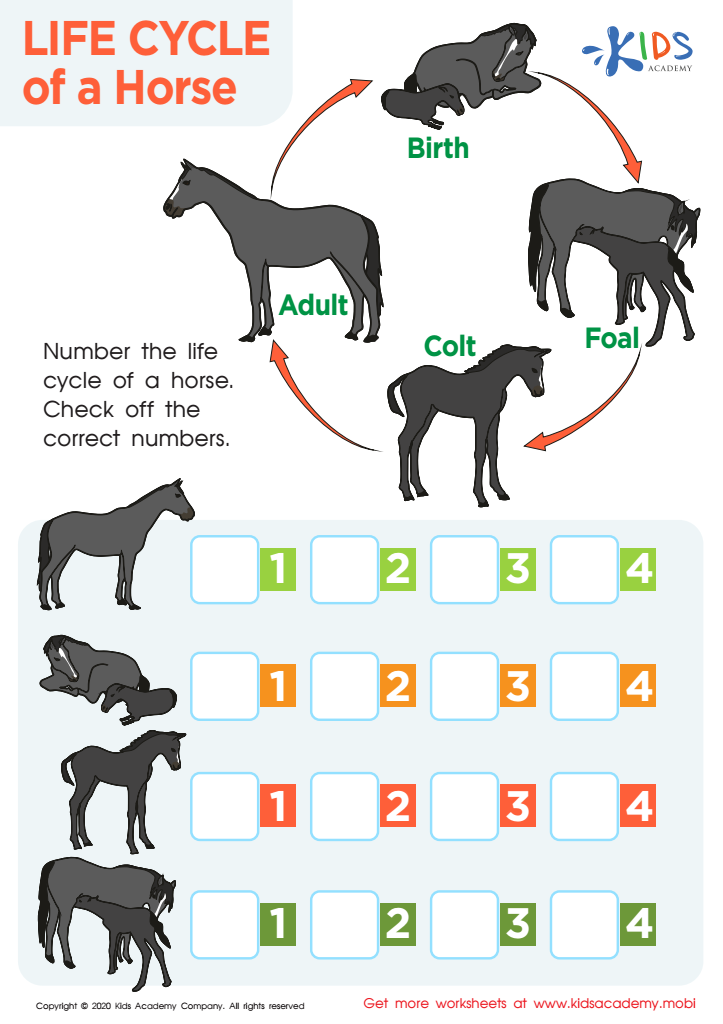
Life Cycle of a Horse Worksheet






Understanding life cycles is an essential part of science education for children ages 3-7, and both parents and teachers should prioritize this learning for several key reasons. Firstly, introducing young children to the concept of life cycles helps them grasp foundational biological principles in a simple and engaging manner. By learning how plants, animals, and even humans grow and change, children develop a deeper appreciation for the natural world around them.
Secondly, teaching life cycles can cultivate curiosity and a love for science among youngsters. Observing phenomena like a seed sprouting into a plant or a caterpillar transforming into a butterfly fosters a sense of wonder and encourages inquiry-based learning. This kind of thinking lays the groundwork for critical thinking skills that are invaluable in all areas of education and life.
Moreover, understanding life cycles helps children make real-world connections, such as comprehending seasonal changes and why certain foods are available at different times of the year. These lessons inform better-informed and environmentally conscious future citizens.
Lastly, life cycle education supports social and emotional development by offering concrete examples of change and growth, concepts that mirror their own experiences as they evolve through different stages of childhood. Learning about life cycles thus becomes a comprehensive educational tool, benefiting a child's intellectual and personal growth.