Hand-eye Coordination Easy Alphabet Worksheets for Ages 3-8
3 filtered results
Difficulty Level
Grade
Age
-
From - To
Subject
Activity
Standards
Enhance your child's hand-eye coordination with our "Hand-eye Coordination Easy Alphabet Worksheets for Ages 3-8." Perfectly designed for young learners, these fun and engaging activities help kids master the alphabet while improving their fine motor skills. Each worksheet features a variety of tracing, coloring, and matching exercises tailored to keep preschoolers and early elementary students both entertained and challenged. With vibrant illustrations and clear instructions, these worksheets make learning an enjoyable experience. Suitable for both classroom and at-home practice, support your child's development with our comprehensive and captivating alphabet worksheets. Start today and watch their skills grow!
Favorites
With answer key
Interactive
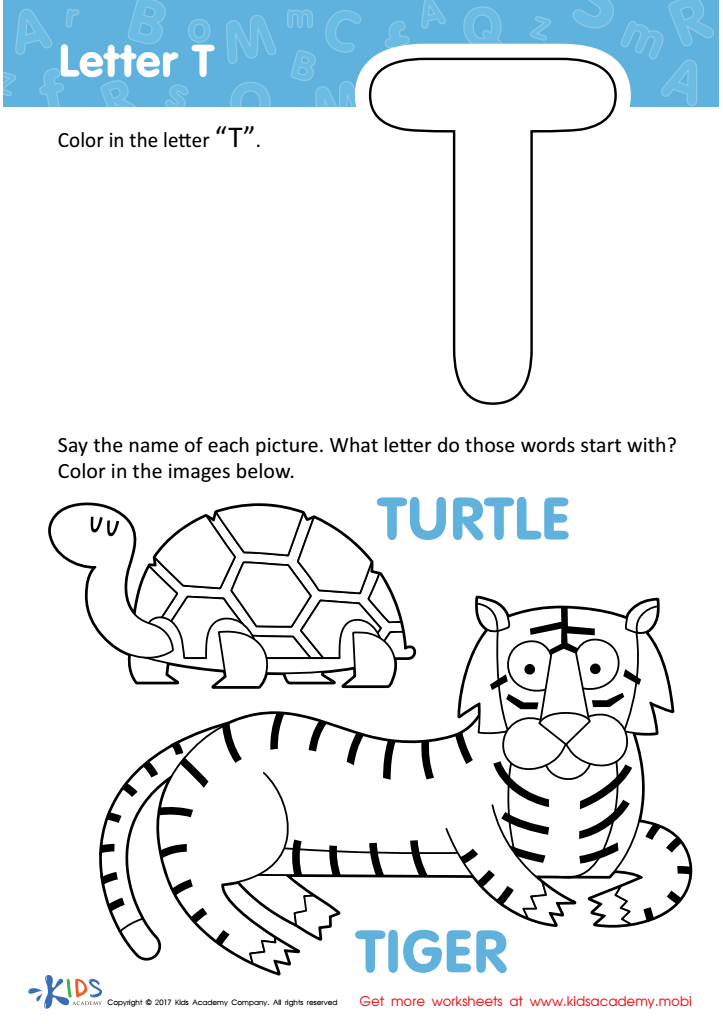
Letter T Coloring Sheet
Introduce your child to the letter "T" and its animals – turtles and tigers! With this coloring page, you can stimulate your child's imagination and creativity, while helping them recognize the letter "T". Have fun with your child and get coloring!
Download (PDF)
 Assign to My Students
Assign to My Students
Letter T Coloring Sheet
Worksheet
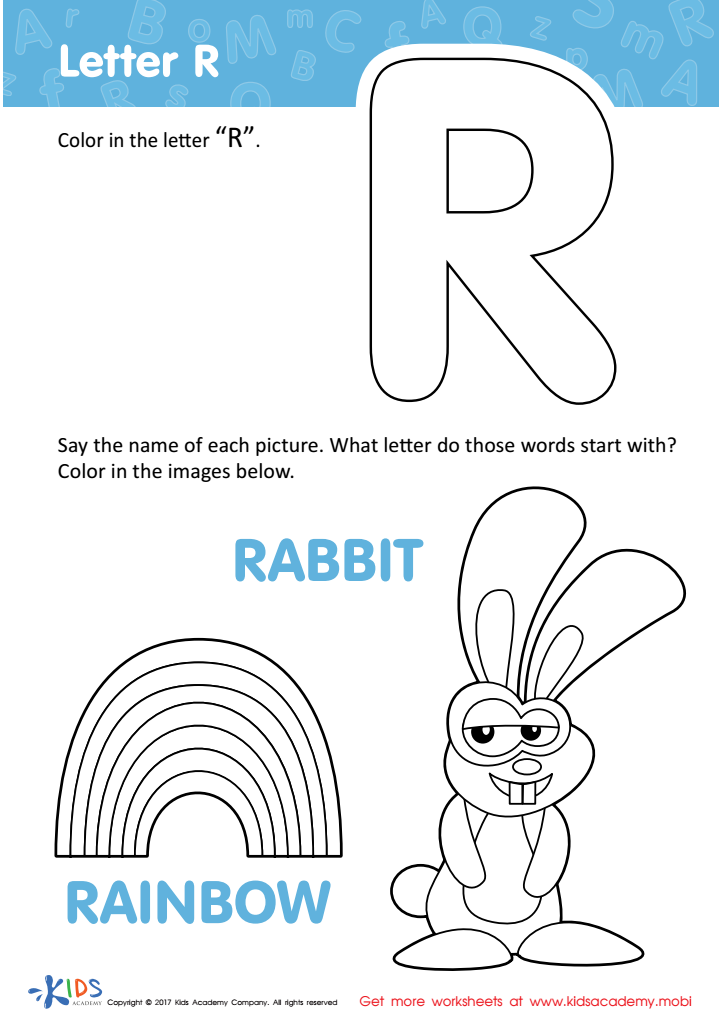
Letter R Coloring Sheet
Let your child explore the rainbow with this fun letter "R" coloring page! They can learn to recognize the letter and make connections to words, all while having fun! Make alphabet learning enjoyable with joyful coloring pages.
Download (PDF)
Assign to My Students
Assign to My Students
Letter R Coloring Sheet
Worksheet
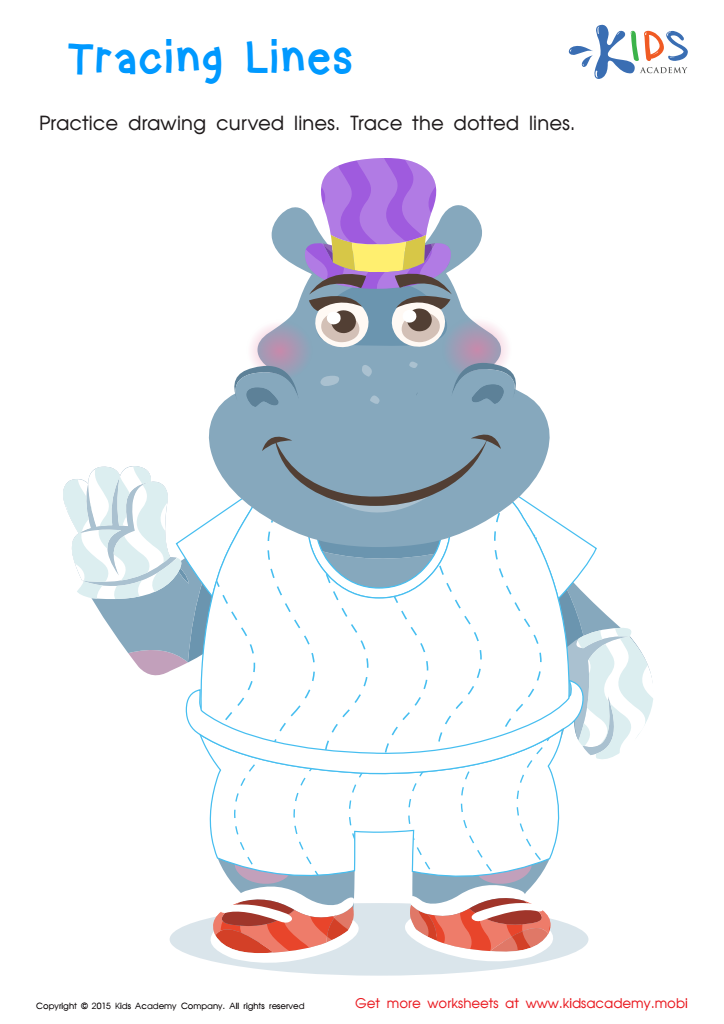
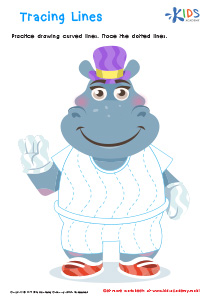
Tracing Lines Worksheet
Help your child nurture their writing and drawing skills with this cute tracing lines PDF worksheet. It improves pencil grip and hand-to-eye coordination, a key step in learning to write. Have fun and watch your child's confidence grow!
Tracing Lines Worksheet
Worksheet
Join Kids Academy for Free
Who is primarily going to use this learning content?








Hand-eye coordination is a critical skill that forms the foundation for a variety of daily tasks and academic learning for children aged 3-8. Focusing on it through activities like the Hand-eye Coordination Easy Alphabet offers multiple benefits. Firstly, it enhances cognitive development. As children engage in tracing, drawing, or sorting alphabet letters, they improve their visual processing and motor control. This dual engagement stimulates brain areas responsible for learning and problem-solving.
Secondly, it aids in developing fine motor skills. Actions like picking up letters, tracing their shapes, or matching them to pictures help children refine the small muscle movements in their hands and fingers, which are crucial for writing and other day-to-day activities.
Moreover, it strengthens literacy skills. Familiarity with the alphabet is foundational for reading and writing. As children repeatedly see and manipulate letters, they begin to recognize their shapes, sounds, and eventually, their uses in words and sentences.
Lastly, it builds confidence and independence. Successfully completing tasks that require hand-eye coordination boosts a child’s self-esteem and encourages them to tackle more complex activities.
By incorporating Hand-eye Coordination Easy Alphabet activities into their routine, parents and teachers can provide holistic development, setting up children for future academic success and everyday competence.