Comparing quantities Easy Worksheets for Ages 3-8
4 filtered results
-
From - To
Explore our "Comparing Quantities Easy Worksheets for Ages 3-8," designed to make learning fun and engaging for young learners! These worksheets help children grasp essential math concepts such as more, less, and equal, fostering essential skills through vibrant visuals and interactive exercises. Perfect for parents and educators, our user-friendly resources encourage hands-on practice, ensuring children build a strong foundation in early mathematical reasoning. Whether at home or in the classroom, these worksheets provide a valuable tool for developing critical thinking skills while enhancing children's confidence in their math abilities. Start your child’s numerical journey today with our exciting printable worksheets!
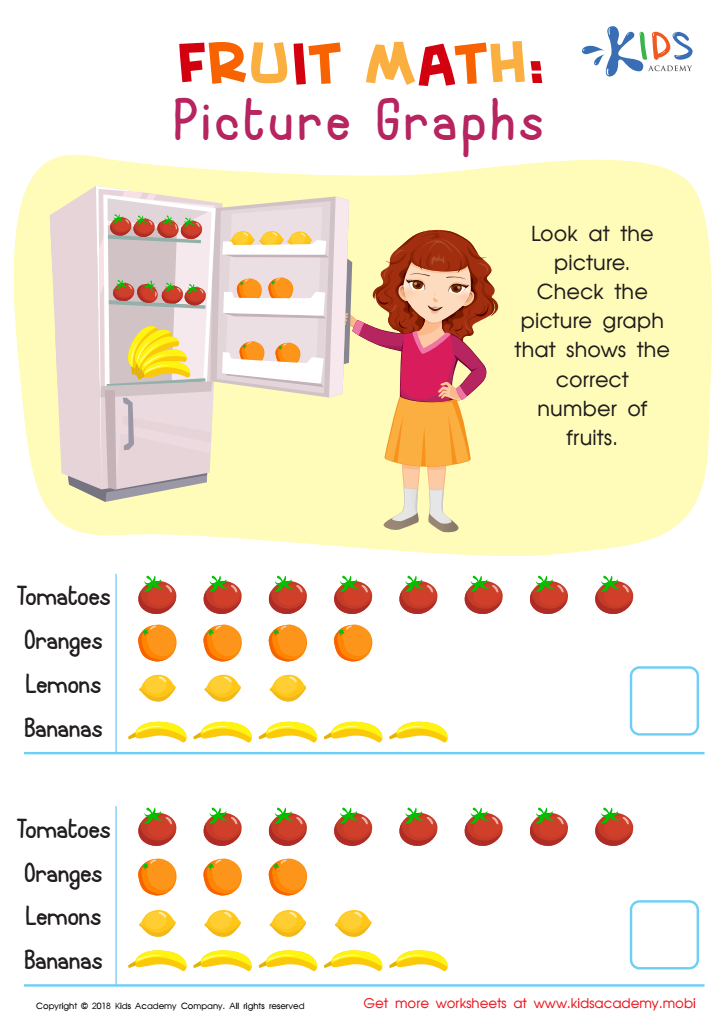
Fruit Math: Picture Graphs Worksheet
 Assign to My Students
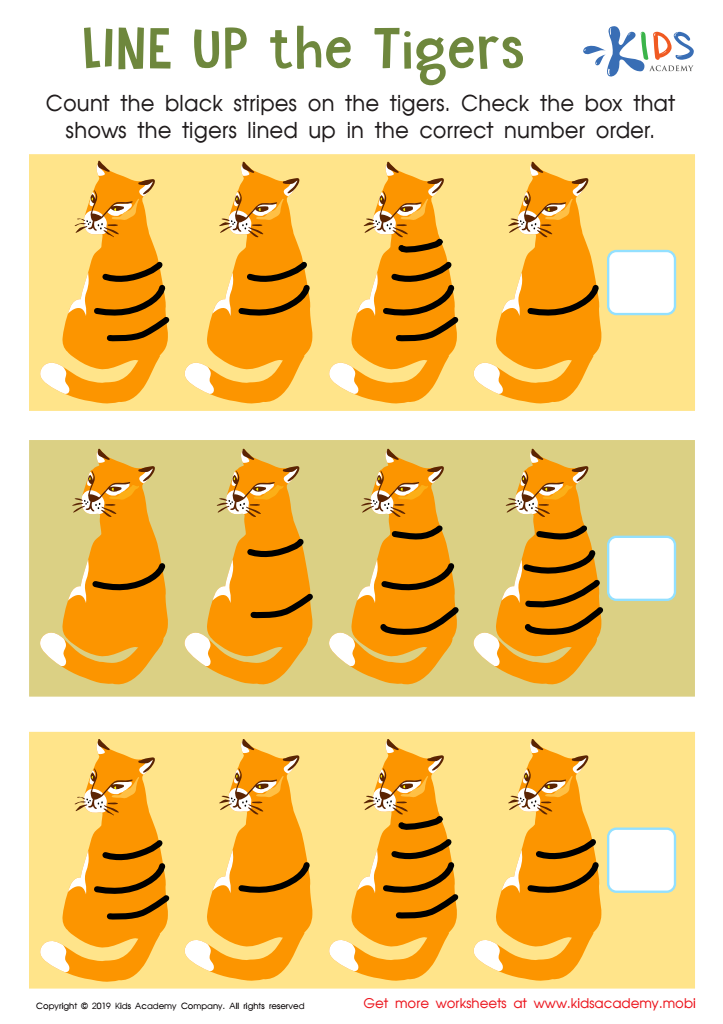
Line up the Tigers Worksheet
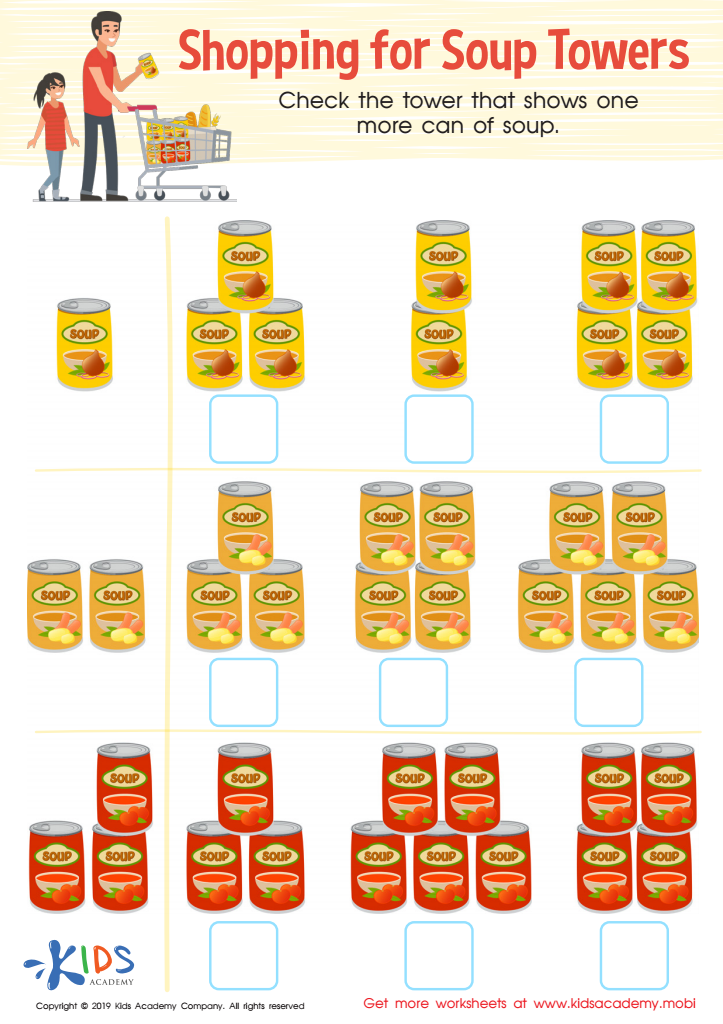
Soup Towers Worksheet
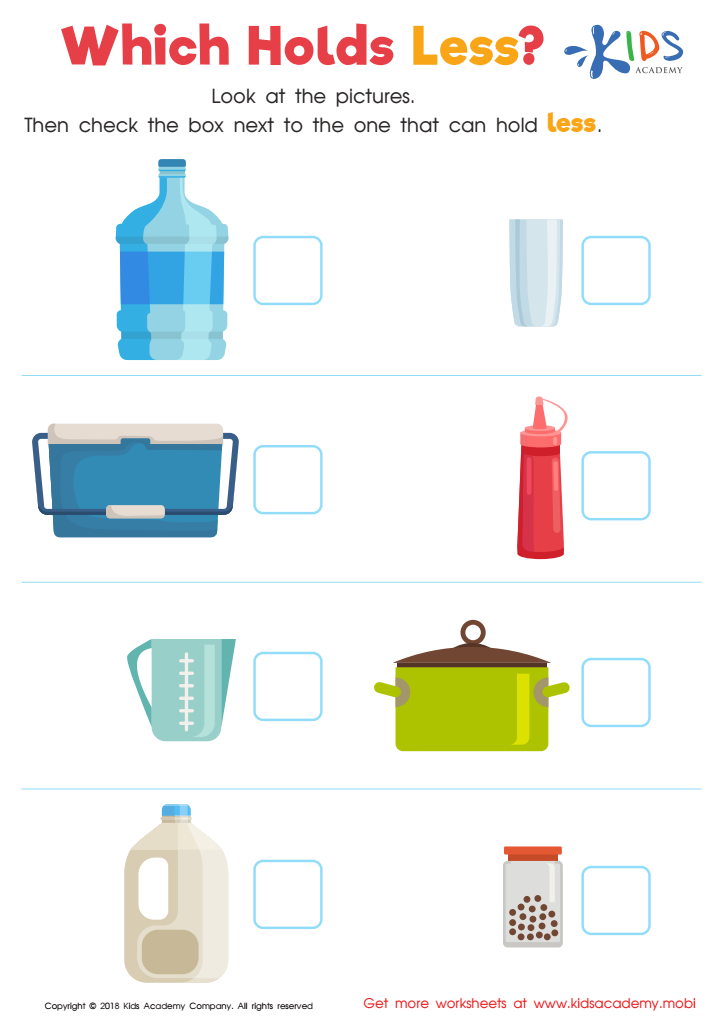
Which Holds Less? Worksheet








Understanding comparing quantities is crucial for young children, as it lays the foundation for essential mathematical concepts they will encounter later. For children aged 3-8, this skill helps develop critical thinking and problem-solving abilities. Learning to compare quantities fosters intuitive notions of more, less, and equal, which are fundamental to math and everyday life.
Parents and teachers should prioritize this learning because it enhances cognitive development. When children grasp comparing quantities—whether through counting objects, measuring ingredients, or recognizing differences in size—they enhance their observational skills and logical reasoning. This understanding also builds confidence in their mathematical abilities, helping to ease future learning challenges.
Moreover, engaging children in these activities boosts their social interactions. Group play scenarios where children compare objects encourage collaboration and communication, fostering their emotional skills. It also opens opportunities for rich discussions, questioning, and exploration.
By caring about and facilitating learning around comparing quantities, parents and teachers not only support children's academic growth but also nurture well-rounded individuals adept in both math and interpersonal skills. These foundational experiences set children on a path to success, both in school and in everyday situations.








