Enhance your child's observation skills with our easy worksheets designed for ages 3-8. These engaging activities promote critical thinking and strengthen focus while enabling young learners to notice details in their environment. Each worksheet is thoughtfully crafted to encourage exploration, stimulate curiosity, and support the development of key observational skills. With fun themes and colorful illustrations, children will enjoy completing tasks that foster creativity and improve cognitive abilities. Perfect for preschool or early elementary settings, our worksheets make learning fun and effective. Download and empower your child to sharpen their observation skills today!

Check out this FREE "Enhancing observation skills" Trial Lesson for age 3-8!

Signs and Labels in the Community

Favorites
With answer key
Interactive
  • 3-8
  • Enhancing observation skills
  • Easy
The Scientific Process Worksheet

The Scientific Process Worksheet

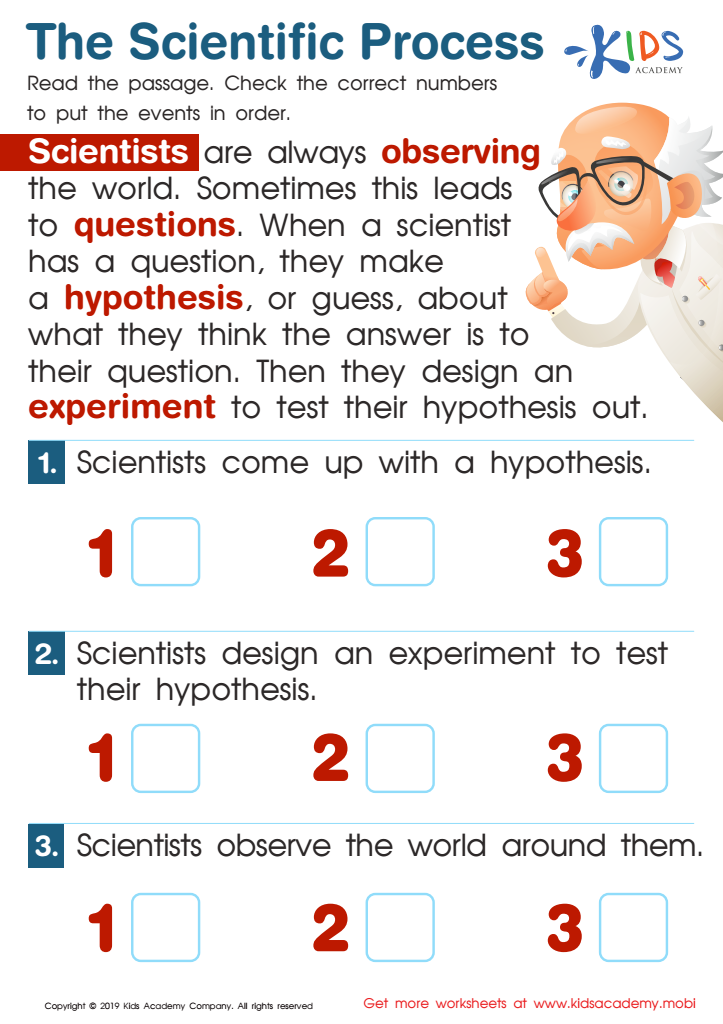
Help your kids read the passage, then ask them to explain what they've learnt. Ask the questions and help put the events in order. Through this worksheet, your kids will learn more about science and practice reading skills. It's a fun way to explore science! (80 words)
The Scientific Process Worksheet
Worksheet
Pets Tally Chart Worksheet

Pets Tally Chart Worksheet

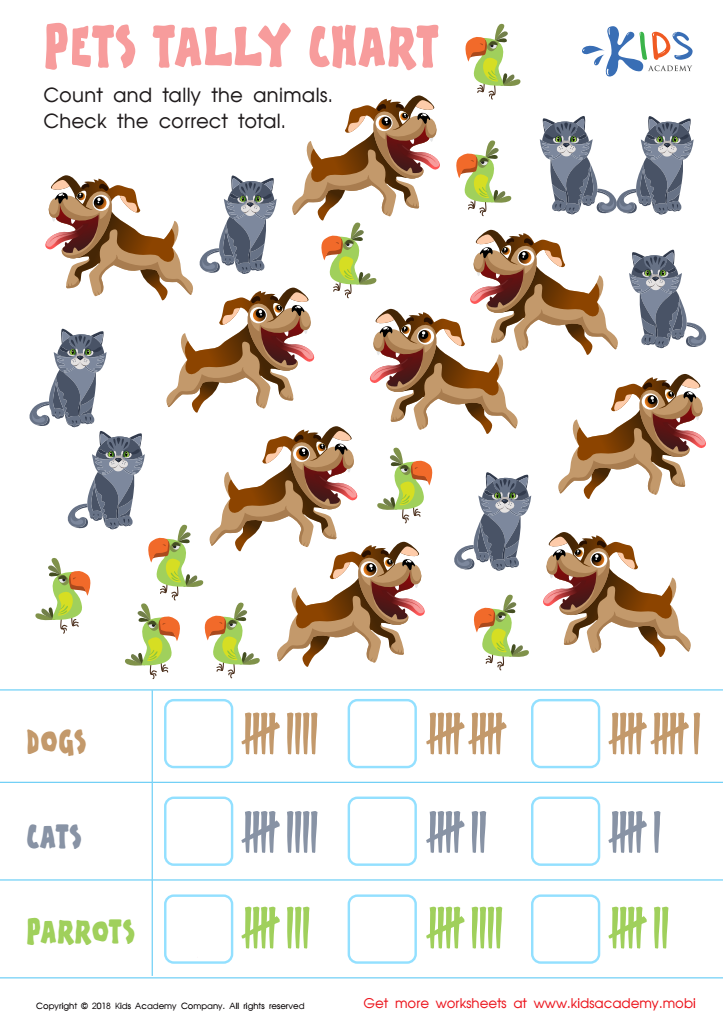
Let your little mathematician count and tally the animals with this fun PDF worksheet. They'll assign value to each pet type and select the correct answer. It's a great way to practice number reasoning and learn how tallying helps keep math organized and efficient when solving equations.
Pets Tally Chart Worksheet
Worksheet
Life Cycle of a Frog Worksheet

Life Cycle of a Frog Worksheet

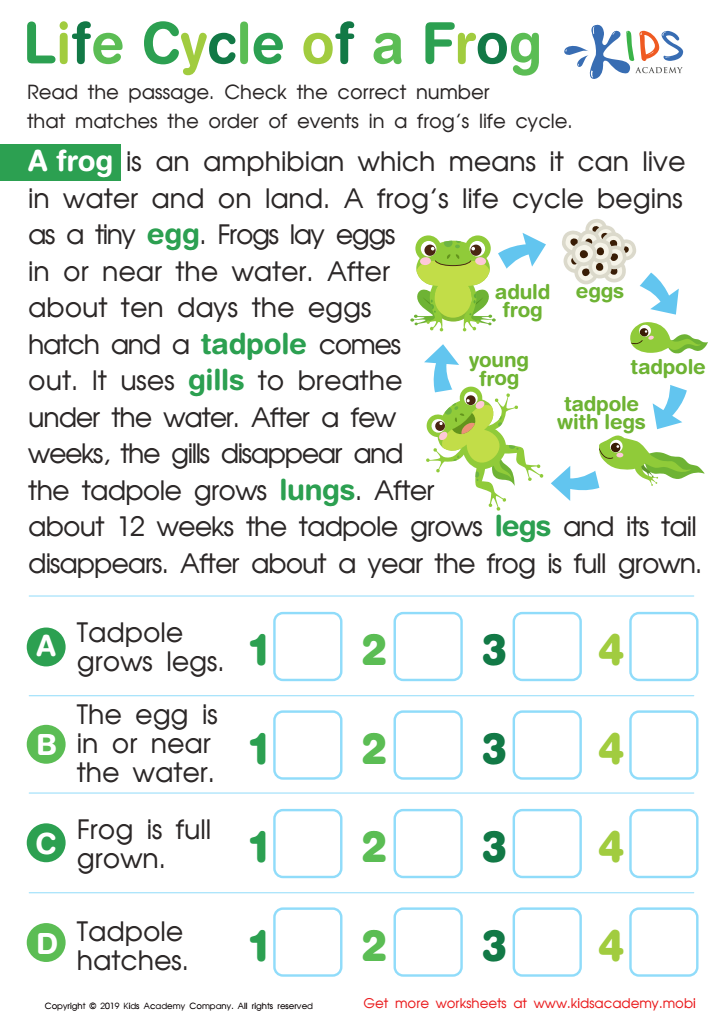
Teach your kids to read and open their eyes to new knowledge. Frogs have fascinating life cycles. Show them the worksheet with pictures and guide them as they read the passage about it. Encourage them to check the number that matches the frog's life cycle order.
Life Cycle of a Frog Worksheet
Worksheet
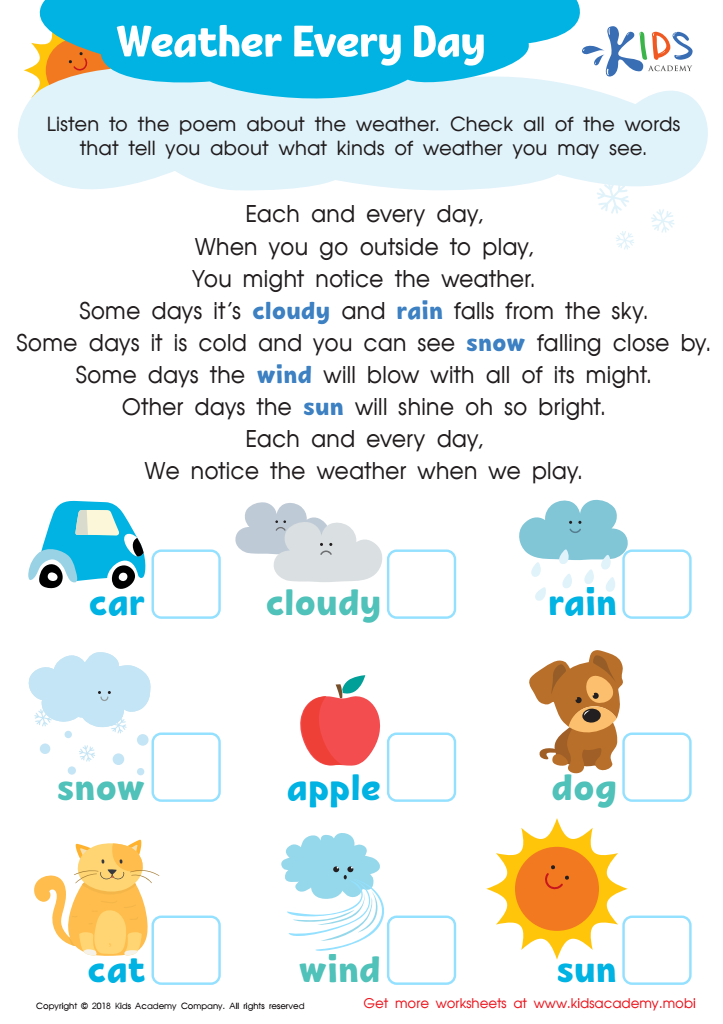
Weather Every Day Worksheet

Weather Every Day Worksheet

Ask your child to look out the window and tell you what the weather's like. Is it raining, stormy, cloudy, snowing or sunny? Help them observe all the different types of weather and then check the words at the bottom of the worksheet. What's their favorite type of weather? Read them this poem about the weather and see what they think!
Weather Every Day Worksheet
Worksheet
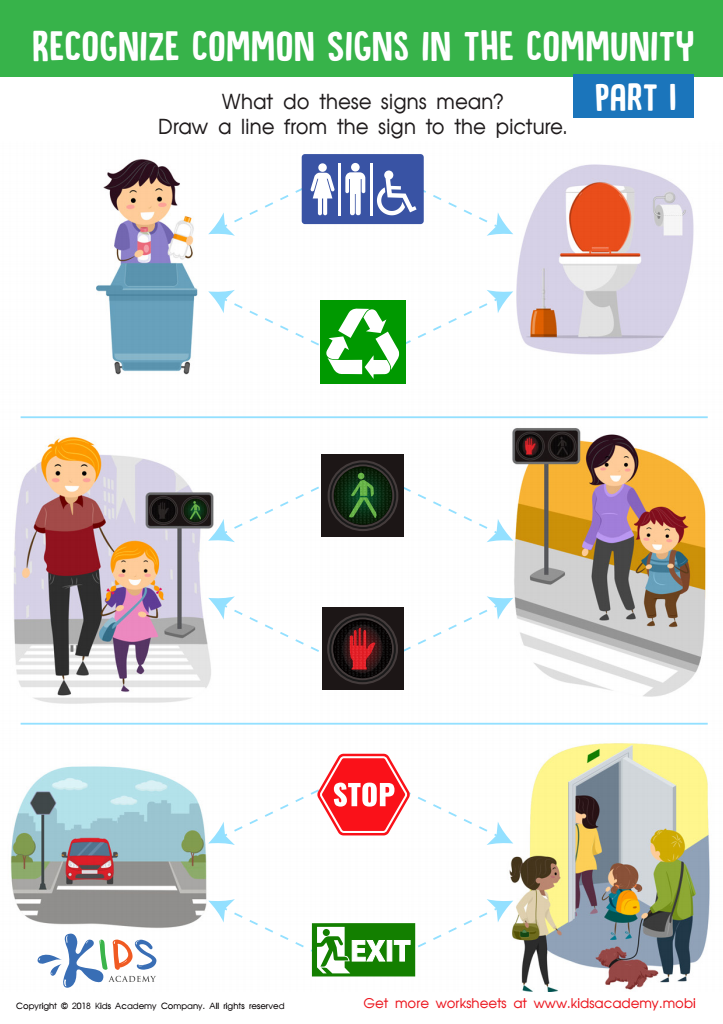
Recognize Common Signs: Part 1 Worksheet

Recognize Common Signs: Part 1 Worksheet

Beginning readers can strengthen picture identification and decoding skills with a free downloadable worksheet. They use traceable lines to match activities in community signs to the correct pictures and build a bridge to reading. This helps familiarize them with their surroundings and starts them on their reading journey.
Recognize Common Signs: Part 1 Worksheet
Worksheet
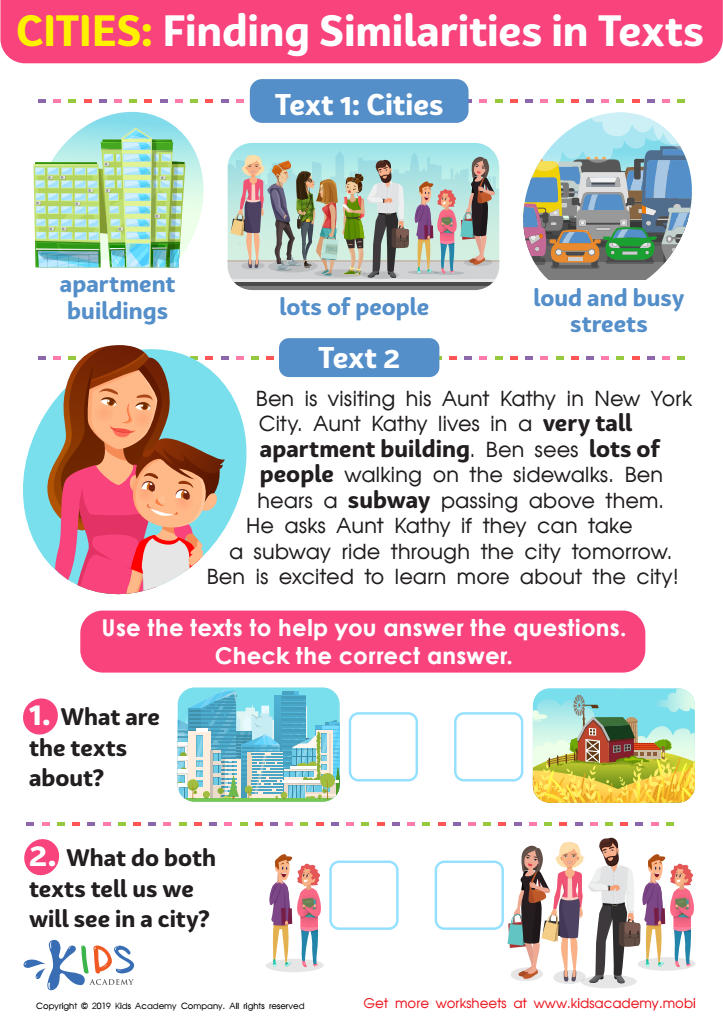
Cities: Finding Similarities Worksheet


Cities: Finding Similarities Worksheet

This worksheet offers kids a chance to explore how information can be presented differently but still contain similar facts. They'll compare two texts and look for similarities, honing their reading comprehension and critical thinking skills.
Cities: Finding Similarities Worksheet

Worksheet


Enhancing observation skills in children aged 3-8 is crucial for their development and learning. These formative years lay the foundation for cognitive, social, and emotional growth. Improved observation skills enable children to engage effectively with their surroundings, fostering critical thinking and curiosity. By observing, they learn to notice details, make connections, and question the world around them, promoting a love for exploration and discovery.

For parents and teachers, nurturing these skills not only supports academic success but also enhances children’s ability to communicate, cooperate with peers, and express their thoughts and feelings. Children who can observe well are more likely to notice social cues, leading to better interpersonal relationships and conflict resolution abilities.

In educational settings, teachers can utilize enhanced observation skills to tailor their lessons and support individual learning styles. Parents can also encourage these skills at home through simple activities like nature walks, storytelling, and play-based learning. Ultimately, fostering observation skills in young children is vital to their overall development, encouraging lifelong learning, and preparing them for future academic and social challenges. Engaging in this process benefits not only the child but enriches the family and educational environment.