Number comprehension Easy Addition and Subtraction Word Problems Worksheets for Ages 3-8
4 filtered results
-
From - To
Explore our engaging "Number Comprehension Easy Addition and Subtraction Word Problems Worksheets" designed for children aged 3-8. These worksheets simplify mathematical concepts, enabling young learners to grasp addition and subtraction through fun, relatable scenarios. Each problem encourages critical thinking and lays a solid foundation for basic arithmetic skills. From counting apples to sharing toys, our word problems make math enjoyable and accessible. Perfect for homeschooling or classroom use, these worksheets cater to various learning styles, fostering independence and confidence in math. Help your child thrive in number comprehension with these thoughtfully crafted activities! Download and watch them excel in math today!
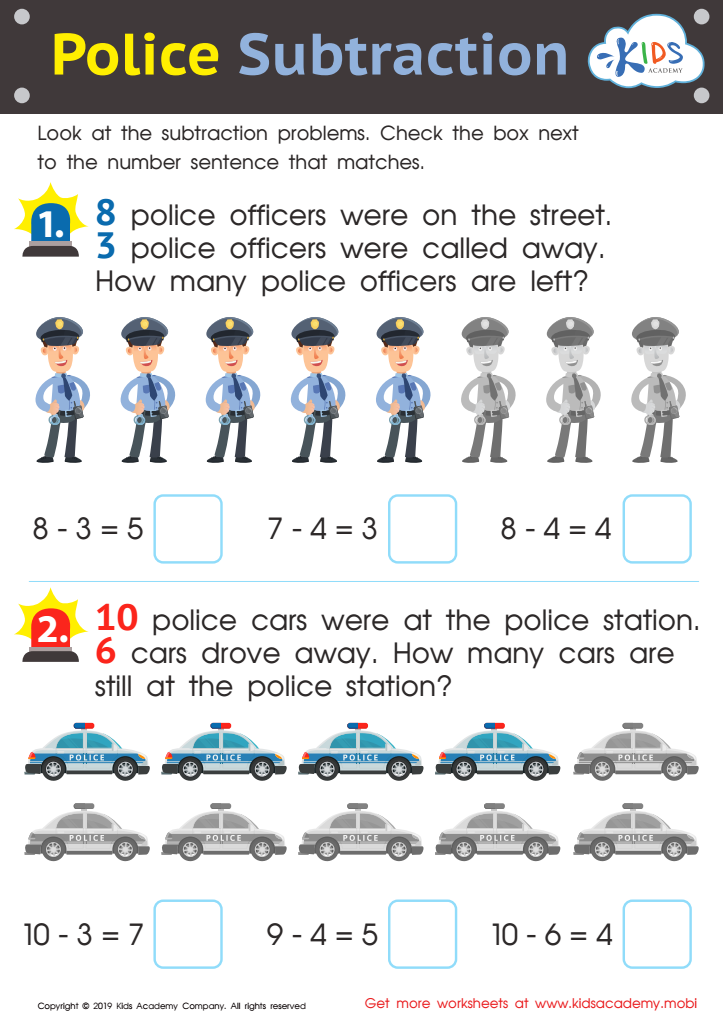
Police Subtraction Worksheet
 Assign to My Students
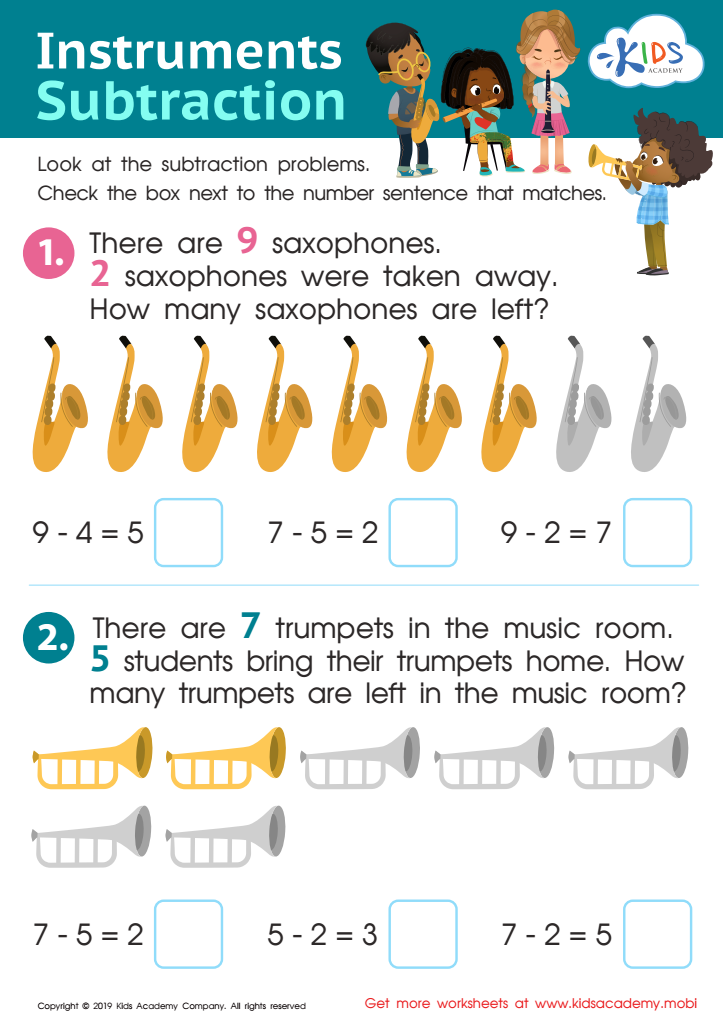
Instrument Subtraction Worksheet
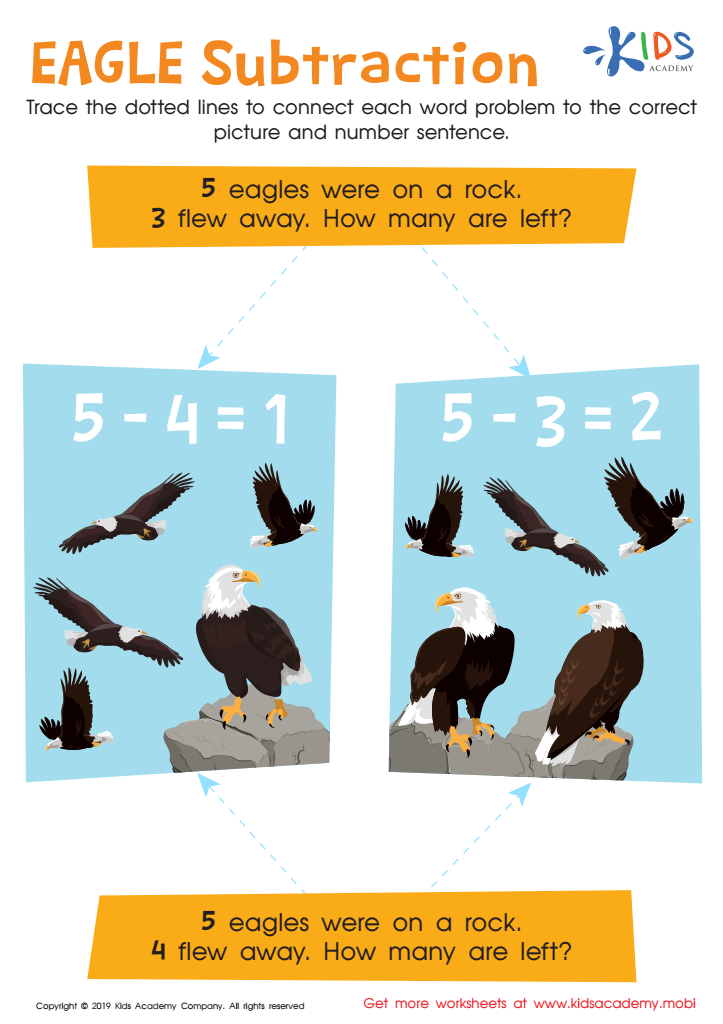
Eagle Subtraction Worksheet
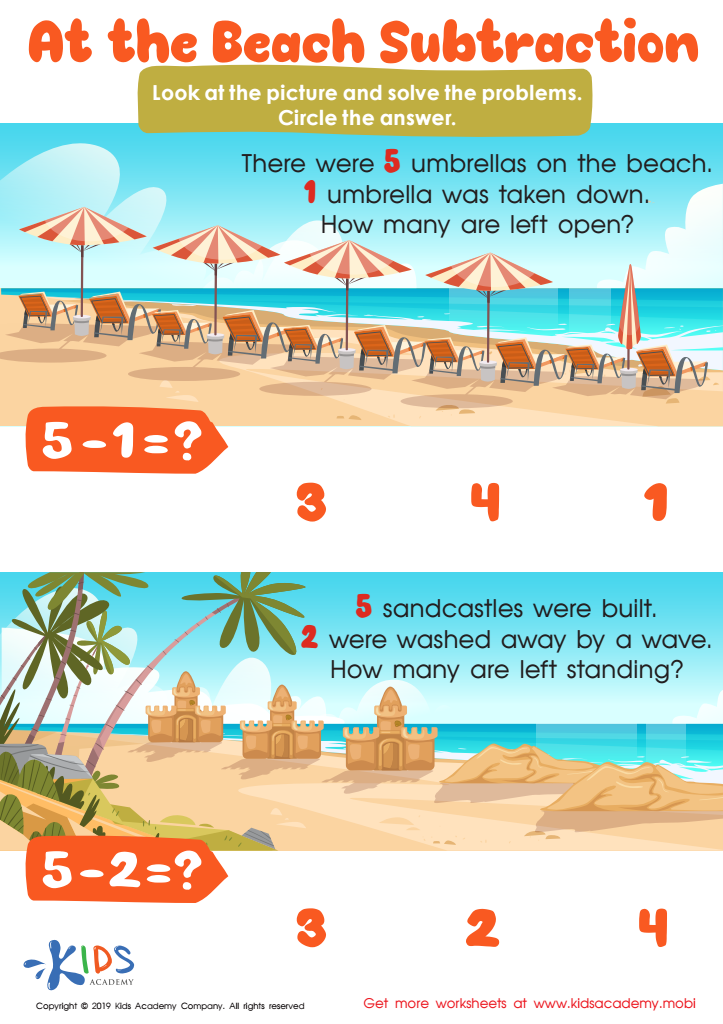
At the Beach Subtraction Worksheet








Number comprehension in early childhood, particularly concerning easy addition and subtraction word problems, is crucial for several reasons. Firstly, it lays the foundation for mathematical literacy. Children aged 3-8 are at a key developmental stage where they begin to grasp basic mathematical concepts, and word problems provide a practical context for applying their knowledge. This engagement helps reinforce critical thinking, problem-solving abilities, and spatial reasoning.
Secondly, comprehension of simple addition and subtraction enhances language skills. As children learn to interpret word problems, they practice reading and understanding language—building vocabulary, sentence structure, and the ability to follow multi-step instructions. These skills align directly with both math and literacy development, making them essential in a well-rounded educational framework.
Moreover, solving these problems promotes perseverance and resilience. Children learn that while a problem may be challenging, persistence can lead to solutions, instilling a growth mindset.
Lastly, fostering an early interest and competence in mathematics sets the stage for future academic success. When parents and teachers emphasize these skills, they create a supportive learning environment that not only motivates children but also reduces math anxiety in later years, ultimately contributing to better educational outcomes.