Problem-Solving Skills Easy Addition & Subtraction Worksheets for Ages 3-8 - Page 2
29 filtered results
-
From - To
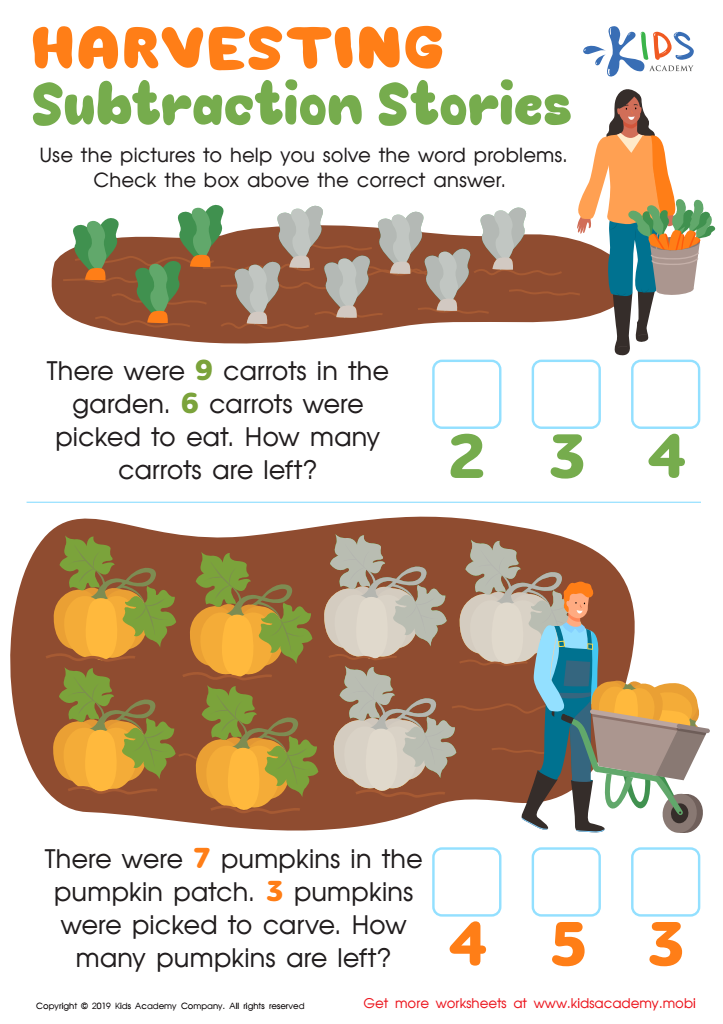
Harvesting Subtraction Stories Worksheet
 Assign to My Students
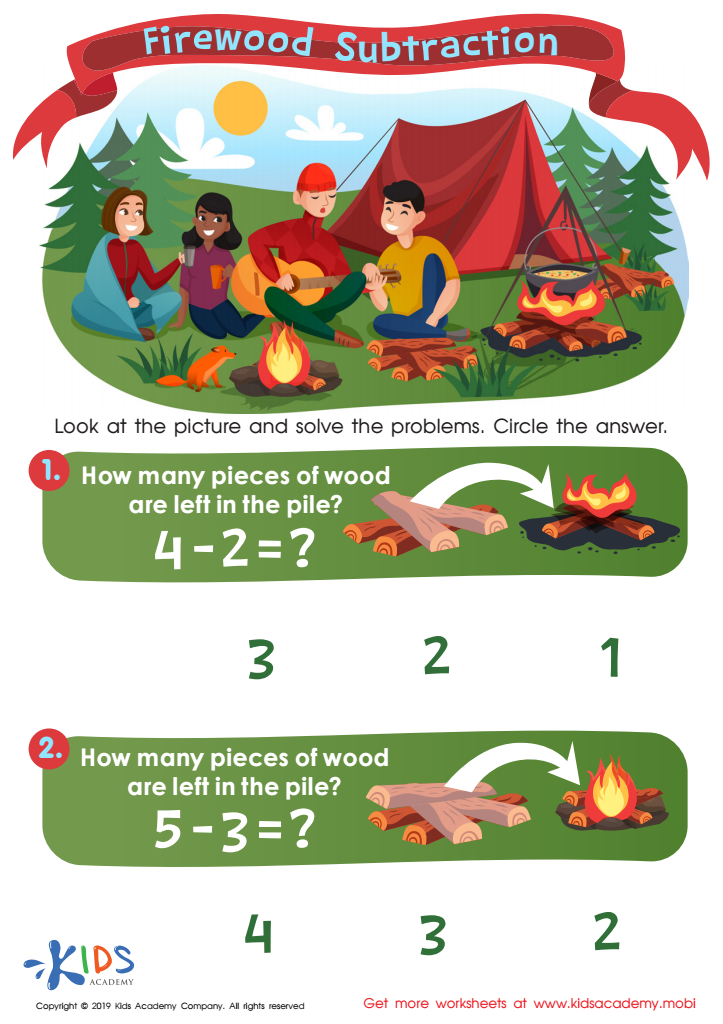
Firewood Subtraction Worksheet
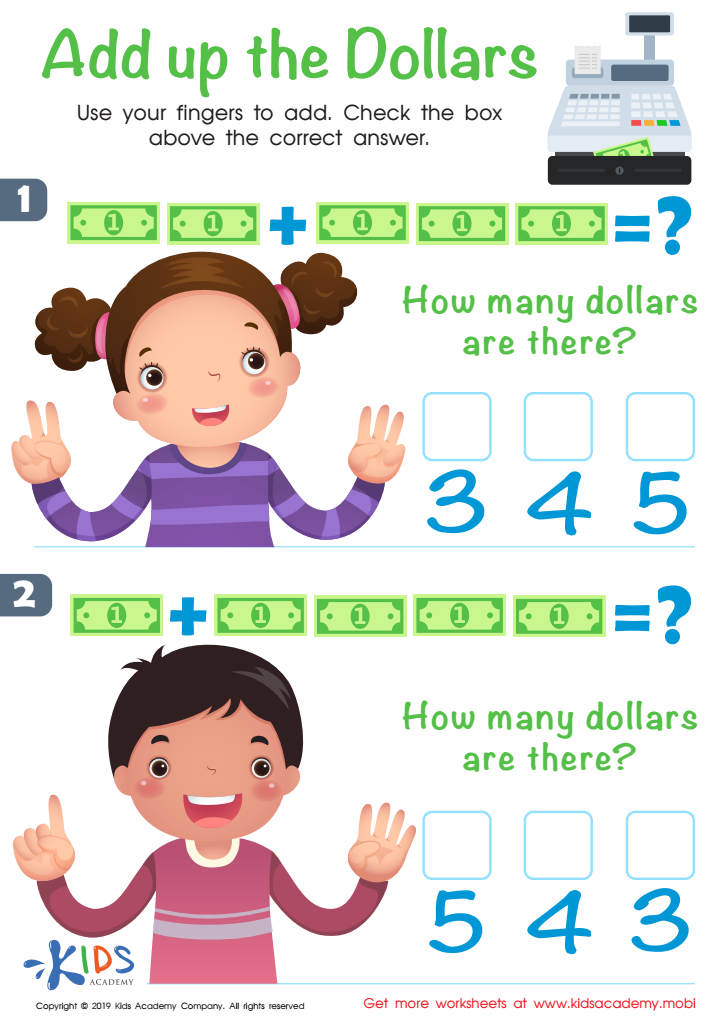
Add up the Dollars Worksheet
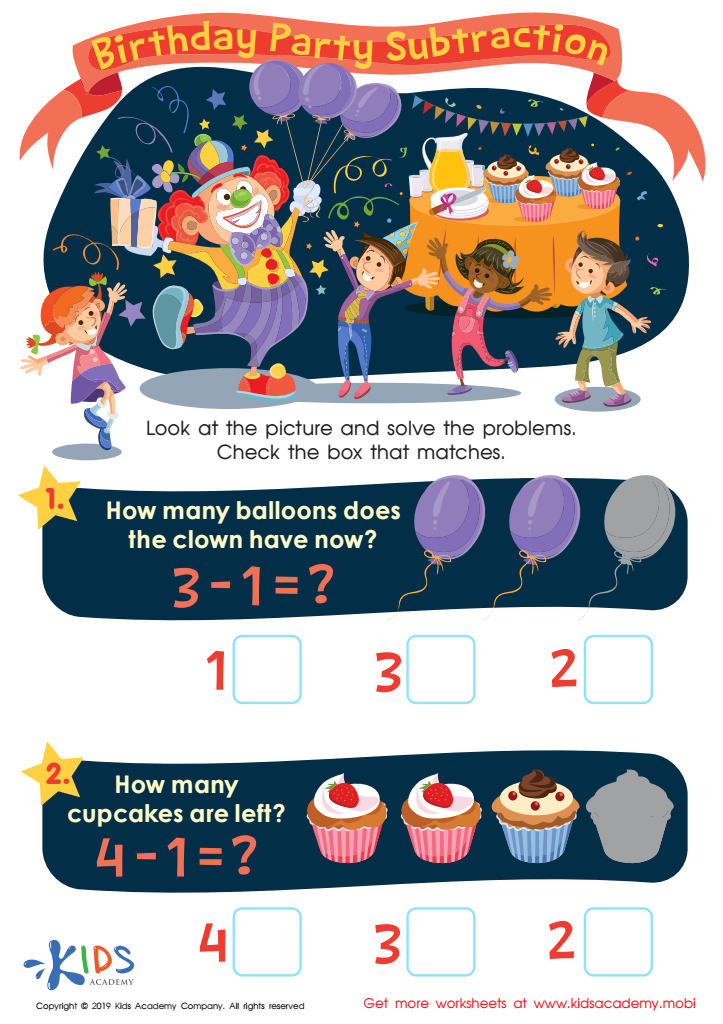
Birthday Party Subtraction Worksheet
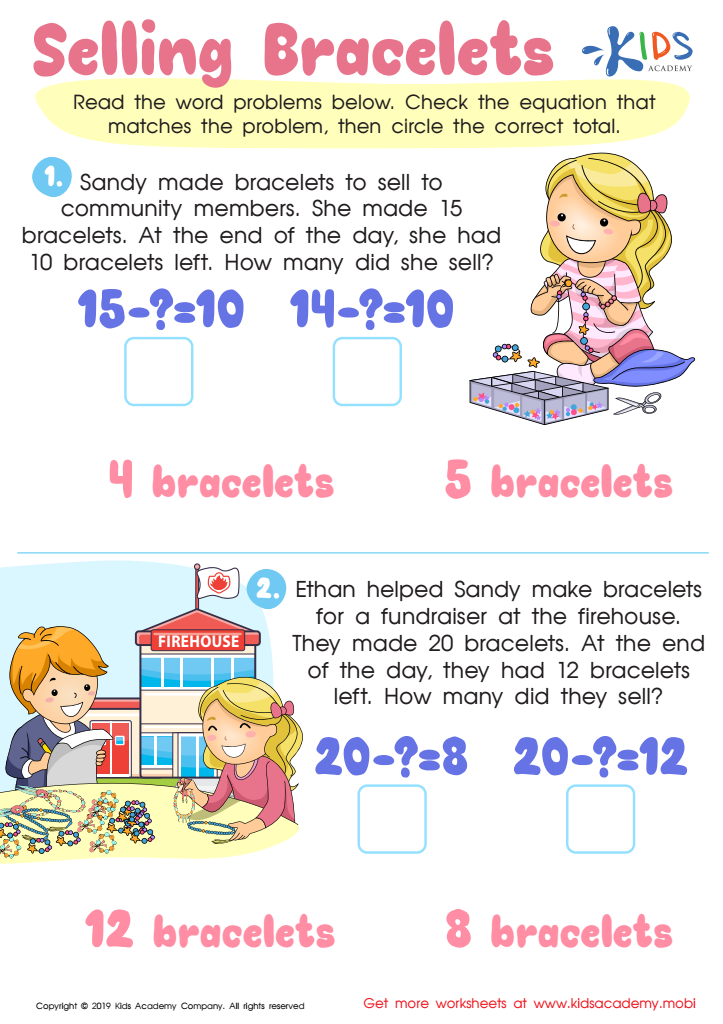
Selling the Bracelets Worksheet








Problem-solving skills, particularly in easy addition and subtraction, are essential for children aged 3-8 as they lay the foundation for critical thinking, reasoning, and mathematical understanding. Developing these skills at an early age promotes cognitive growth and enhances a child’s confidence in their ability to tackle challenges, both in math and everyday life.
Parents and teachers should care about nurturing these skills because they foster independence and resilience. Children who engage in problem-solving learn how to approach tasks systematically, analyze options, and apply strategies to find solutions. This is vital not only in mathematics but also in developing life skills such as decision-making and perseverance.
Moreover, early exposure to problem-solving in math encourages a positive attitude towards learning. When children grasp basic concepts in addition and subtraction through play-based activities, they develop a sense of accomplishment that motivates them to take on more complex problems as they progress.
Additionally, these skills are often interconnected with literacy and communication, as children articulate their thought processes and rationale. In an ever-evolving world, equipping young learners with problem-solving competencies helps prepare them for future academic success and adaptation to real-life situations. Thus, fostering early problem-solving skills in math is crucial for holistic child development.








