Counting skills Easy Geometry Worksheets for Ages 3-8
3 filtered results
-
From - To
Welcome to our "Counting Skills Easy Geometry Worksheets" designed specifically for children aged 3-8! These engaging, printable worksheets introduce young learners to foundational counting and geometric concepts in a fun and interactive way. Kids will explore shapes, patterns, and basic counting through colorful visuals and hands-on activities that promote critical thinking and problem-solving. Ideal for preschool and early elementary education, our worksheets align with developmental milestones and curriculum standards. Foster a love for math and geometry in your child with our easy-to-use resources, helping to build confidence and comprehension in essential skills while ensuring a joyful learning experience!
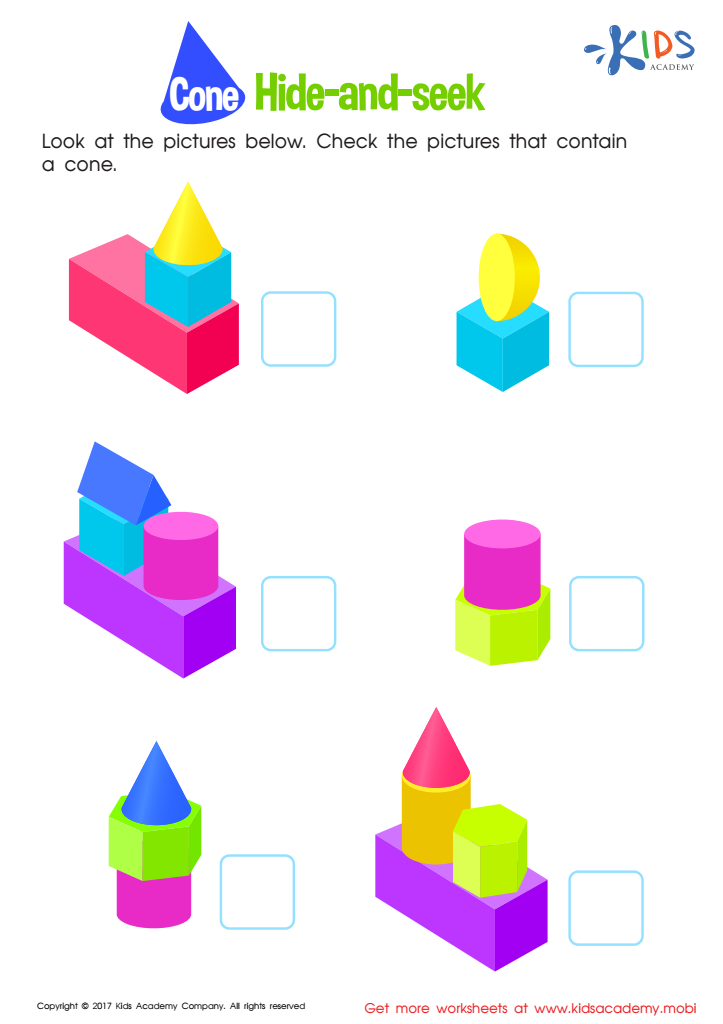
Cone Hide-and-Seek Worksheet
 Assign to My Students











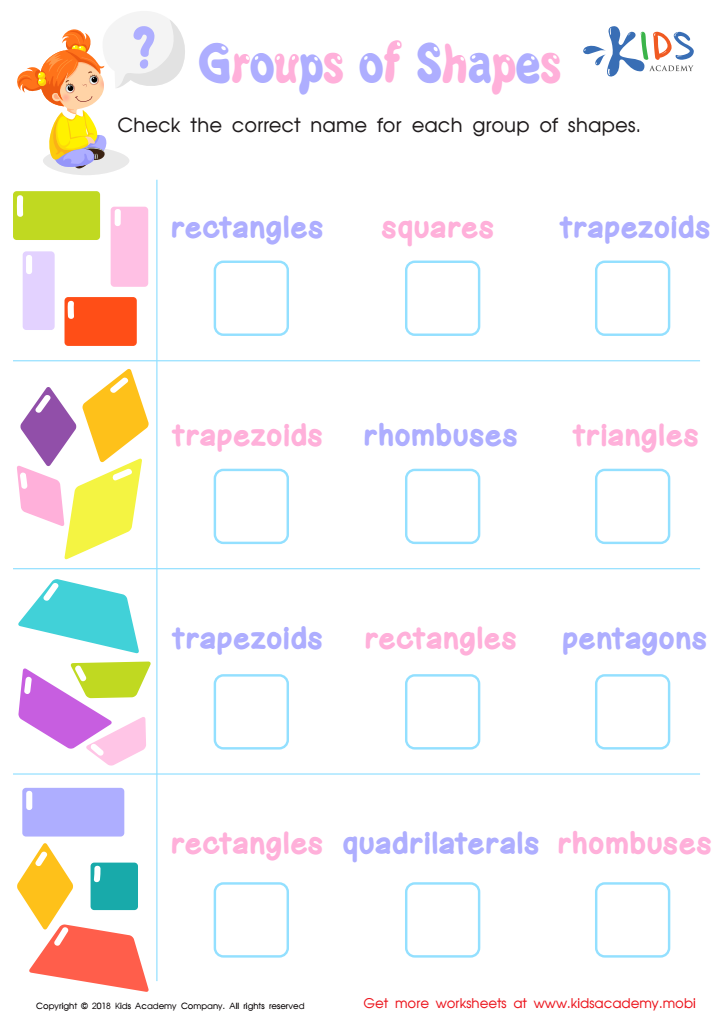
Groups of Shapes Worksheet
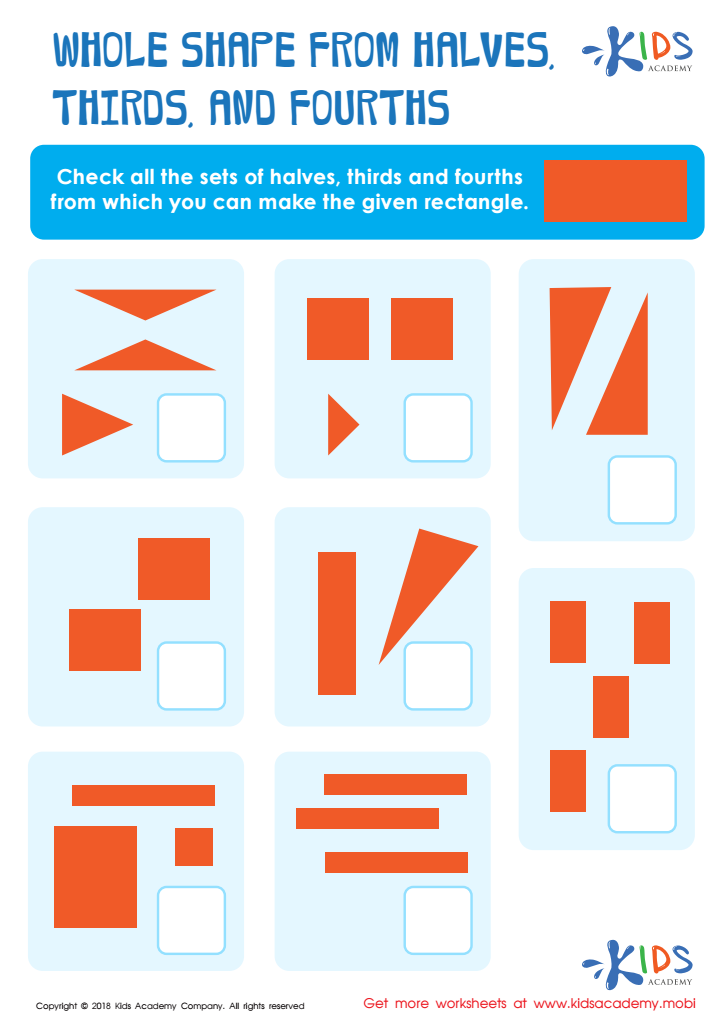
Whole Shape from Halves, Thirds and Fourths Worksheet








Counting skills and basic geometry are foundational components of early childhood education, crucial for a child’s cognitive development. For ages 3-8, mastering these skills lays the groundwork for more advanced math concepts. When children learn to count, they enhance their number sense, which is essential for everyday activities, problem-solving, and later mathematical reasoning.
Easy geometry introduces shapes and spatial reasoning, helping children recognize patterns in their environment. This not only aids in mathematics but also promotes critical thinking and creativity. For instance, identifying geometric shapes can enhance a child's ability to categorize and describe objects, bolstering their communication and observational skills.
Parents and teachers play a vital role in nurturing these skills through playful, interactive activities. Incorporating counting games, puzzles, and shape recognition in daily routines makes learning enjoyable and reinforces these concepts. Engaging young learners in these ways fosters intrinsic motivation and curiosity, paving the way for a positive attitude towards math as they grow.
Investing time in counting and geometry helps build confidence in young learners, equipping them with essential skills that are critical for academic success and real-world applications. Ultimately, these foundational experiences shape a child’s lifelong relationship with mathematics.








