Sorting skills Easy Numbers Worksheets for Ages 3-8
3 filtered results
-
From - To
Enhance your child's foundational math skills with our "Sorting Skills Easy Numbers Worksheets for Ages 3-8". Specially designed for early learners, these engaging worksheets help children develop critical sorting and categorizing abilities in a fun and interactive manner. Each activity supports young minds in identifying, comparing, and grouping numbers, laying the groundwork for advanced mathematical concepts. Perfect for both classroom and at-home learning, these printable sheets are tailored to captivate your child's interest while fostering essential cognitive skills. Start your child’s educational journey on the right foot with our expertly crafted sorting worksheets!
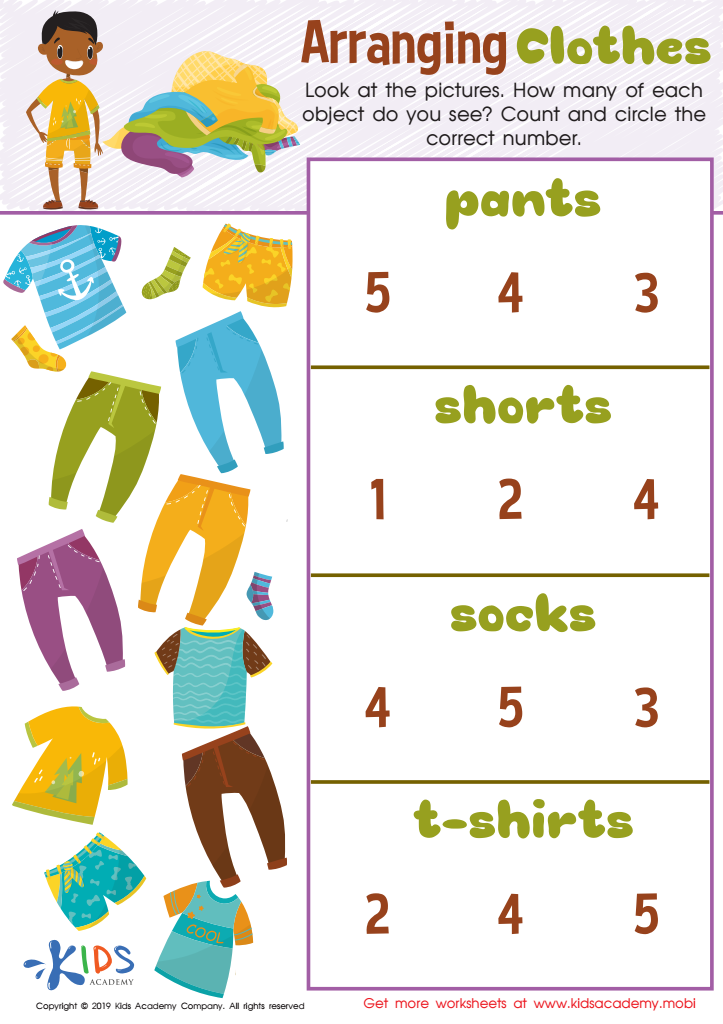
Arranging Clothes Worksheet
 Assign to My Students
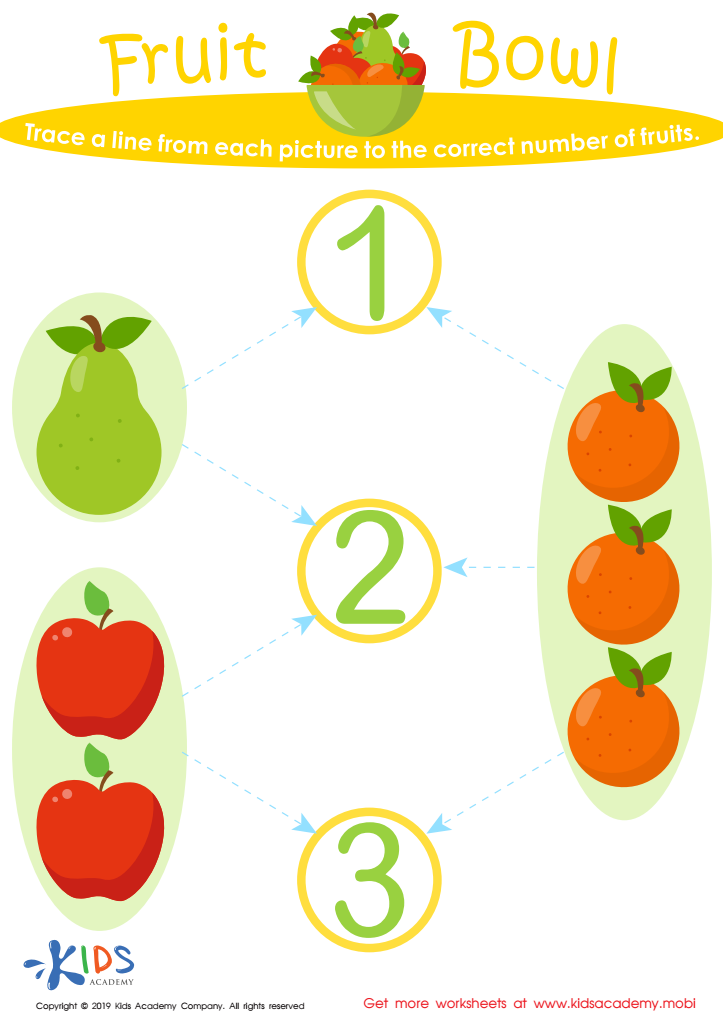
Fruit Bowl Worksheet
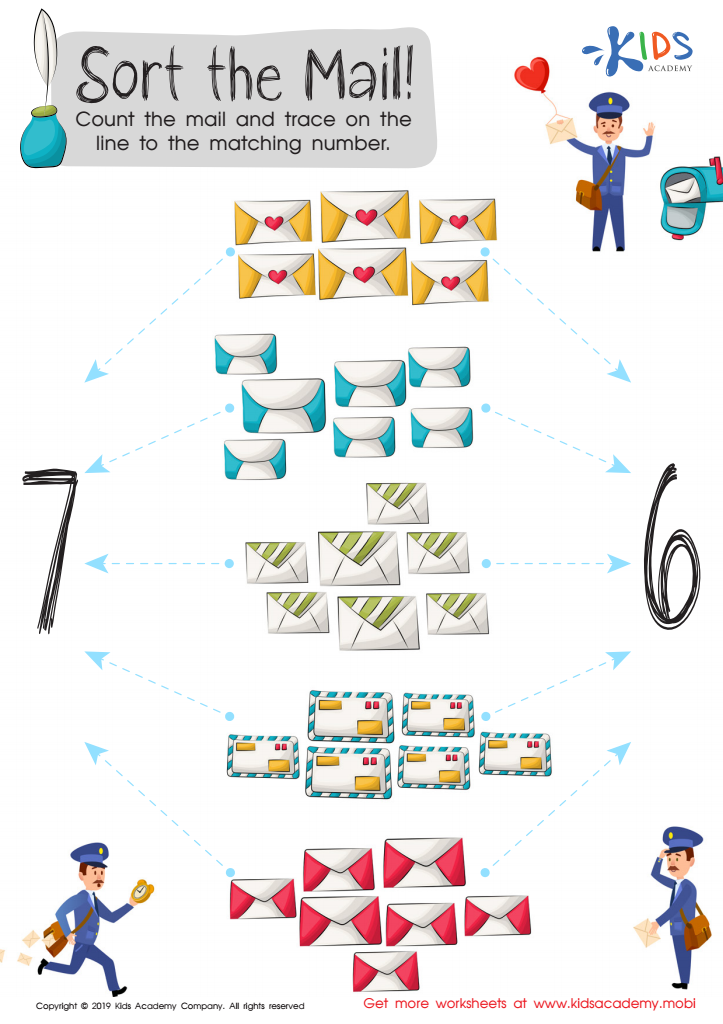
Sort the Mail Worksheet







Sorting skills with easy numbers for children aged 3-8 are crucial for several reasons. First and foremost, sorting helps young learners develop foundational math skills. By organizing objects based on numerical attributes, children begin to understand concepts like counting, number sequence, and basic arithmetic. This prepares them for more complex mathematical operations as they grow.
Furthermore, sorting enhances cognitive development. Engaging in sorting activities encourages children to observe, compare, and categorize, which enhances critical thinking and problem-solving skills. These activities lay the groundwork for logical reasoning, which is essential across various subjects and in everyday decision-making.
Sorting also improves fine motor skills. Handling small objects, like counting blocks or number cards, strengthens hand-eye coordination and dexterity. These fine motor skills are necessary for writing, drawing, and other essential tasks.
Additionally, sorting tasks foster language development. As children sort and discuss their activities, they expand their vocabulary, learning terms related to numbers, sizes, and categories. This helps in better communication skills, allowing them to express and understand concepts more effectively.
Overall, sorting with easy numbers is a multifaceted activity that supports academic growth, cognitive development, motor skills, and language acquisition, making it a vital component of early childhood education. By integrating sorting activities, parents and teachers provide a well-rounded foundation for their children’s and students' future learning experiences.








