Addition Practice Easy Math Worksheets for Ages 3-8 - Page 2
27 filtered results
-
From - To
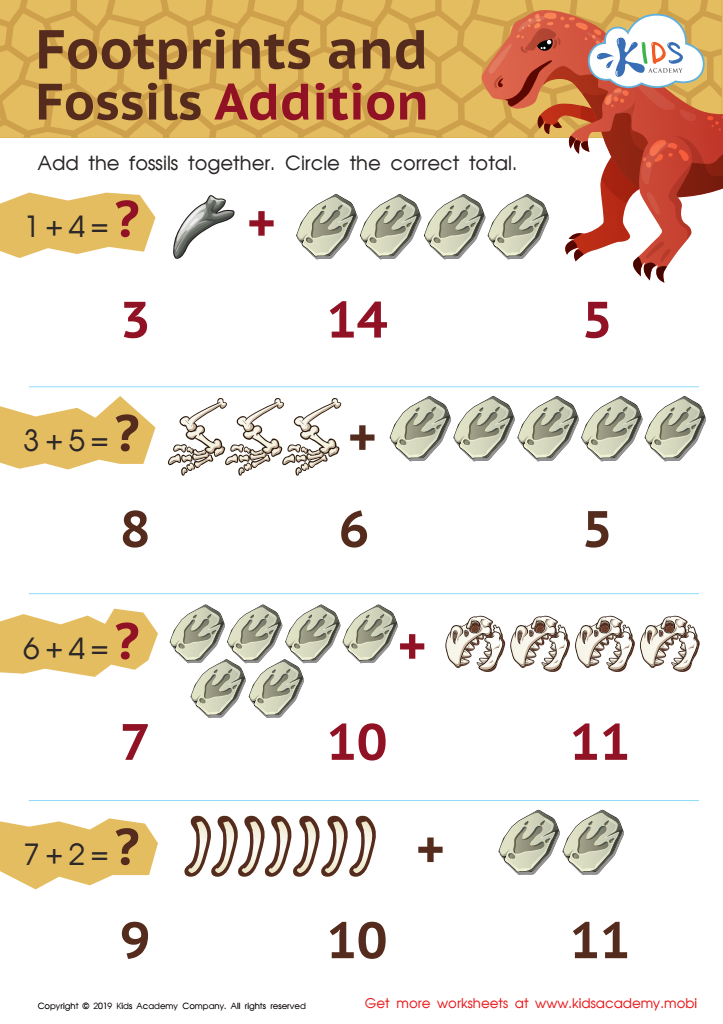
Footprints and Fossils Addition Worksheet
 Assign to My Students
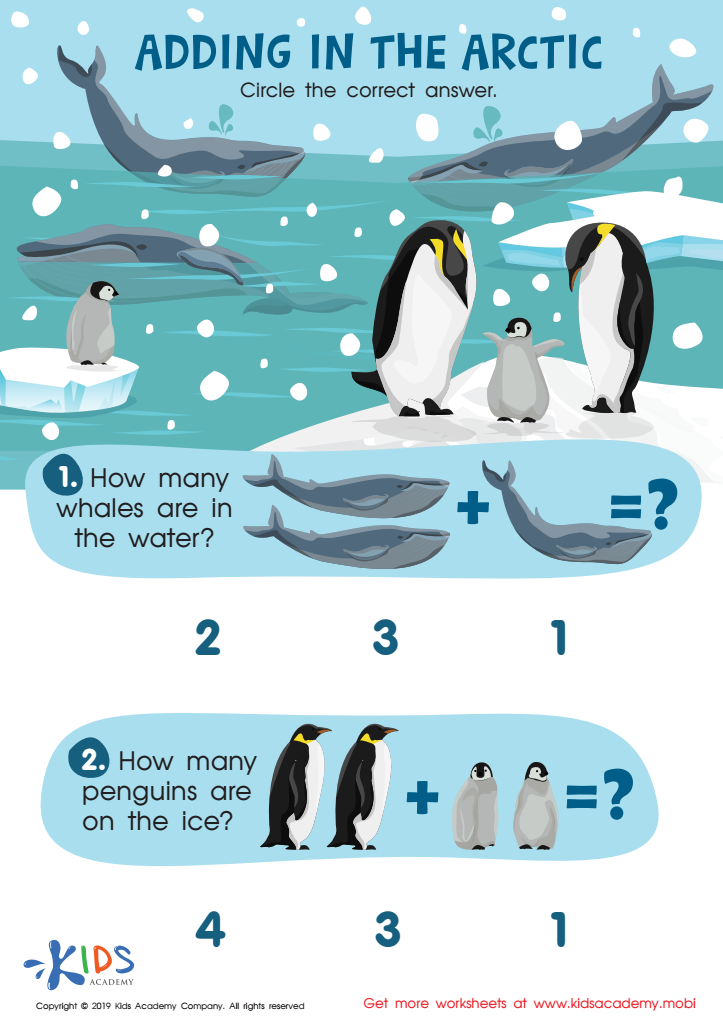
Adding in the Arctic Worksheet
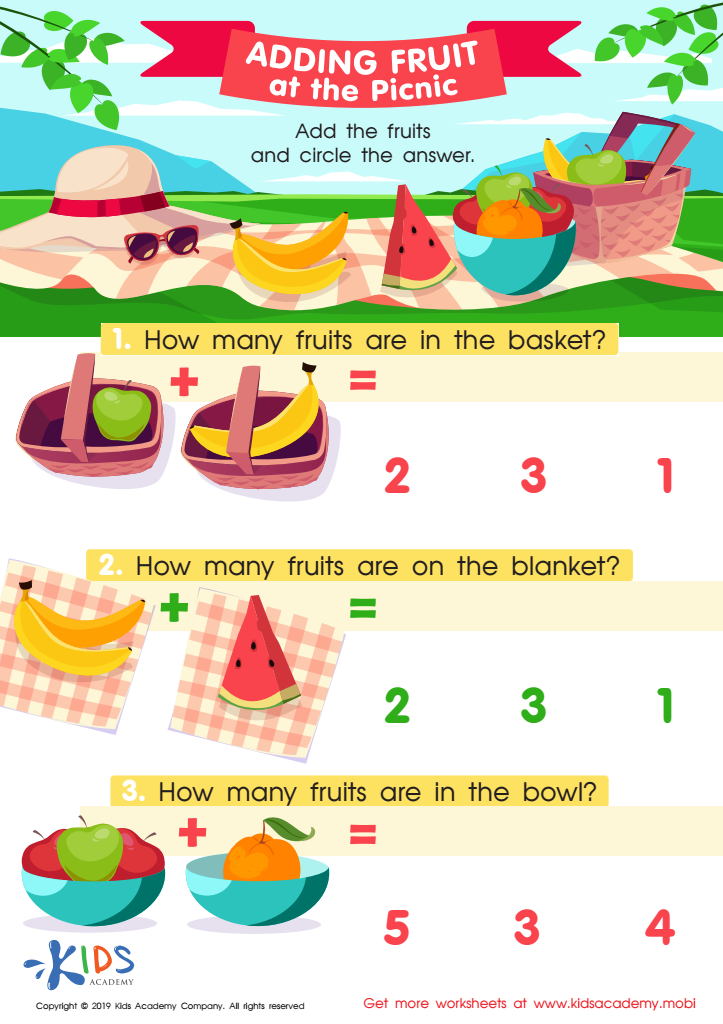
Adding Fruit at the Picnic Worksheet








Parents and teachers should prioritize addition practice for children aged 3-8 because it forms the bedrock of mathematical understanding, crucial for later academic success and daily life skills. This early stage, known as the foundational years, is when children's brains are most receptive to learning new concepts. Engaging in activities that strengthen addition skills can enhance cognitive development, problem-solving abilities, and logical thinking.
Moreover, early mastery of addition helps build confidence and sets a positive attitude towards mathematics, making children more likely to enjoy and pursue it in the future. Engaging children with fun and interactive addition exercises also develops their attention span, memory retention, and ability to follow instructions. This practice is not just about numbers; it enhances literacy by requiring children to understand and follow word problems, fostering both numerical and verbal proficiency.
In today's world, where STEM (Science, Technology, Engineering, and Mathematics) opportunities are increasingly important, building a strong mathematical foundation early on gives children a competitive edge. By investing in easy, enjoyable addition practice, parents and teachers support children in developing essential life skills, ensuring they are well-equipped for academic challenges and everyday tasks that require mathematical reasoning.








