
Basic math concepts Easy Math Worksheets for Ages 3-8
4 filtered results
Difficulty Level
Grade
Age
-
From - To
Subject
Activity
Standards
Discover our "Easy Math Worksheets" designed for children ages 3-8! These engaging and interactive worksheets focus on essential math concepts such as counting, addition, subtraction, shapes, and patterns. Perfect for early learners, our worksheets make math fun and accessible, ensuring your little ones build a strong foundation in basic math skills. With vibrant illustrations and age-appropriate challenges, children will enjoy practicing their math skills independently or with family support. Browse our collection to find worksheets that suit your child’s learning pace and help them develop a love for math. Start their educational journey with our easy-to-use resources today!
Favorites
With answer key
Interactive
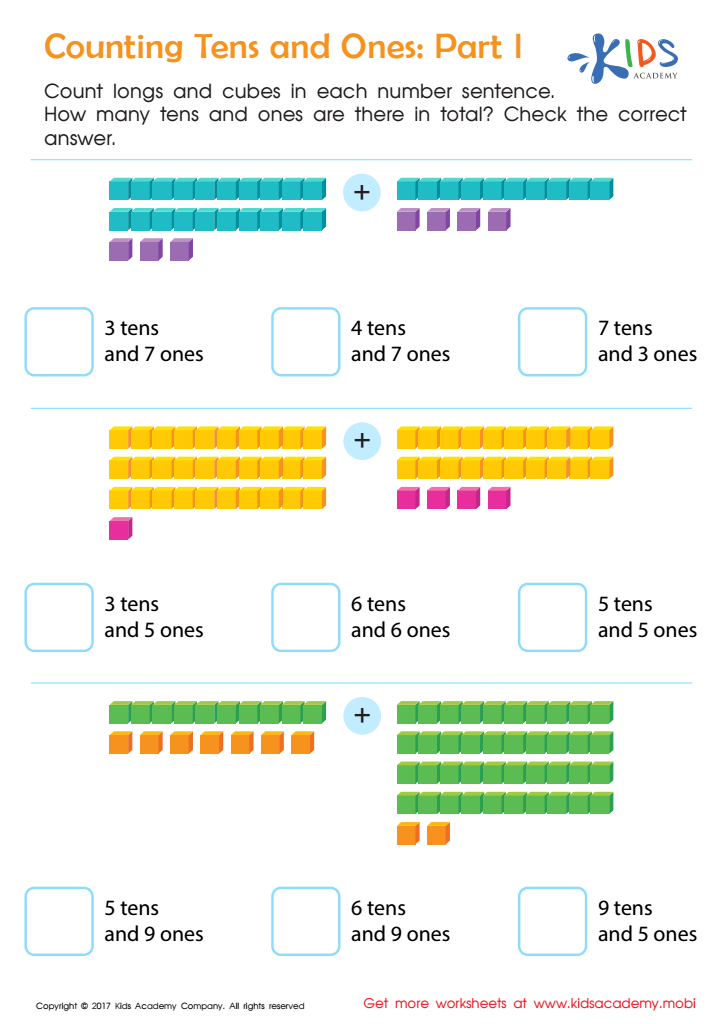
Counting Tens and Ones: Part 1 Worksheet
Kids Academy has a great place value worksheet to help kids learn when they don't have manipulatives at home! It includes longs and cubes that kids can count and add to find the sum. Colorful and downloadable, this page will help kids understand addition and place value better. Give it a try!
 Assign to My Students
Counting Tens and Ones: Part 1 Worksheet
Worksheet
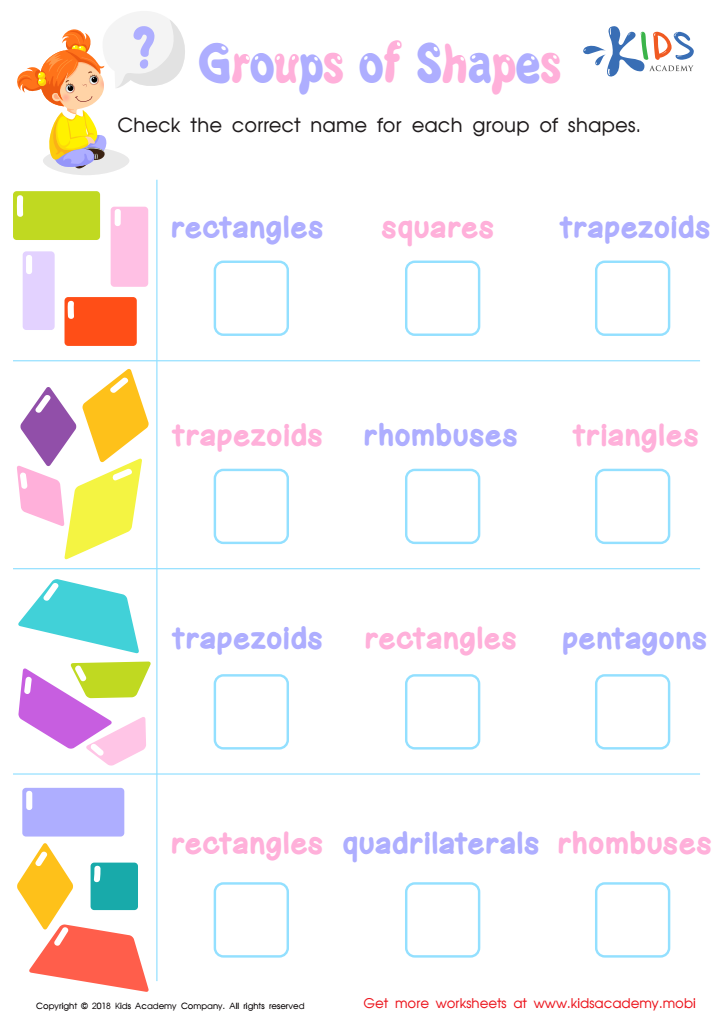
Groups of Shapes Worksheet
Can your child identify and name shapes? Help them learn the unique features of each and have them check the correct name for each group in the colorful pictures on this worksheet.
Groups of Shapes Worksheet
Worksheet
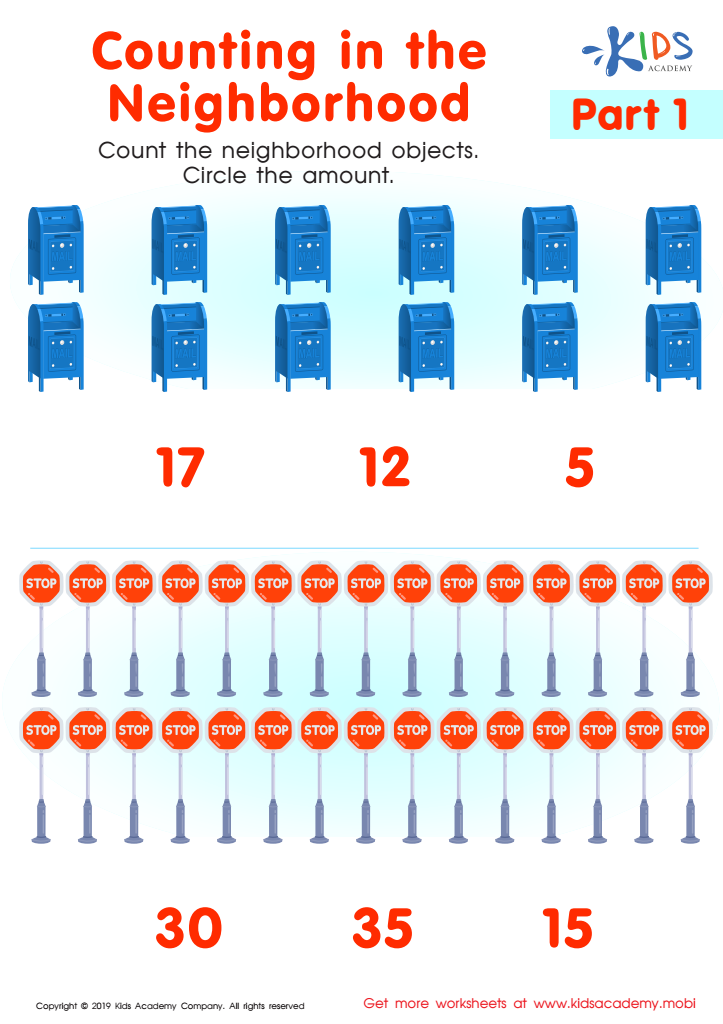
Counting in the Neighborhood Part1 Worksheet
Counting using one-to-one representation is a great way to develop a child's number sense. Use objects, pictures and images to help counting beyond the fingers. This worksheet uses everyday objects to practice counting. It encourages children to find the correct number and count forward. Give it a try!
Counting in the Neighborhood Part1 Worksheet
Worksheet
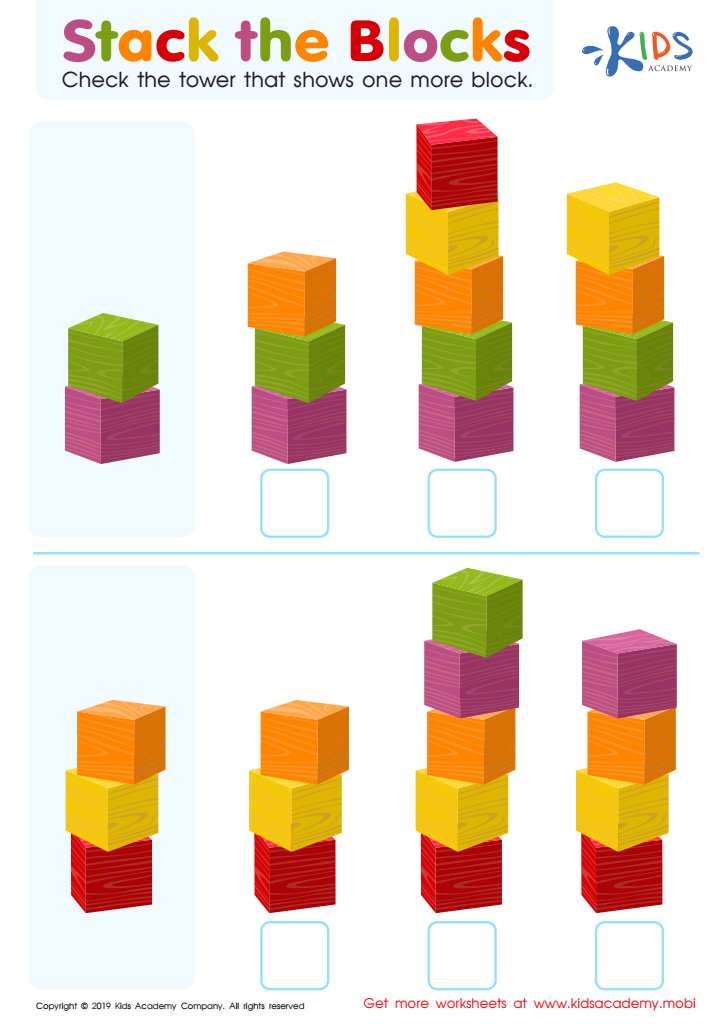
Stack the Blocks Worksheet
Playing with blocks is a great way for kids to learn! They can create patterns, shapes, and even count. In this worksheet, ask them to identify the colors and count each stack of blocks. If they can spot one extra block in the tower, even better! Encourage learning through play with these fun blocks.
Stack the Blocks Worksheet
Worksheet
Join Kids Academy for Free
Who is primarily going to use this learning content?







Parents and teachers should prioritize basic math concepts for children ages 3-8 as these foundational skills are critical for future learning and overall cognitive development. Early exposure to math enhances children’s problem-solving abilities, logical reasoning, and critical thinking skills, allowing them to navigate everyday situations effectively. Basic math, such as recognizing numbers, counting, and understanding simple addition and subtraction, develops essential skills that contribute to academic success in later years.
Furthermore, integrating math into playful, engaging activities helps to foster a positive attitude toward the subject. By making math fun, children are more likely to become interested and confident in their abilities, reducing the anxiety often associated with the subject as they grow older.
Additionally, many real-world scenarios—like shopping and cooking—require rudimentary math skills, so instilling these concepts early prepares children for these practical applications. Teaching math through everyday activities encourages parents and teachers to actively participate in a child’s learning process, strengthening their relationships and promoting essential communication skills.
In short, a solid understanding of basic math concepts sets the stage for lifelong learning and success, making it vital that parents and teachers focus on this critical aspect of early education.








