
Basic subtraction Easy Math Worksheets for Ages 3-8
4 filtered results
Difficulty Level
Grade
Age
-
From - To
Subject
Activity
Standards
Discover the perfect tool to aid your child's math journey with our Basic Subtraction Easy Math Worksheets for ages 3-8. These engaging and colorful worksheets are designed to make learning subtraction fun and accessible. Tailored to young learners, each worksheet incorporates visual aids and simple problems to build foundational math skills. Ideal for preschoolers and early elementary students, these resources help kids understand basic subtraction concepts through interactive activities. Boost your child's confidence and proficiency in math with our user-friendly worksheets, making math a delightful adventure. Download now from Kids Academy and watch them thrive!
Favorites
With answer key
Interactive
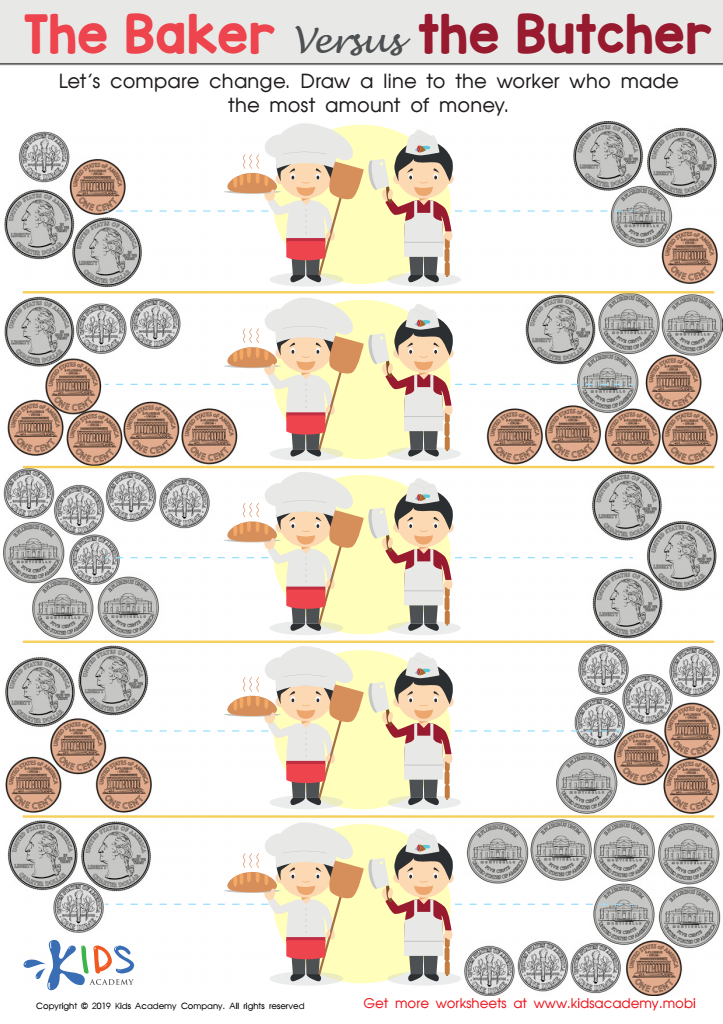
The Baker versus the Butcher Worksheet
At the baker’s and butcher’s, there are plenty of delicious treats and meals! With this worksheet, your kids can see who made more money at the end of the day. Have them trace a line to the worker who made the most amount of money. They’ll have fun while learning the basics of business and money!
 Assign to My Students
The Baker versus the Butcher Worksheet
Worksheet
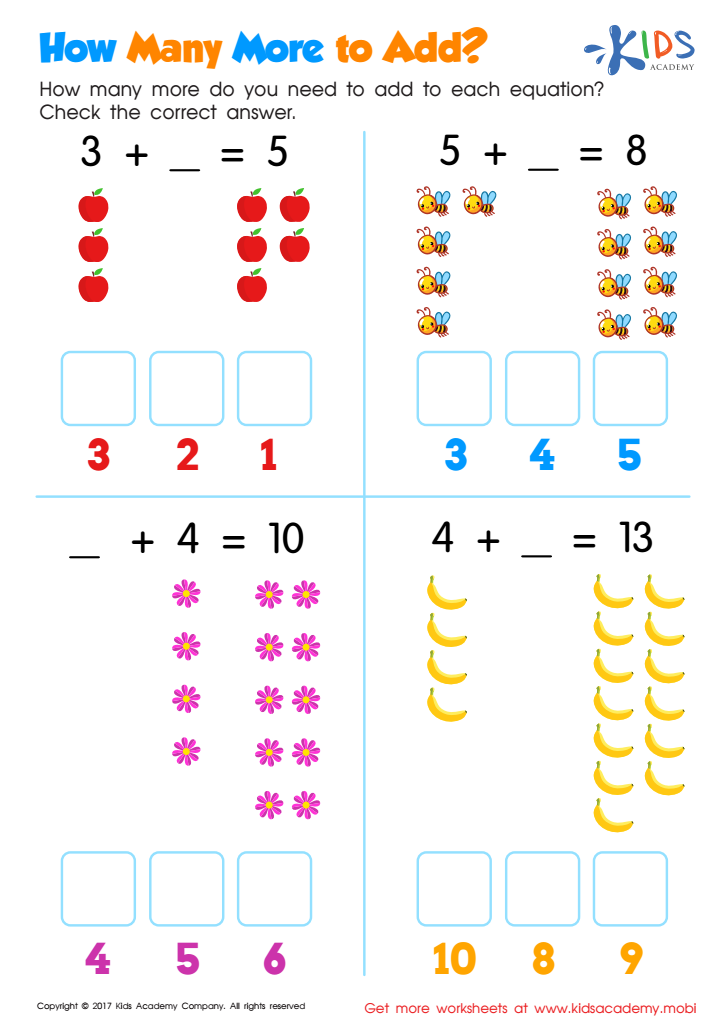
How Many More to Add Worksheet
Sharpen your child's math skills with this pdf worksheet. Help them figure out how many apples, bees, flowers and bananas are needed to reach the answer given. The possible answers are provided at the bottom of the boxes. Have some fun doing some addition and subtraction magic together and get those math skills sharpened!
How Many More to Add Worksheet
Worksheet
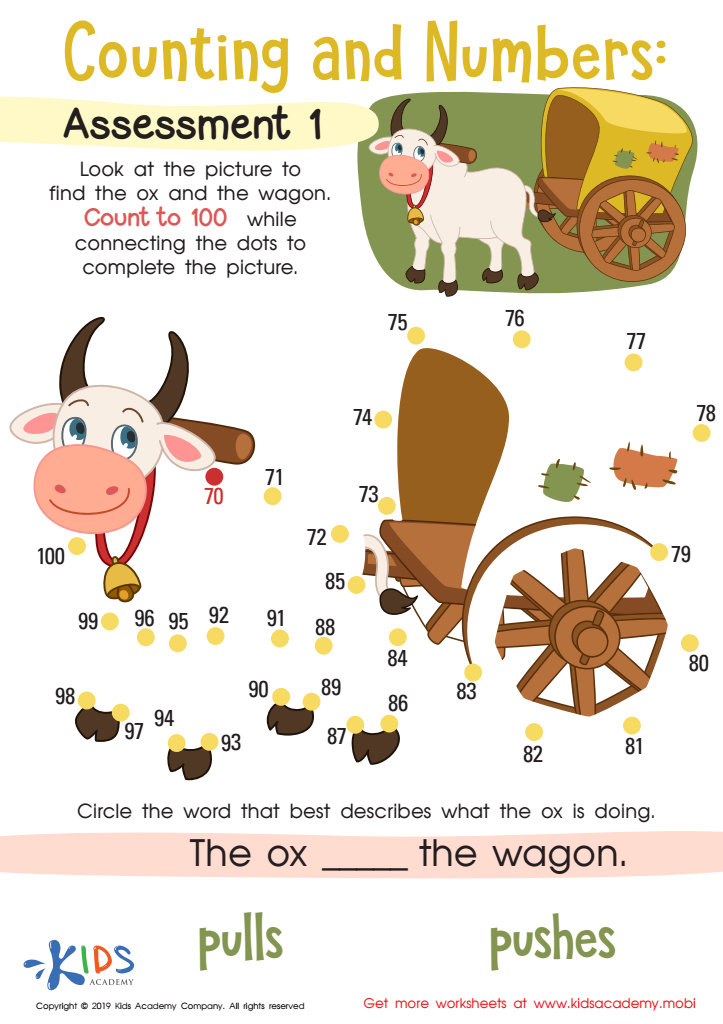
Counting and Numbers: Assessment 1 Worksheet
Let your kids use the picture as a guide and count from 70 to 100 to complete an ox pulling a wagon. As a comprehension check, have them answer the related question using words from the word bank. This dot-to-dot worksheet is a great way to assess their number reasoning and counting forward skills.
Counting and Numbers: Assessment 1 Worksheet
Worksheet
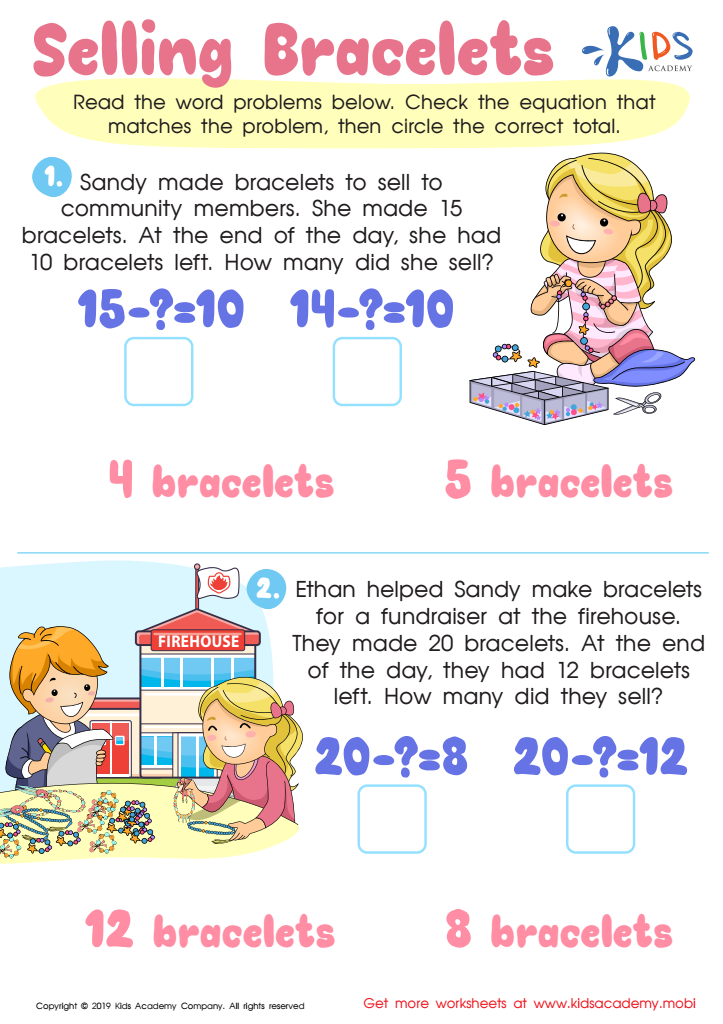
Selling the Bracelets Worksheet
Engage your kids with learning by making it fun! Try this creative worksheet: your kids can practice subtraction while making bracelets. Download the pdf; read the two word problems to them and help them choose the correct total. Have fun! (80 words)
Selling the Bracelets Worksheet
Worksheet
Join Kids Academy for Free
Who is primarily going to use this learning content?








Basic subtraction is a fundamental math skill that parents and teachers should prioritize for children ages 3-8 because it lays the foundation for more complex mathematical concepts and daily life problem-solving. Understanding how to subtract helps children develop critical thinking and logical reasoning, enabling them to approach challenges methodically.
At a young age, children are naturally curious and eager to explore the world around them. Teaching subtraction through fun activities, games, and real-life scenarios makes learning engaging and relevant. For instance, using objects like toys or snacks to demonstrate subtraction can turn abstract ideas into concrete understanding. This hands-on method helps them grasp how and why subtraction works.
Moreover, early proficiency in subtraction boosts a child’s confidence in their mathematical abilities. As they progress in their education, the concepts of subtraction will be built upon to include addition, multiplication, and division. A solid understanding of these basics is vital for success in school and beyond.
Equipping children with these skills early on also supports their cognitive development. Subtraction encourages mental arithmetic and enhances memory. Therefore, prioritizing basic subtraction not only aids academic achievement but also nurtures essential skills for everyday interactions and future learning.








