Basic measurement concepts Easy Measurement Worksheets for Ages 3-8
4 filtered results
-
From - To
Discover "Basic Measurement Concepts" – engaging and easy measurement worksheets tailored for children ages 3-8. Perfectly designed to introduce young learners to fundamental measurement skills, these worksheets cover concepts such as size, length, weight, and volume through fun and interactive activities. Clear instructions and colorful graphics keep kids motivated and entertained as they learn. This essential early math resource enhances critical thinking and problem-solving abilities, ensuring a solid foundation in measurement. Ideal for both parents and teachers, our carefully crafted worksheets make learning measurement concepts simple and enjoyable for young minds. Explore today and boost your child’s math confidence!
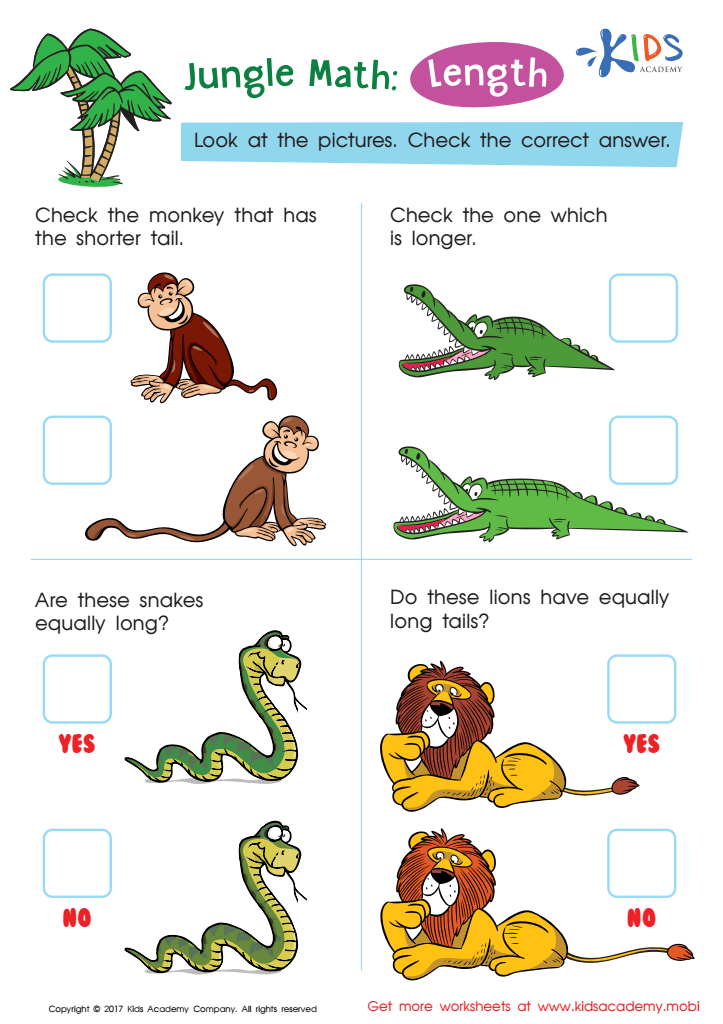
Which One Is Longer - Length Worksheet
 Assign to My Students
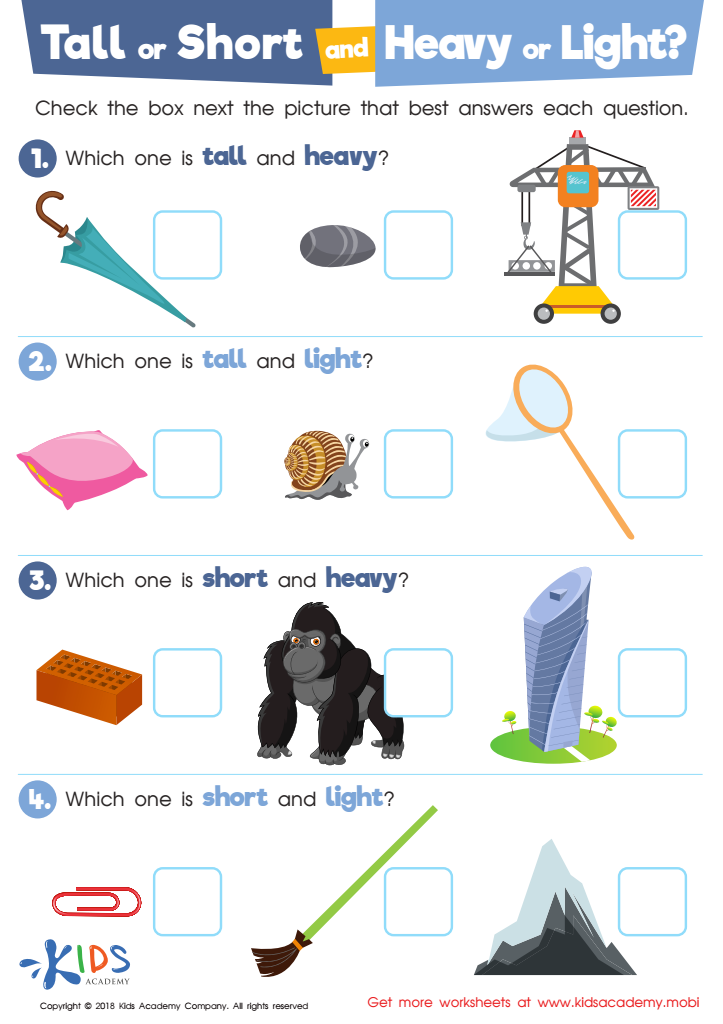
Tall or Short and Heavy or Light? Worksheet
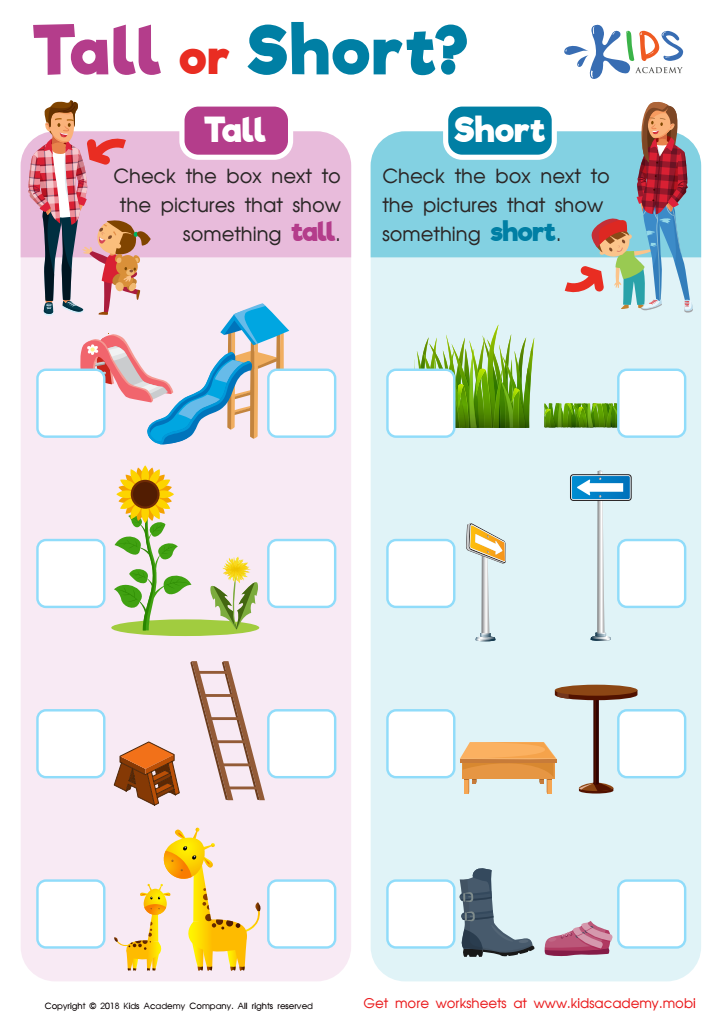
Tall or Short? Worksheet
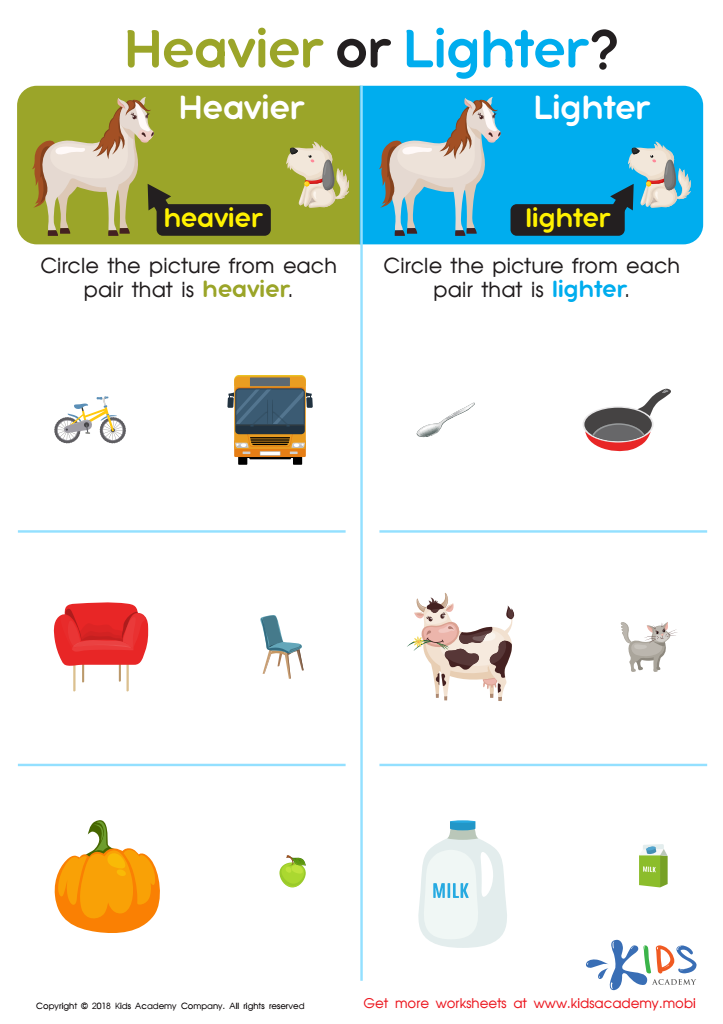
Heavier or Lighter? Worksheet








Understanding basic measurement concepts early in life sets the foundation for a child's mathematical and cognitive development, making it crucial for parents and teachers to prioritize this area of learning. For children aged 3-8, grasping easy measurement concepts—such as length, weight, volume, and time—not only helps them with academic skills but enhances their everyday problem-solving abilities.
When children learn about measurement, they begin to understand the world around them in a more structured way. They can compare sizes, quantities, and durations, making sense of their daily experiences, whether it's sharing toys equally or understanding how long to wait until bedtime.
Additionally, engaging with measurement activities helps children develop fine motor skills and spatial awareness, both of which are essential for tasks ranging from writing to playing sports. Early exposure to measurement vocabulary also enriches their language skills, teaching them to articulate concepts like "shorter," "heavier," or "later."
Moreover, early measurement lessons form the basis for future science and math learning. They introduce children to logical thinking and problem-solving strategies, which are integral in academic success and day-to-day life. By caring about and actively teaching these concepts, parents and teachers are investing in a child's holistic growth—academically, cognitively, and practically.








