Comparing lengths Easy Measurement Worksheets for Ages 3-8
5 filtered results
-
From - To
Explore our "Comparing Lengths Easy Measurement Worksheets" designed specifically for children aged 3-8! These engaging worksheets provide a fun and interactive way for young learners to understand the concepts of length and measurement. Through colorful illustrations and straightforward exercises, kids will practice comparing different lengths, enhancing their spatial awareness and critical thinking skills. Ideal for home or classroom use, these worksheets cater to various learning styles and promote hands-on learning. Whether beginners or those seeking to reinforce their skills, these resources foster a love for math while building essential measurement skills. Start your child's journey in measuring today!
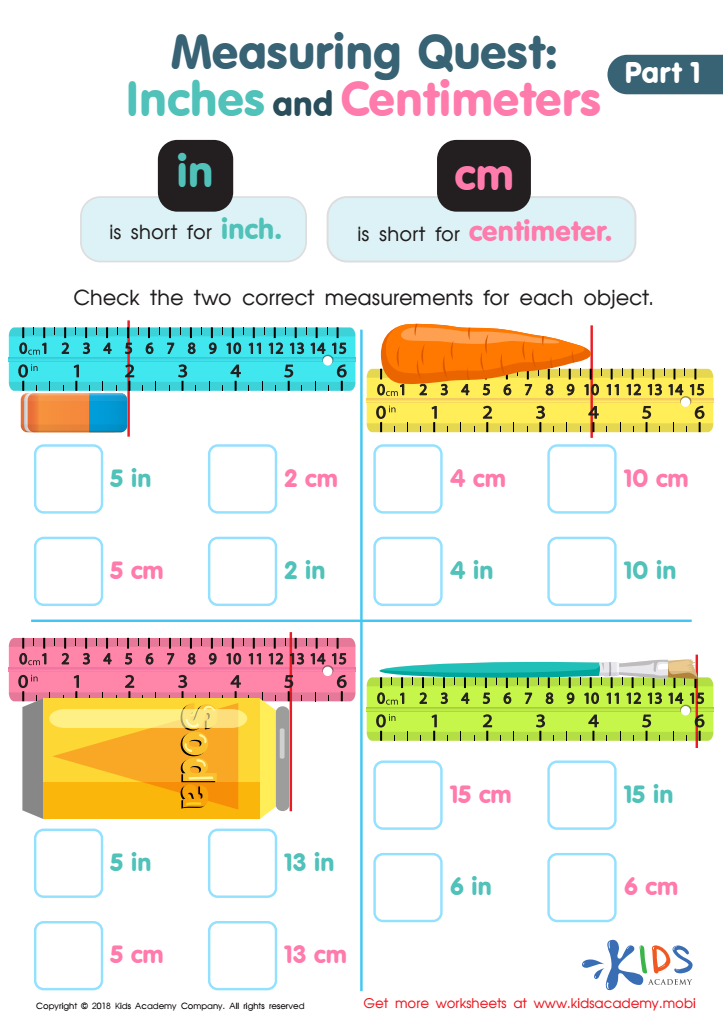
Measuring Quest: Inches and Centimeters Worksheet
 Assign to My Students
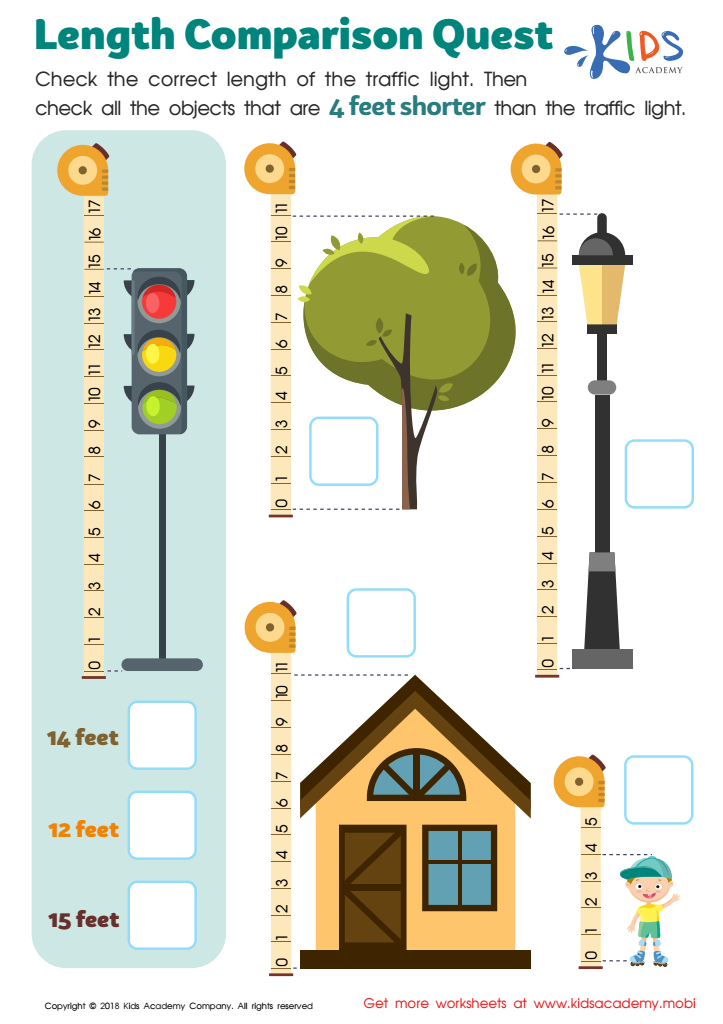
Length Comparison Quest Worksheet
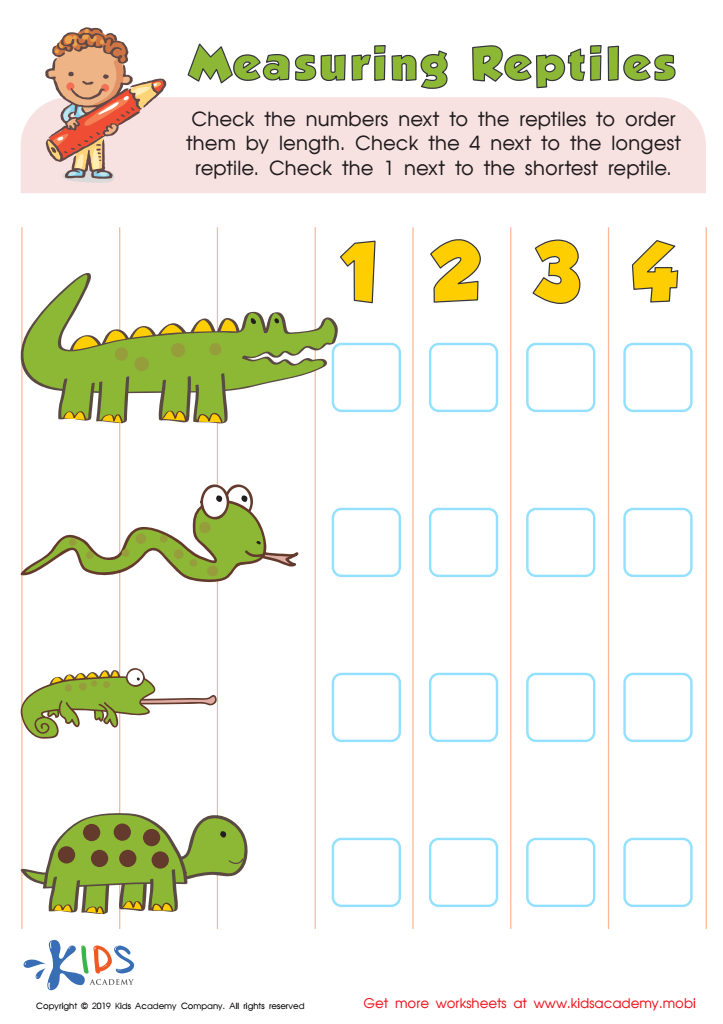
Measuring Reptiles Worksheet
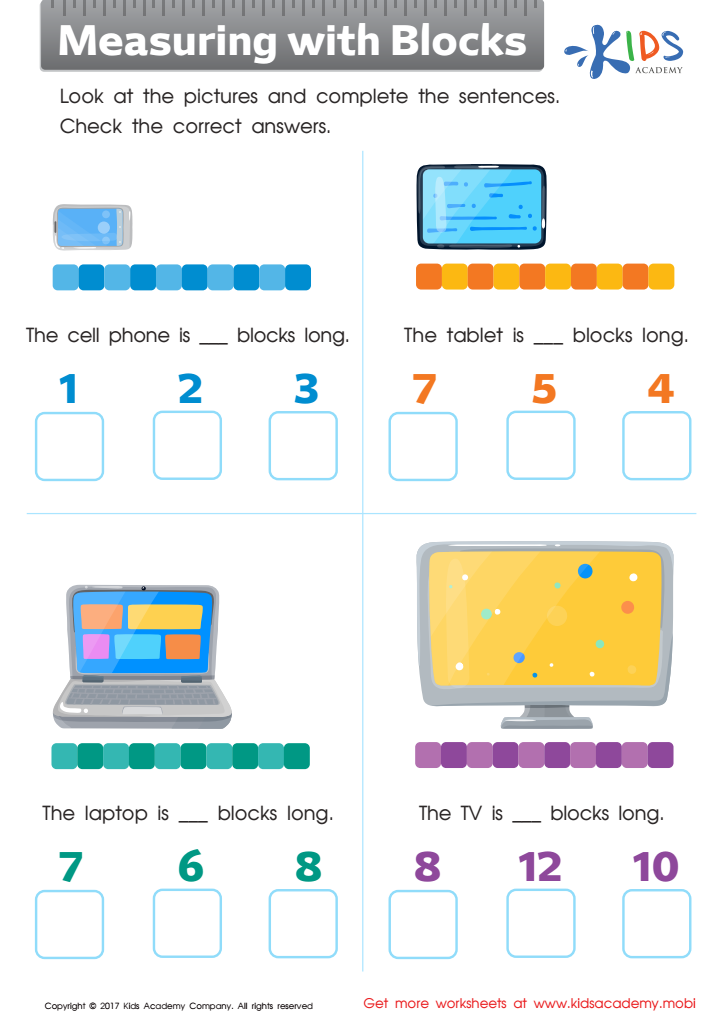
Measuring with Blocks Worksheet
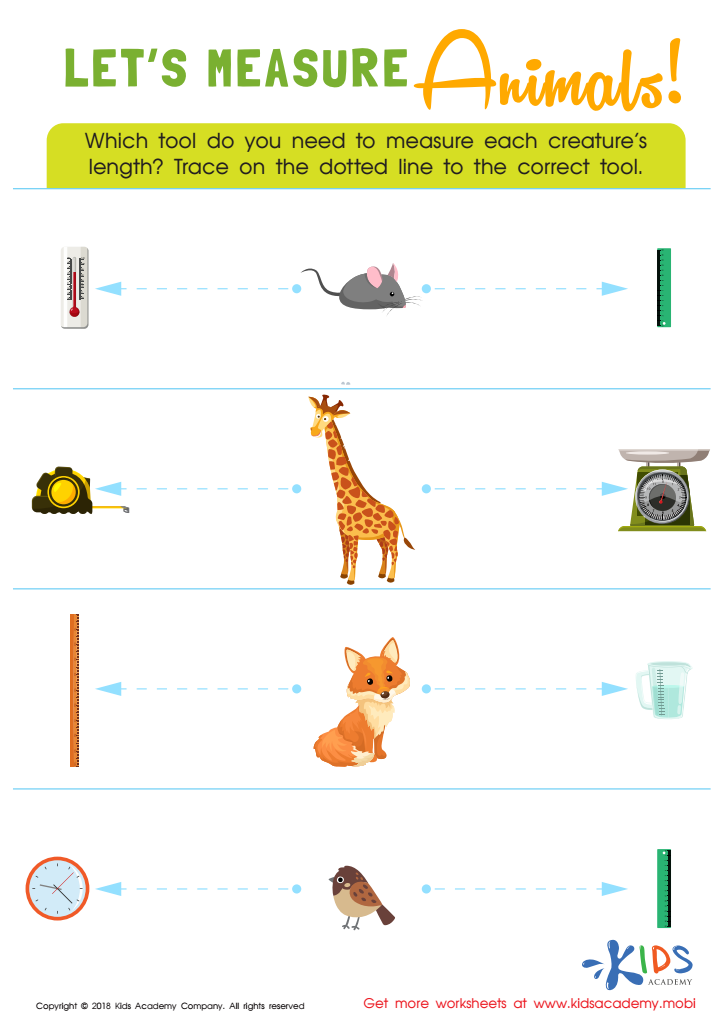
Let's Measure Animals! Worksheet








Comparing lengths and understanding measurement are fundamental skills for children ages 3-8 that lay a strong foundation for future mathematical learning. Parents and teachers should care about this early educational focus for several reasons.
First, developing measurement skills enhances cognitive abilities. As children compare lengths, they engage in critical thinking and problem-solving, which strengthens their reasoning skills. This activity encourages them to observe, classify, and analyze, all essential components of early mathematics.
Second, measurement is a practical life skill that children will utilize as they grow. Simple tasks like understanding height differences, understanding age-appropriate concepts like sorting or organizing items, and making informed choices in everyday situations (like cooking) enhance their independence.
Moreover, comparing lengths fosters language development. When children describe measurements, they broaden their vocabulary, learning terms like taller, shorter, longer, shorter, and equal. This enriches their communication skills and boosts their confidence in expressing ideas.
Lastly, collaborating on measuring activities creates bonding moments between parents, teachers, and children. These shared experiences not only reinforce the learning process but also create lasting memories. In summary, prioritizing comparing lengths and easy measurement equips young learners with essential skills while enhancing their overall development.








