Data interpretation Easy Measurement Worksheets for Ages 3-8
7 filtered results
-
From - To
Unlock the world of data interpretation for young learners with our Easy Measurement Worksheets, designed for ages 3-8. These engaging activities introduce children to key concepts of measurement and data analysis, helping them build foundational math skills. With vibrant visuals, hands-on exercises, and age-appropriate challenges, kids will learn to interpret simple data sets, compare measurements, and understand basic statistics. Our worksheets nurture critical thinking while enhancing cognitive development in a fun and interactive way. Perfect for home or classroom use, these resources aim to inspire curiosity and excitement about math through easy yet effective learning experiences. Explore the resources today!
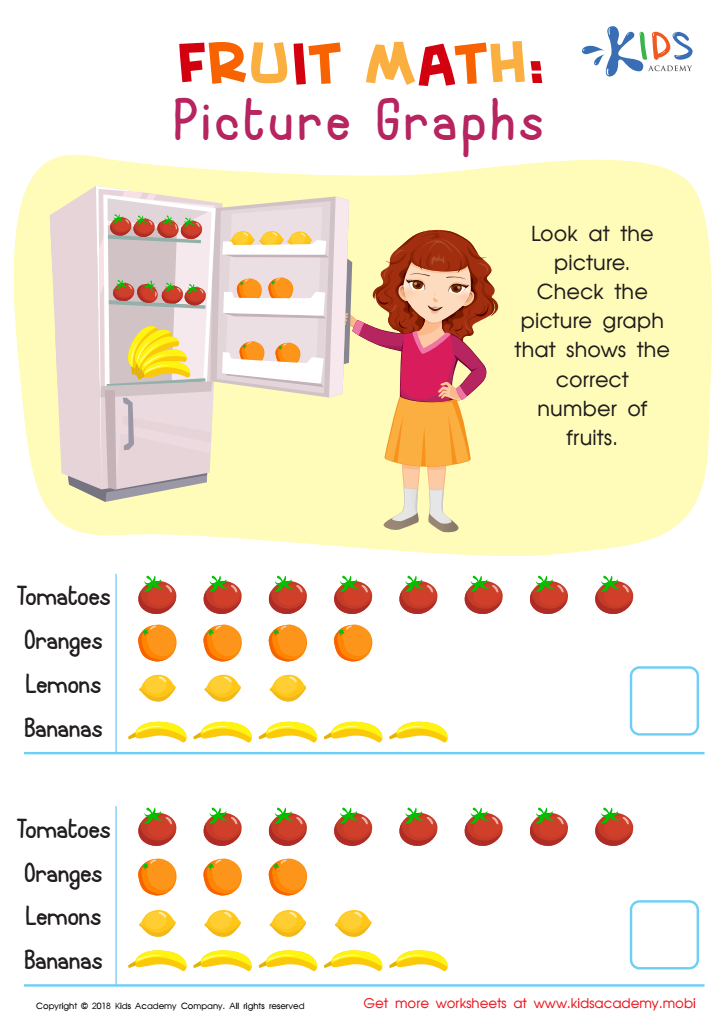
Fruit Math: Picture Graphs Worksheet
 Assign to My Students
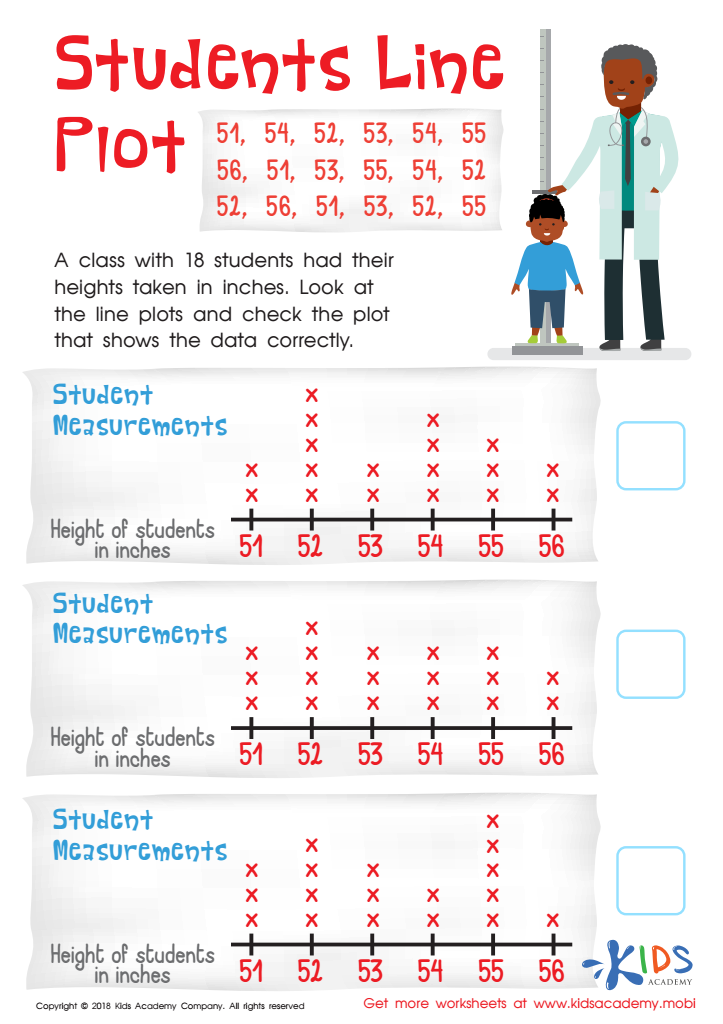
Students Line Plot Worksheet
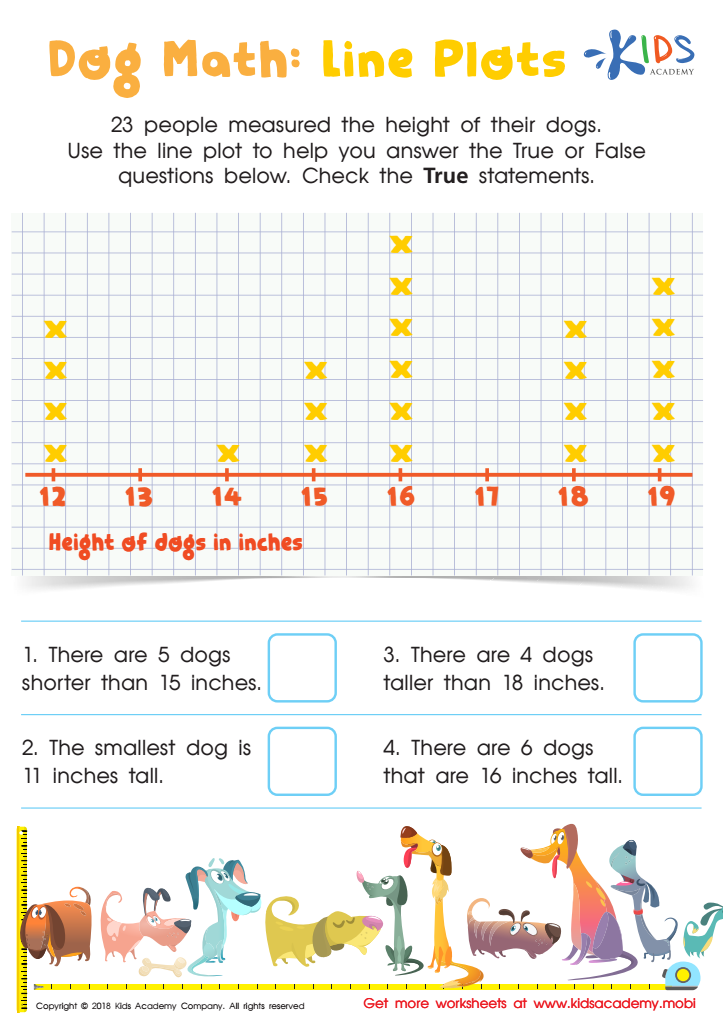
Dog Math: Line Plots Worksheet
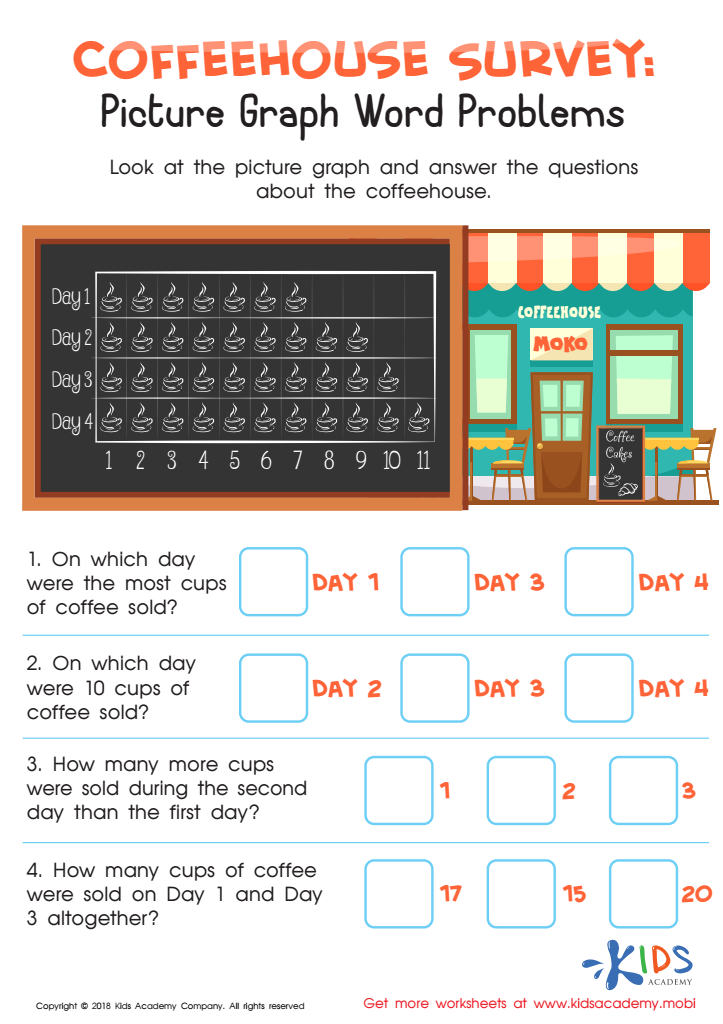
Coffeehouse Survey: Picture Graph Word Problems Worksheet
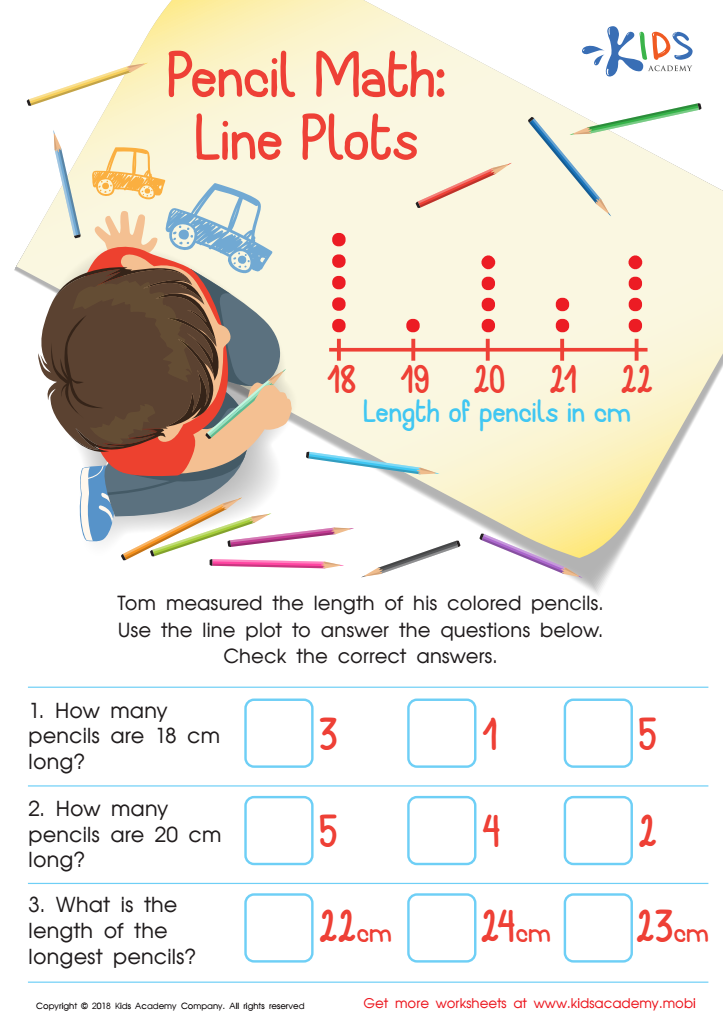
Pencil Math: Line Plots Worksheet
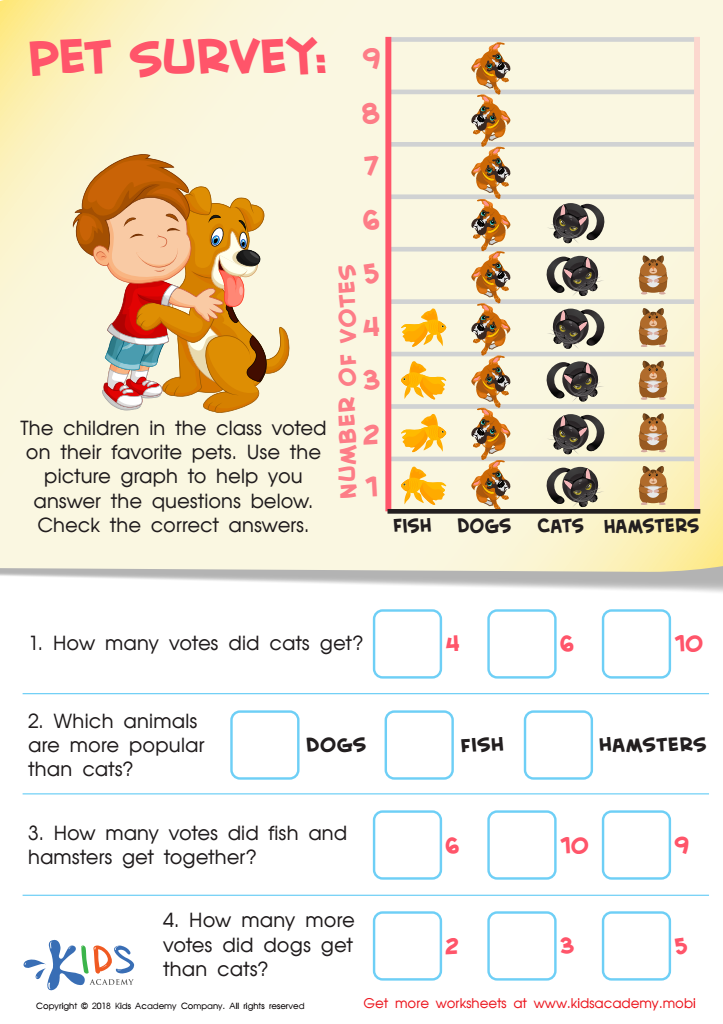
Pet Survey Worksheet
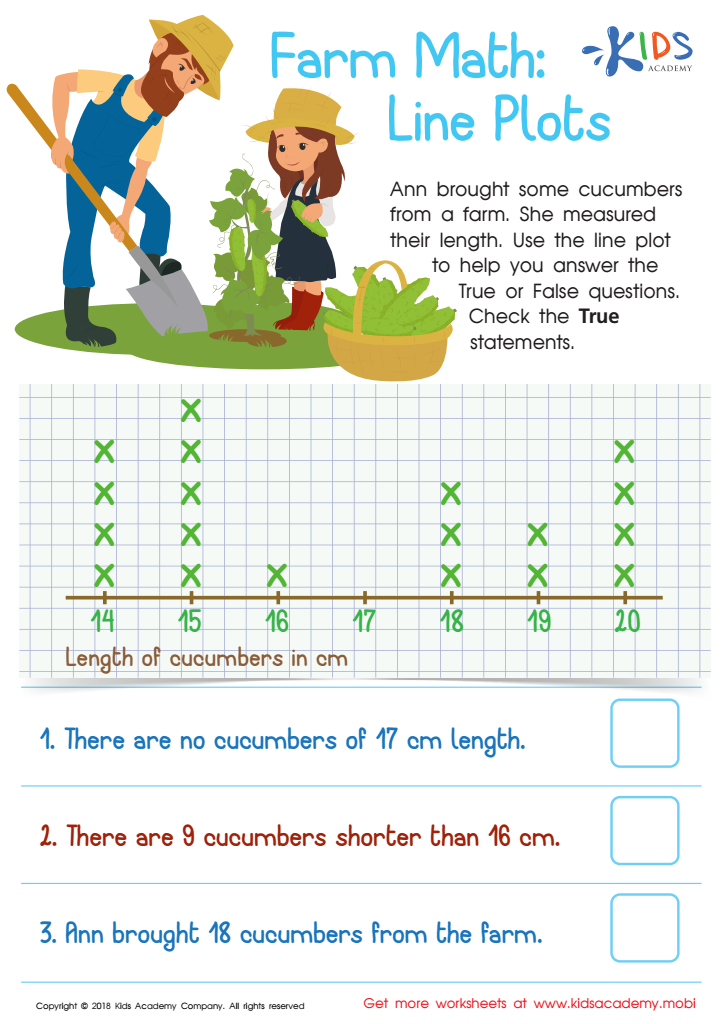
Farm Math: Line Plots Worksheet








Data interpretation and measurement are foundational skills for young learners aged 3-8, and it's crucial for parents and teachers to prioritize these areas in education. Early exposure to data interpretation helps children develop critical thinking and analytical skills, allowing them to make sense of the world around them. For instance, when kids learn to recognize patterns, categorize objects, or understand basic graphs, they are honing their reasoning abilities which are essential for future academic success.
Easy measurement concepts, like length, weight, and volume, introduce children to practical math applications. These skills contribute to their ability to compare quantities, understand time, and grasp the basics of metrics, fostering a sense of curiosity and inquiry. Engaging students with hands-on activities such as measuring ingredients for a recipe or sorting toys by size reinforces these concepts in an enjoyable, memorable way.
Moreover, these skills support emotional and social development, as children learn to collaborate, communicate their findings, and respect different viewpoints during group activities. By valuing data interpretation and measurement, parents and teachers empower children not only to succeed academically but also to cultivate a life-long appreciation for learning and problem-solving. Prioritizing these skills is essential in shaping well-rounded, inquisitive individuals.








