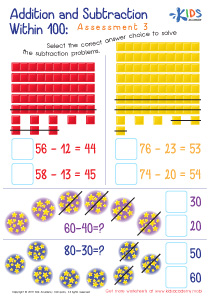
Basic Math Skills Easy Numbers 0–10 Worksheets for Ages 3-8
4 filtered results
-
From - To
Enhance your child's mathematical foundation with our "Basic Math Skills Easy Numbers 0-10" worksheets, designed specifically for ages 3 to 8. These engaging, printable worksheets provide a fun and interactive way for young learners to grasp essential math concepts such as number recognition, counting, and basic addition and subtraction. Featuring colorful illustrations and captivating activities, our resources aim to cultivate a love for math while promoting essential problem-solving skills. Perfect for home or classroom use, these worksheets will help your child build confidence as they explore the world of numbers, ensuring they are well-prepared for future math challenges. Start their learning journey today!
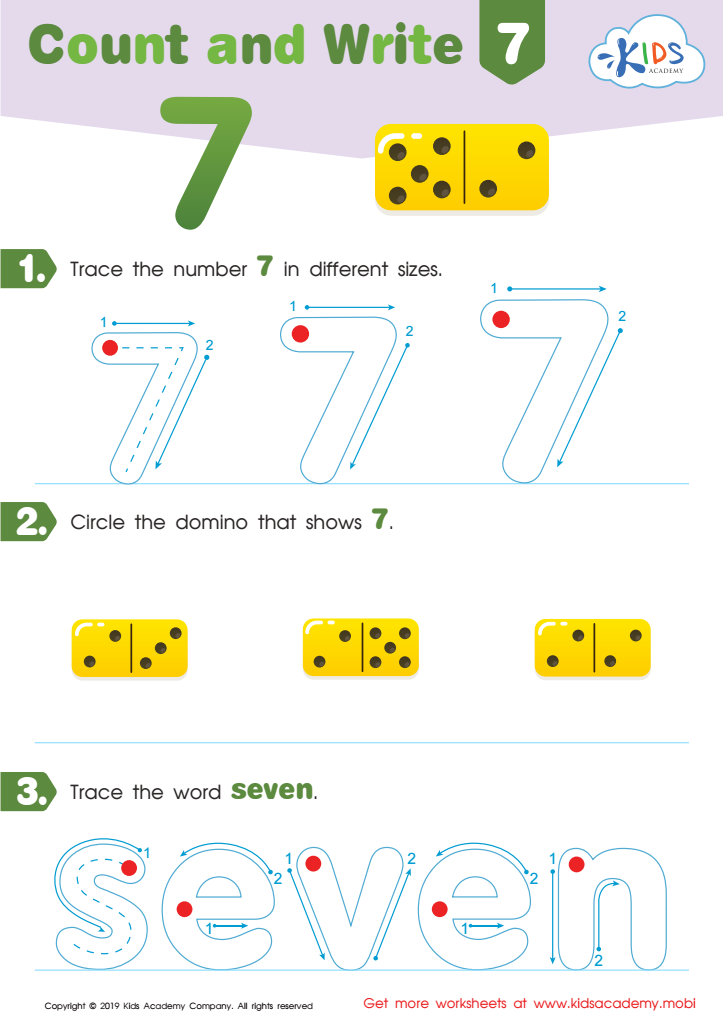
Count and Write 7 Worksheet
 Assign to My Students
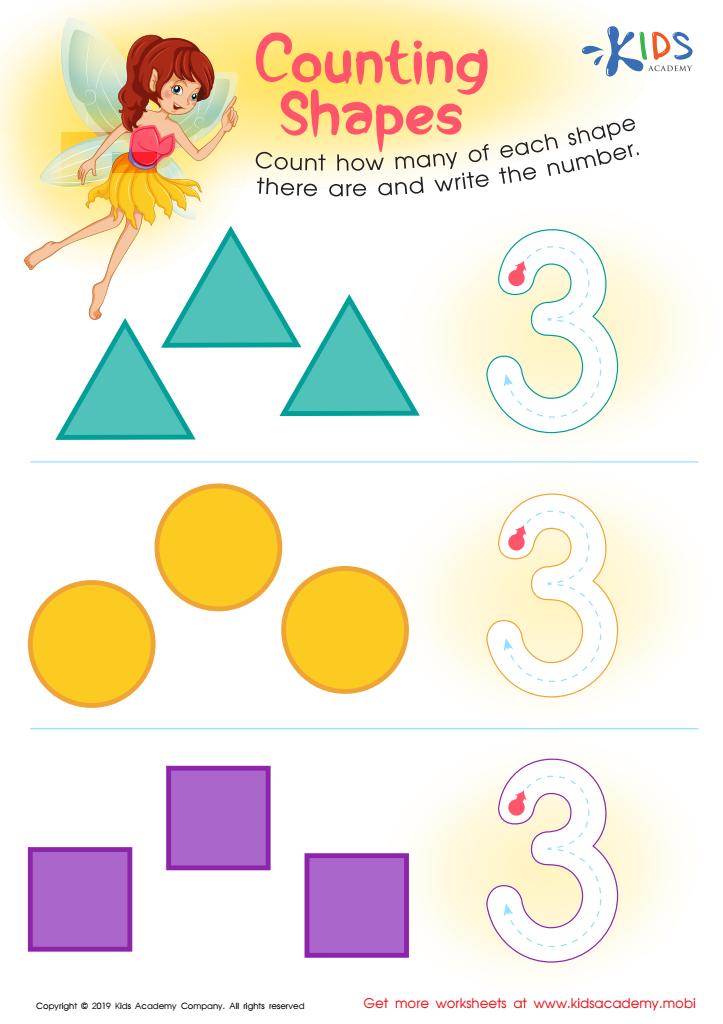
Counting Shapes Worksheet
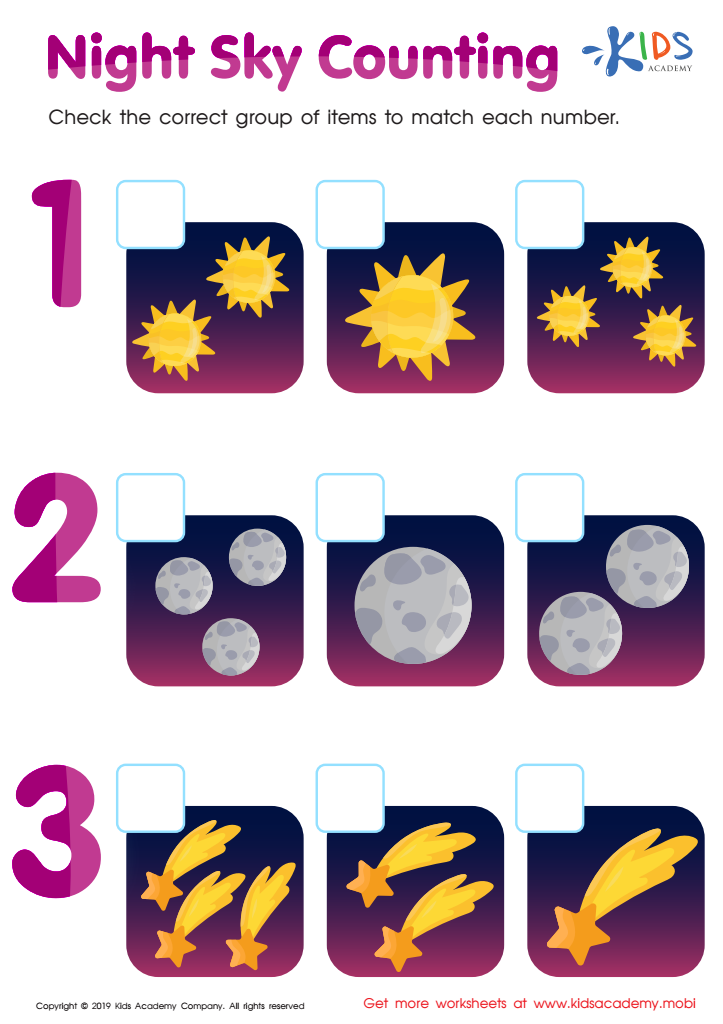
Night Sky Counting Worksheet
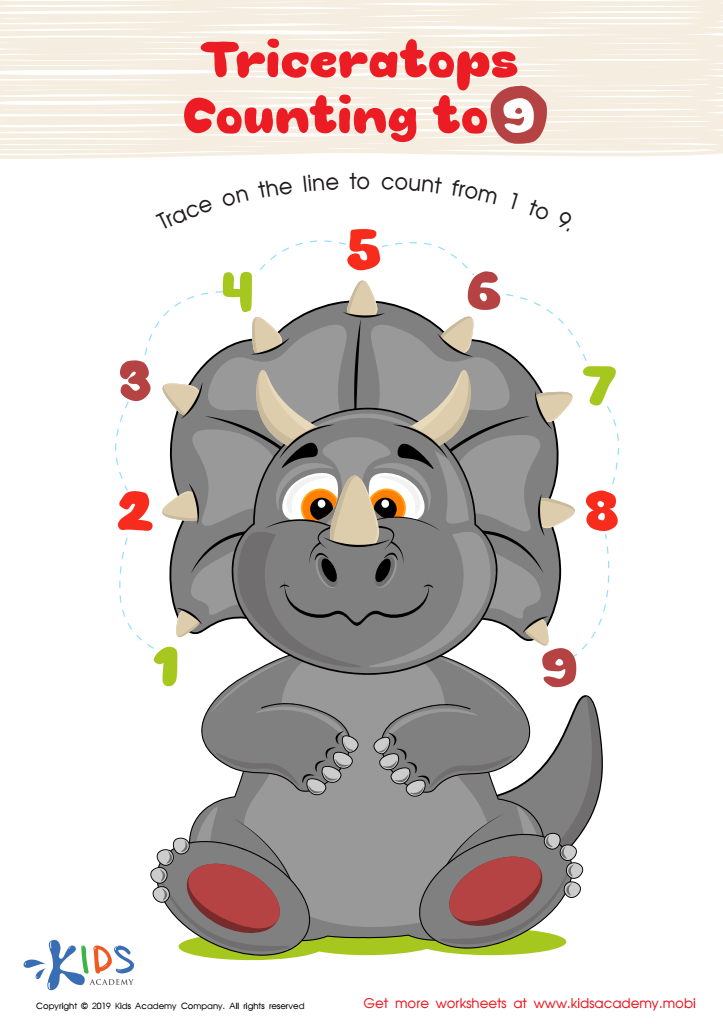
Triceratops Counting to 9 Worksheet








Teaching basic math skills to children aged 3-8, specifically focusing on easy numbers 0-10, is crucial for several reasons. First, early math skills lay the foundation for future learning. Children who develop a strong grasp of basic concepts like counting, number recognition, and simple addition or subtraction are more likely to excel in math as they progress through school.
Second, understanding basic math promotes critical thinking and problem-solving abilities. Engaging young learners in fun, meaningful activities enhances their cognitive development and nurtures a positive attitude towards math, which often influences their overall academic success.
Additionally, math skills help children navigate everyday situations; they learn to make sense of the world around them through counting and comparing, such as during playtime or while shopping with parents. Instilling confidence in their mathematical abilities at a young age can foster a lifelong appreciation for the subject, reducing math anxiety later in life.
For parents and teachers, supporting the development of early math skills through playful and interactive ways not only enriches a child’s educational experience but also strengthens their emotional and social skills by encouraging collaboration and communication during learning activities. Promoting these skills fosters a well-rounded approach to childhood education.