Categorization skills Easy Numbers 0–10 Worksheets for Ages 3-8
3 filtered results
-
From - To
Enhance your child's learning experience with our "Categorization Skills Easy Numbers 0–10 Worksheets." Tailored for children aged 3-8, these worksheets utilize engaging and age-appropriate activities to teach essential categorization skills. Kids will explore and categorize numbers through vibrant visuals and interactive exercises that promote critical thinking and problem-solving. Designed to complement early math education, our resources not only help children recognize and understand numbers 0 to 10 but also enhance their ability to classify and group related items. Perfect for parents and educators, these worksheets ensure a fun and informative way for young learners to master foundational math skills!
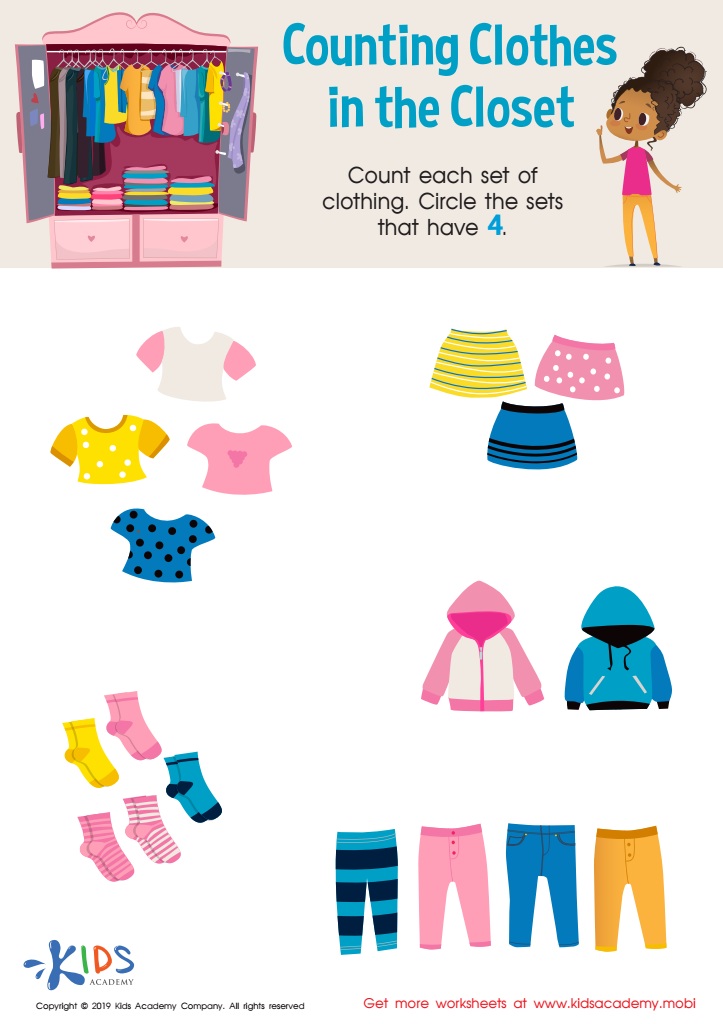
Counting Clothes Worksheet
 Assign to My Students
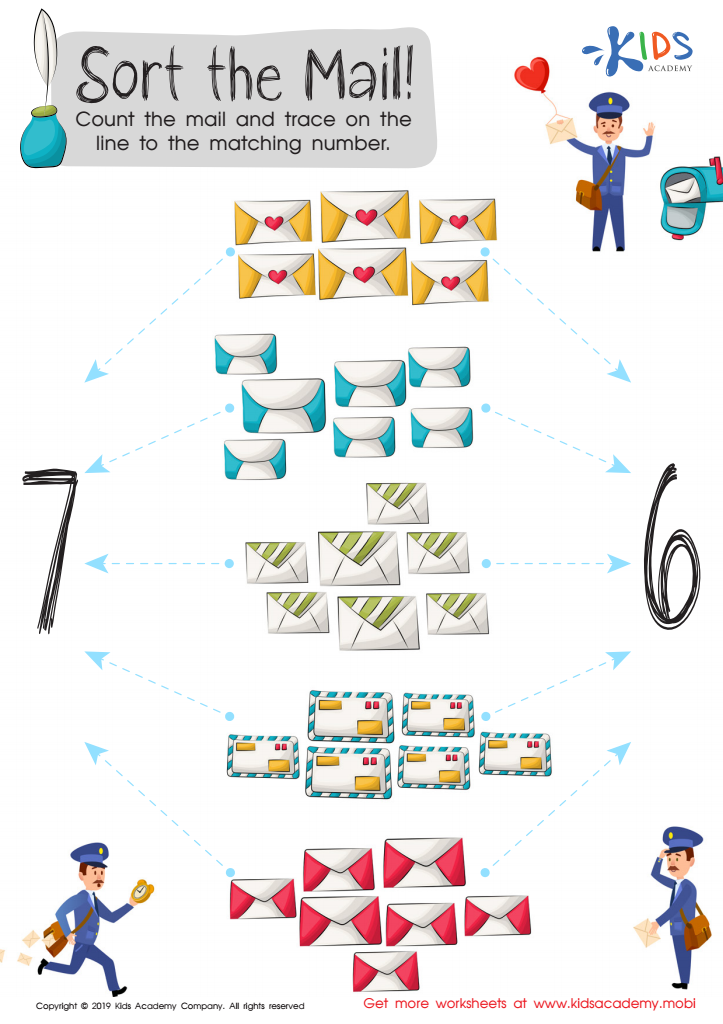
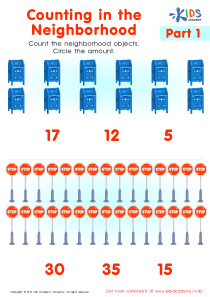
Sort the Mail Worksheet
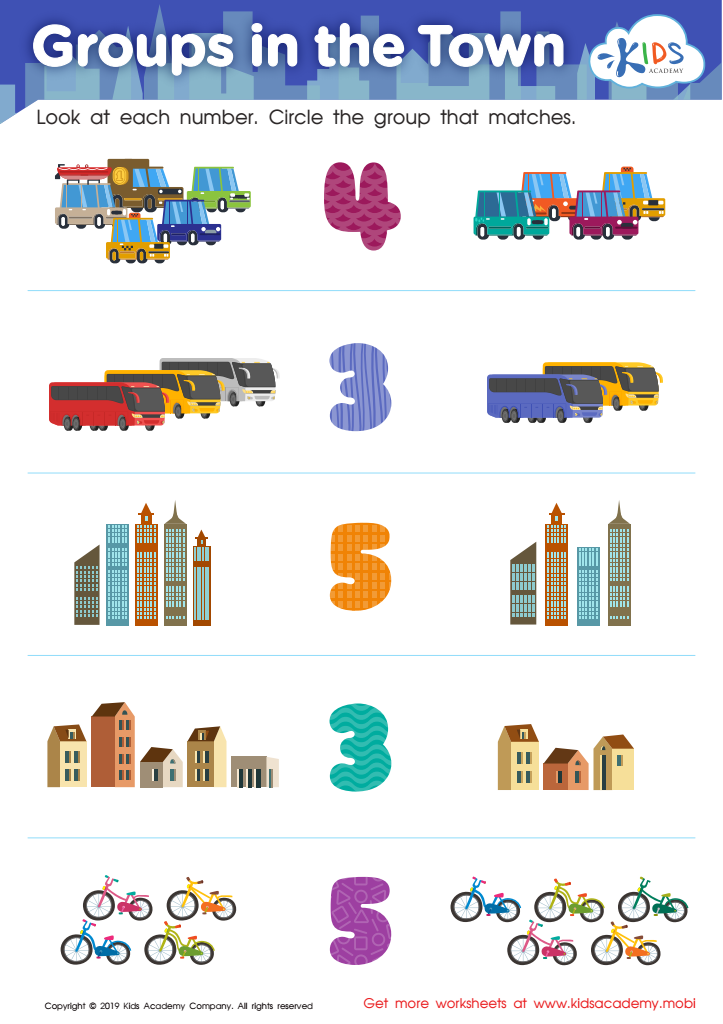
Groups in the Town Worksheet








Categorization skills, especially focusing on easy numbers 0-10 for children ages 3 to 8, are foundational for early learning. Parents and teachers should care about these skills because they play a crucial role in cognitive development. Understanding categorization helps children make sense of the world around them by organizing information logically. For example, through categorizing numbers, children learn to identify similarities and differences, develop critical thinking skills, and enhance their problem-solving abilities.
Moreover, mastering basic numbers aids in establishing a strong mathematical foundation. It creates a comforting familiarity with numbers that prepares children for more complex mathematical concepts in the future. When children can categorize numbers, they can begin to understand concepts such as quantity and sequencing, which are paramount in elementary math.
Additionally, these skills support language development. As children categorize, they often use descriptive words, thus expanding their vocabulary. In a collaborative setting, such as a classroom, categorization encourages interaction and communication among peers, fostering social skills and teamwork.
By investing time in building categorization skills with easy numbers, parents and teachers are equipping young learners with essential tools for academic success and lifelong learning. Such an early focus will yield significant benefits as children progress through their educational journeys.