Understanding times tables Easy Times Tables Worksheets for Ages 3-8
3 filtered results
-
From - To
Unlock the joy of learning multiplication with our "Understanding Times Tables: Easy Times Tables Worksheets for Ages 3-8". Specially designed for young minds, these worksheets introduce children to the fundamentals of times tables in a fun, engaging way. Through colorful illustrations and straightforward exercises, kids grasp concepts quickly and build strong mathematical foundations. Whether used at home or in the classroom, our worksheets cater to various learning styles, ensuring every child finds the learning process enjoyable and easy. Foster a love for math early on and watch your child’s confidence multiply! Explore our collection and make math exciting today.
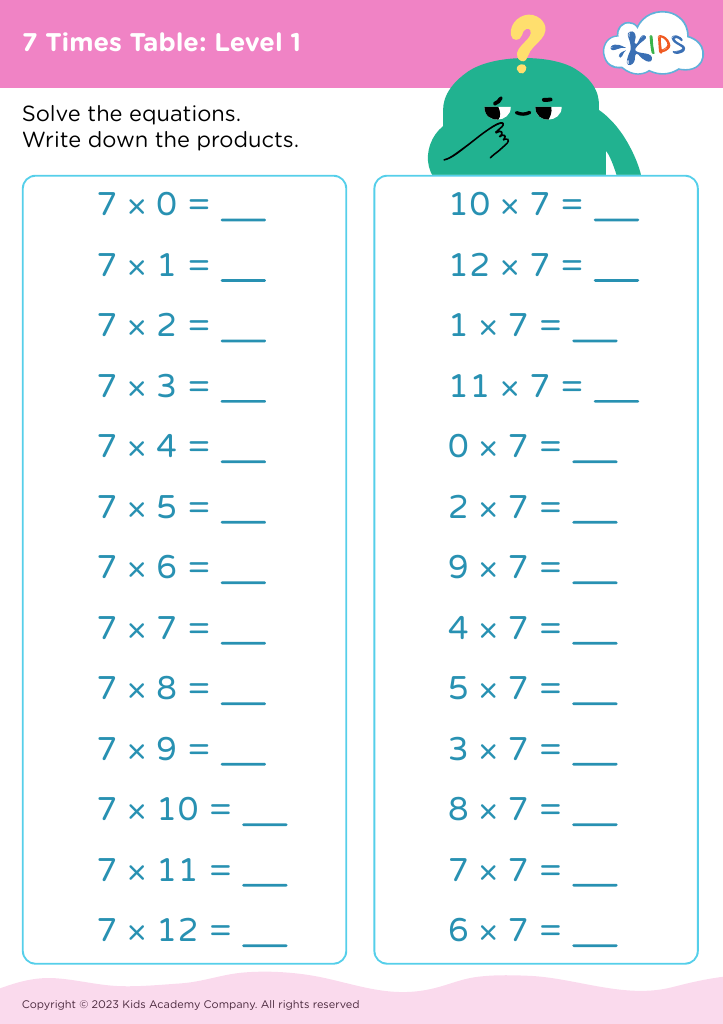
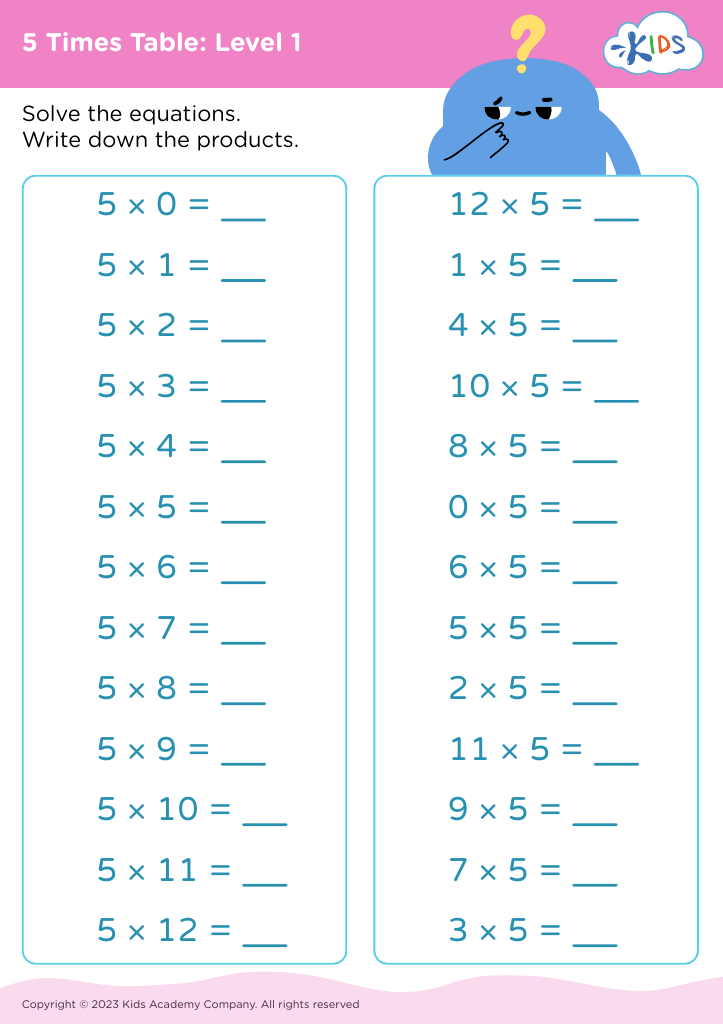
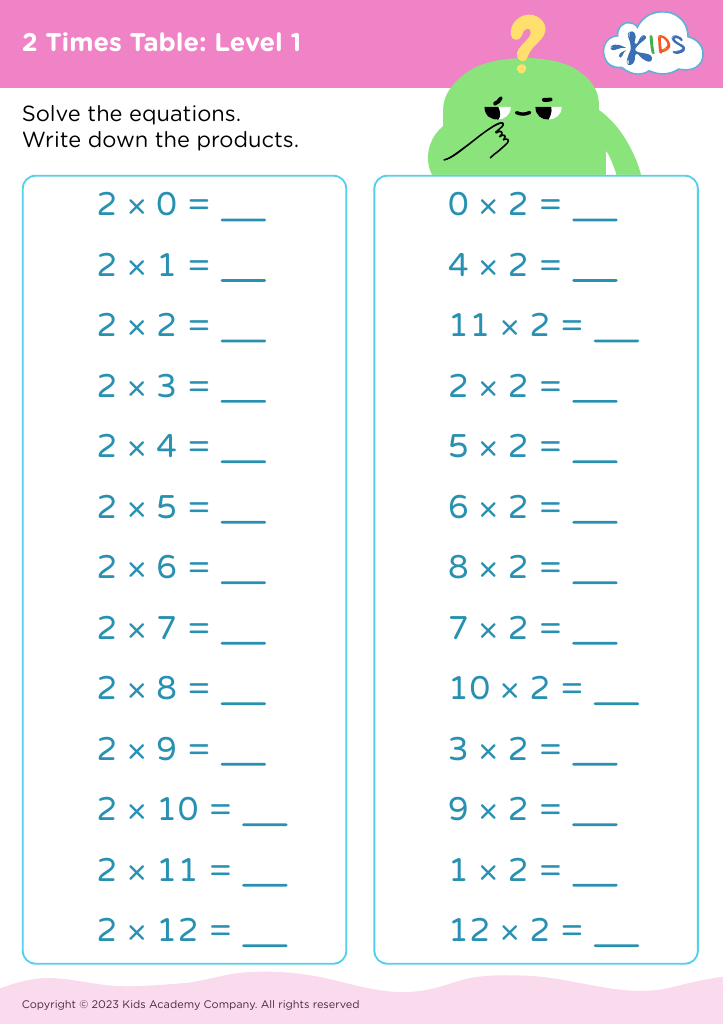





Understanding times tables is fundamental for children's mathematical development, particularly between the ages of 3-8. At this developmental stage, young minds are exceptionally receptive to learning foundational skills. Mastering times tables provides a building block for more complex mathematical concepts, such as division, fractions, and even algebra.
Firstly, familiarity with times tables enhances arithmetic fluency. When children can quickly recall multiplication facts, they solve problems more efficiently, boosting confidence and interest in mathematics. This readiness alleviates math-related anxiety and paves the way for smoother transitions to higher-level math.
Moreover, integrating times tables in early education fosters critical thinking and pattern recognition. Children start noticing patterns in numbers, which nurtures logical thinking and problem-solving skills. These abilities are not only vital in math but also in real-life situations requiring analytical thinking.
Parents and teachers who prioritize easy, engaging ways to teach times tables, like songs, rhymes, games, and visual aids, significantly impact a child's cognitive and academic growth. Early mastery of times tables creates a positive math foundation, encouraging a lifelong appreciation for learning and exploration in various knowledge fields. Therefore, investing time in teaching times tables effectively is crucial in shaping well-rounded, confident, and capable children.








