Counting practice Easy Word Problems Worksheets for Ages 3-8
3 filtered results
-
From - To
Explore our Counting Practice Easy Word Problems Worksheets, specifically designed for children ages 3 to 8! These engaging worksheets help young learners develop essential counting skills through fun and relatable scenarios. Each problem introduces simple concepts that encourage critical thinking and problem-solving abilities while reinforcing numeracy in a playful way. From counting apples to solving simple addition problems, these worksheets cater to various learning levels, making them perfect for home or classroom use. Our thoughtfully crafted activities provide a solid foundation in math, ensuring children build confidence as they learn. Start your child’s mathematical journey today with our interactive, colorful worksheets!
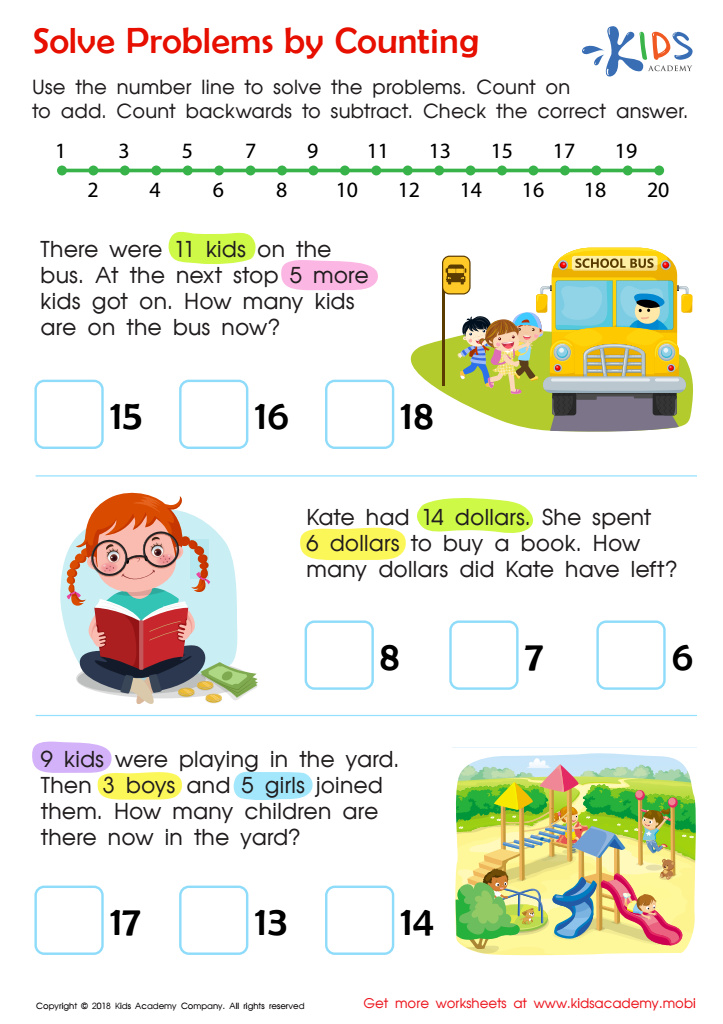
Solve Problems by Counting Worksheet
 Assign to My Students
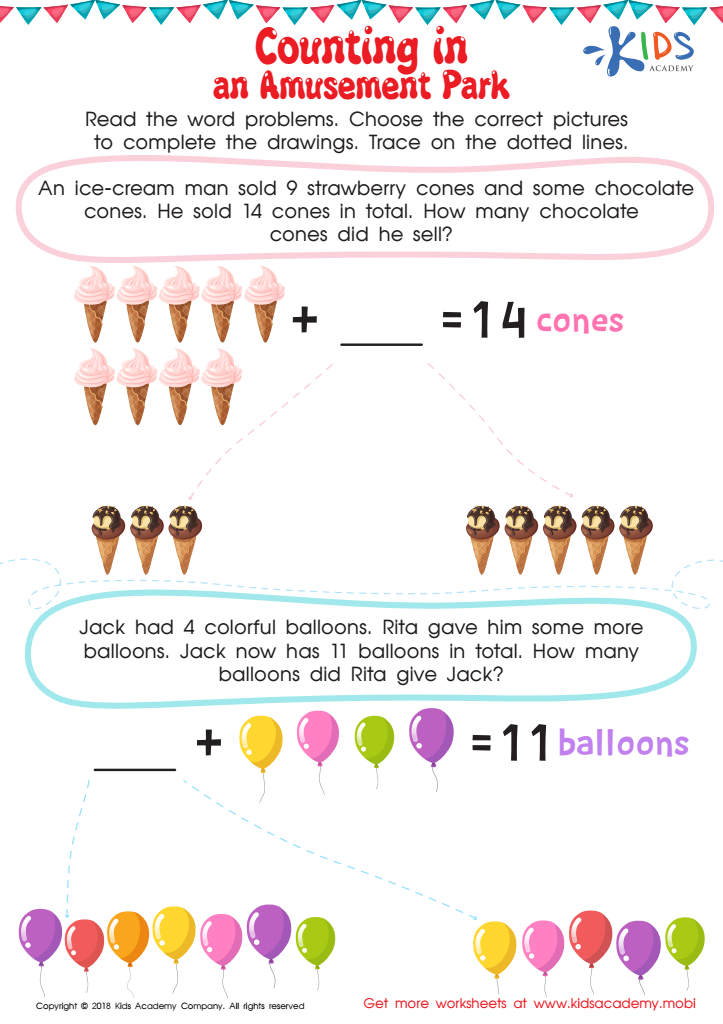
Counting in an Amusement Park Worksheet
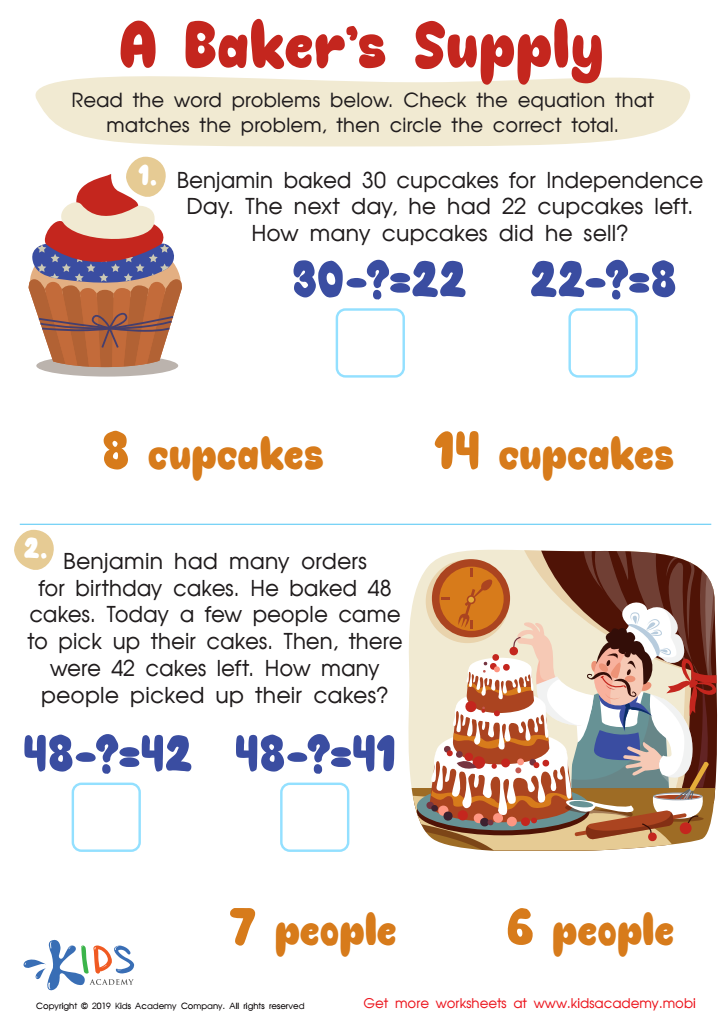
A Baker's Supply Worksheet








Counting practice and easy word problems for children aged 3-8 are crucial for fostering foundational math skills and enhancing critical thinking. At this stage of development, children are naturally curious and eager to learn. Engaging them with counting activities and simple word problems helps build a strong mathematical foundation. Parents and teachers play vital roles in this learning process.
First, these practices develop number sense, which is the comprehension of numbers, their magnitude, and relationships. This is essential for later mathematical concepts and problem-solving abilities. Through counting games and word problems, children also learn to apply math to real-life situations, making the subject more relevant and enjoyable.
Additionally, word problems encourage critical thinking, as they require children to comprehend concepts and articulate their reasoning. This practice enhances language skills, as they learn to decode and communicate numerical concepts effectively.
Moreover, cultivating a positive attitude toward math early on can lead to greater confidence and success in future academic pursuits. By prioritizing counting practice and simple word problems, parents and teachers help children develop essential skills that support not only their current educational journeys but also their lifelong ability to navigate a numerically driven world.








