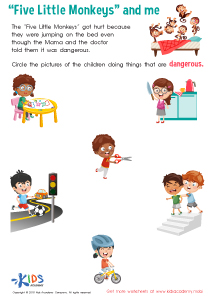
Word Recognition Easy Building Vocabulary Worksheets for Ages 3-8
3 filtered results
-
From - To
Our "Word Recognition Easy Building Vocabulary Worksheets for Ages 3-8" are designed to simplify early learning. These engaging worksheets help children identify, understand, and use new words through fun and interactive activities. Perfect for young learners, these resources support the development of essential reading skills, laying the foundation for lifelong literacy. Kids will enjoy a variety of exercises, from matching and tracing to drawing and coloring, all designed to make vocabulary acquisition enjoyable and effective. Give your child the tools they need to succeed with our playful and educational worksheets.
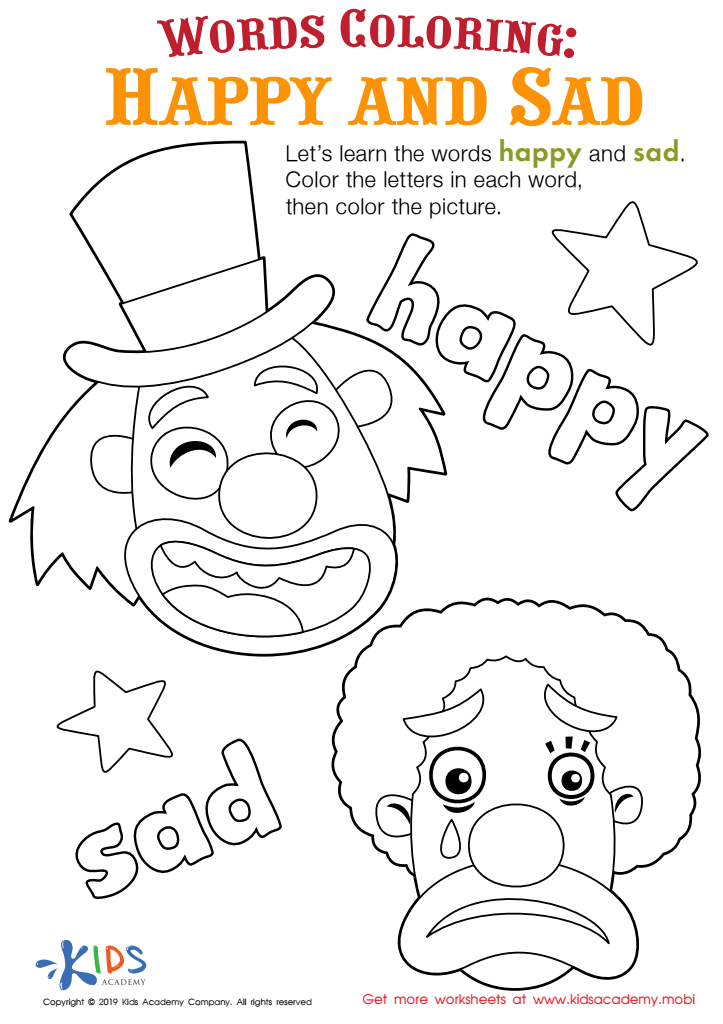
Happy and Sad Words Coloring Worksheet
 Assign to My Students











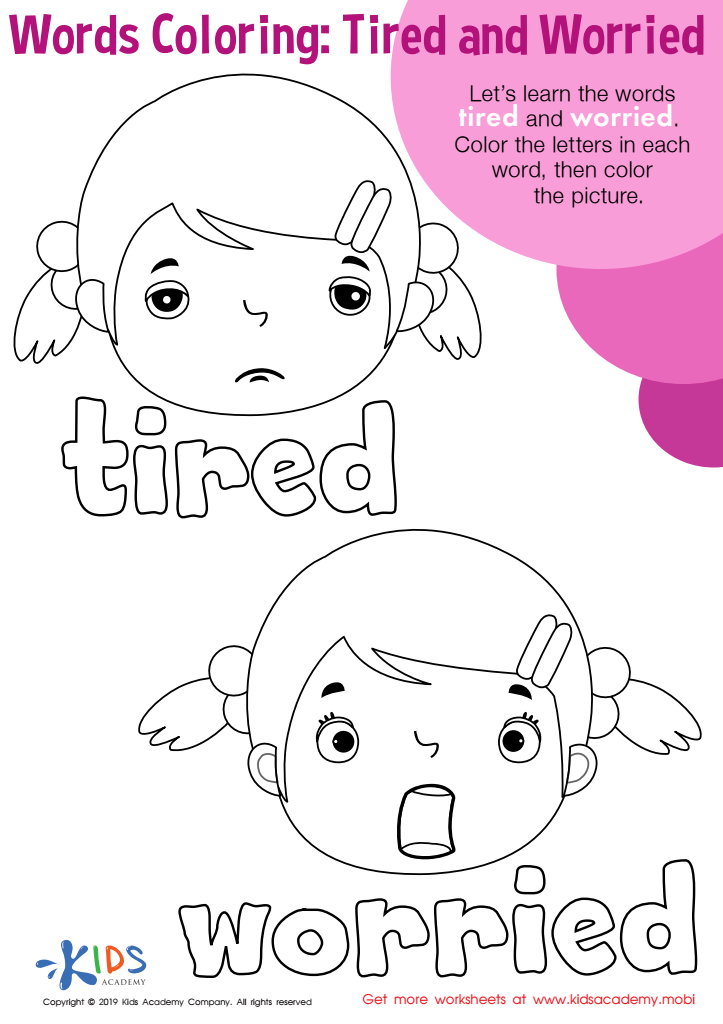
Tired and Worried Words Coloring Worksheet
Assign to My Students
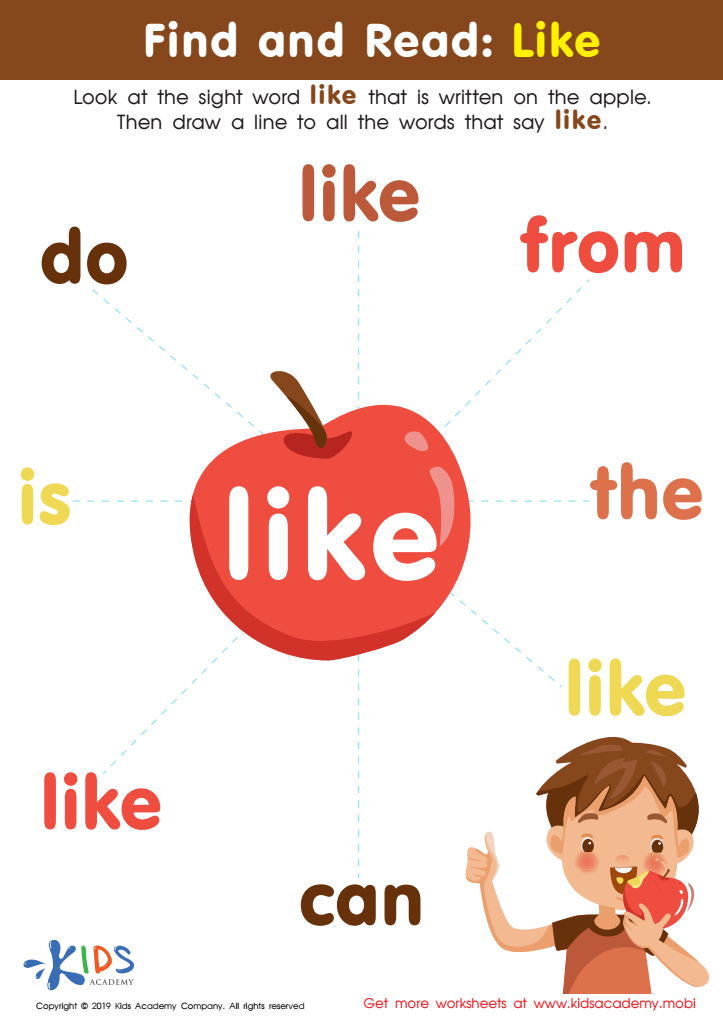
Find and Read: Like Worksheet







.jpg)
Parents and teachers should place a strong emphasis on word recognition and the development of vocabulary in children aged 3-8 because these foundational skills are crucial for future academic success and overall cognitive development. At this early age, children are particularly receptive to language acquisition, making it an ideal period for enriching their word bank. Word recognition is closely linked to reading fluency and comprehension; children who quickly and accurately recognize words spend less cognitive energy on decoding, allowing them to focus more on understanding the text's meaning.
Building a robust vocabulary at a young age also fosters better communication skills. A rich vocabulary gives children the tools they need to express their thoughts, emotions, and needs clearly and effectively, reducing frustration and enhancing social interactions. Moreover, vocabulary skills are interrelated with other key literacy components, such as writing and spelling. Children with a broad vocabulary range are often better at crafting detailed written narratives and understanding new, complex subjects as they advance in their education.
Lastly, strengthening word recognition and vocabulary can boost a child's confidence and love for learning. Success in these early literacy skills often leads to positive attitudes toward school and continuous learning, setting a trajectory for lifelong educational and personal growth. Parents and teachers play a pivotal role in fostering these skills through read-aloud sessions, interactive vocabulary games, and consistently encouraging a print-rich environment.