Enhancing observation skills Easy Reading Non-Fiction Worksheets for Ages 3-8
3 filtered results
-
From - To
Enhance your child's observation skills with our Easy Reading Non-Fiction Worksheets, specially designed for ages 3-8. Our engaging activities encourage young learners to notice details, make connections, and think critically about the world around them. Each worksheet features age-appropriate, informative texts paired with fun exercises that sharpen attention to detail. From identifying animals to observing everyday objects, our printable resources support key developmental milestones. Whether at home or in the classroom, these worksheets make learning enjoyable and effective. Boost your child's curiosity and observational skills today with our expertly crafted ready-to-go activities.
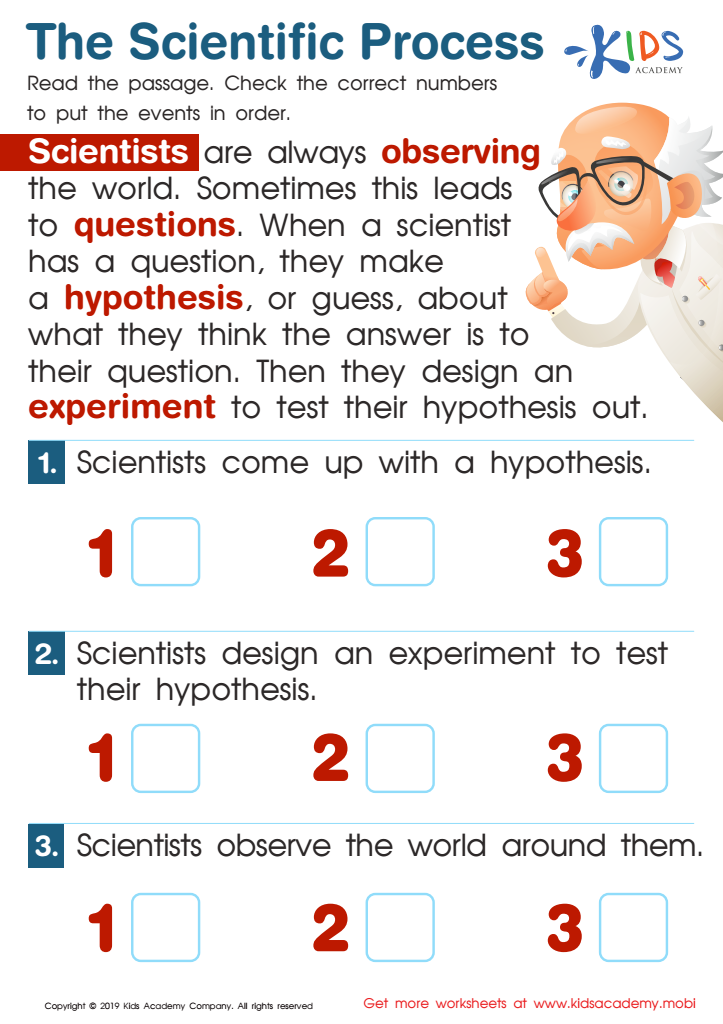
The Scientific Process Worksheet
 Assign to My Students
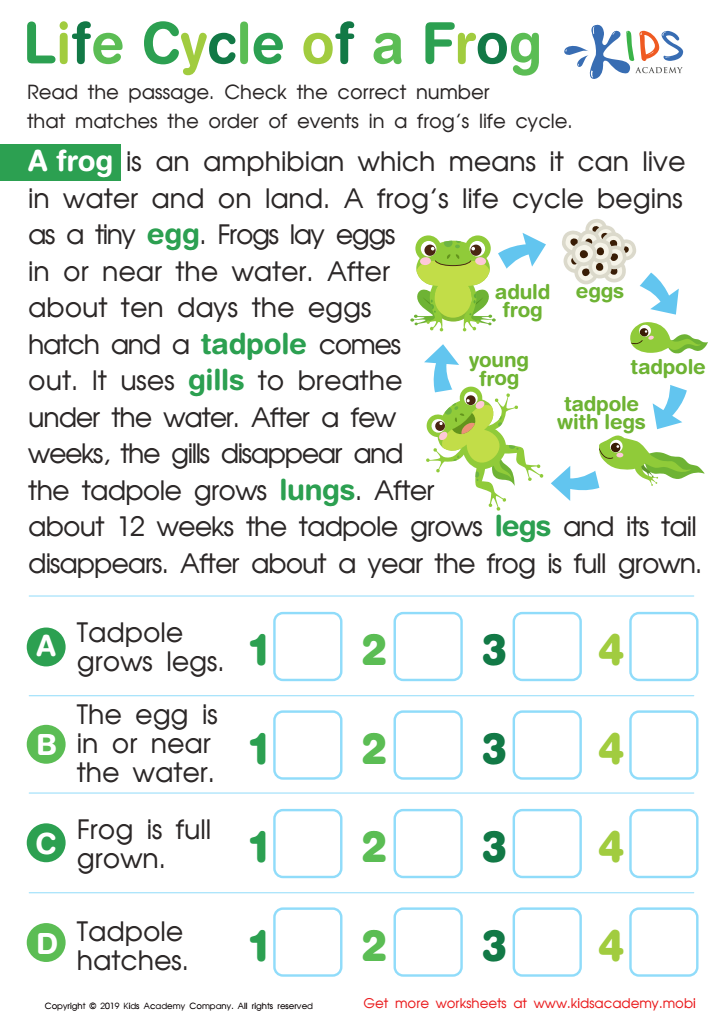
Life Cycle of a Frog Worksheet
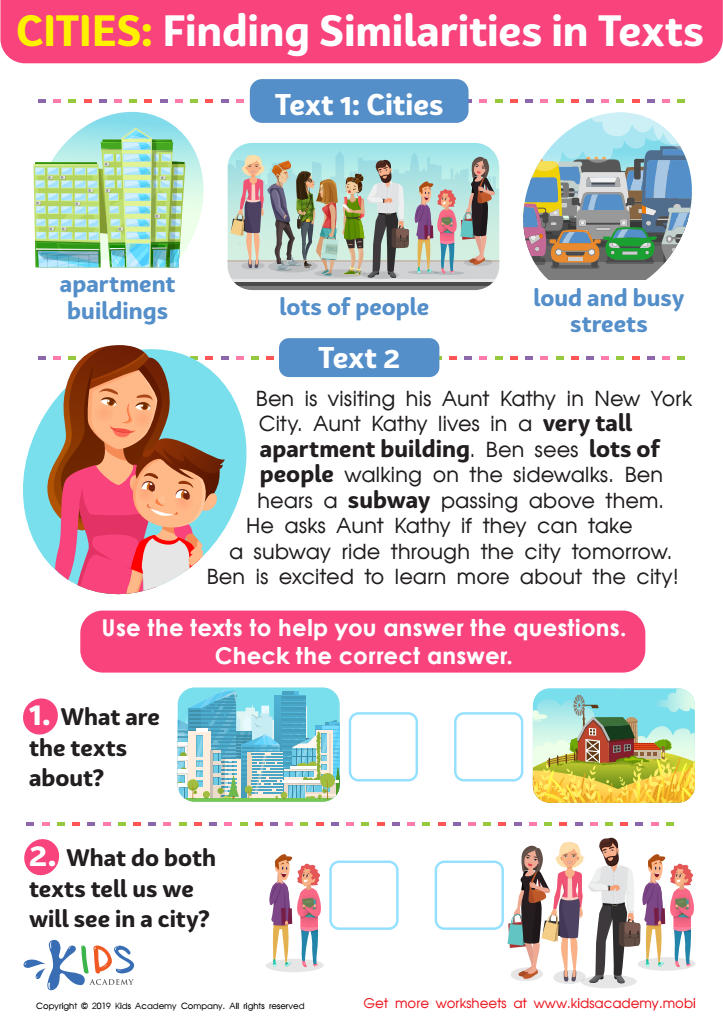
Cities: Finding Similarities Worksheet








Enhancing observation skills in young children, particularly through easy reading non-fiction, is a crucial aspect of early development that parents and teachers should prioritize. For ages 3-8, the ability to observe carefully helps children understand the world around them, fostering curiosity and a lifelong love of learning. Reading non-fiction books tailored for this age group introduces kids to real-life concepts, people, places, and events, making information relatable and engaging. This form of reading can build foundational knowledge in science, nature, history, and social studies.
When children are encouraged to observe attentively, they develop critical thinking and problem-solving skills. They learn to notice details, ask questions, and gather information, all of which are essential for academic success and everyday life. Non-fiction texts provide opportunities for descriptive vocabulary and concept development, expanding language skills while encouraging logical thinking.
Additionally, non-fiction reading often involves visual aids such as pictures, diagrams, and charts which enhance understanding and retention. By nurturing keen observation skills through these texts, educators and families support a child's cognitive development, encourage their natural curiosity, and prepare them for more complex learning tasks. These early experiences form a solid foundation for later academic pursuits, making observation a priceless skill nurtured through the enjoyable act of shared reading.







