Object identification Easy Worksheets for Ages 3-9
3 filtered results
-
From - To
Discover fun and engaging Object Identification Easy Worksheets designed for kids ages 3-9! Our worksheets help young learners sharpen their recognition skills by identifying different objects through colorful images and enjoyable activities. Ideal for preschool and early elementary grades, these printable sheets support cognitive development and vocabulary building. Perfect for parents and teachers, the worksheets offer a playful approach to learning, enhancing kids' abilities to distinguish and categorize everyday objects. With varying levels of difficulty, they cater to every child's pace, making learning easy and delightful. Unlock your child’s potential today with our Object Identification Easy Worksheets!
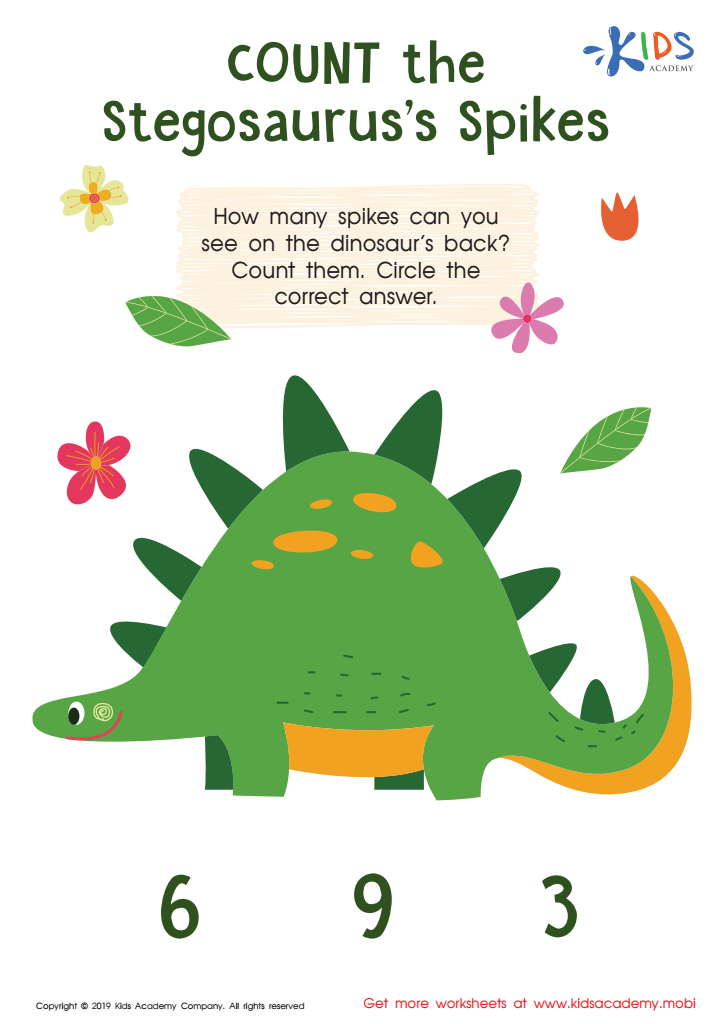
Count the Stegosaurus's Spikes Worksheet
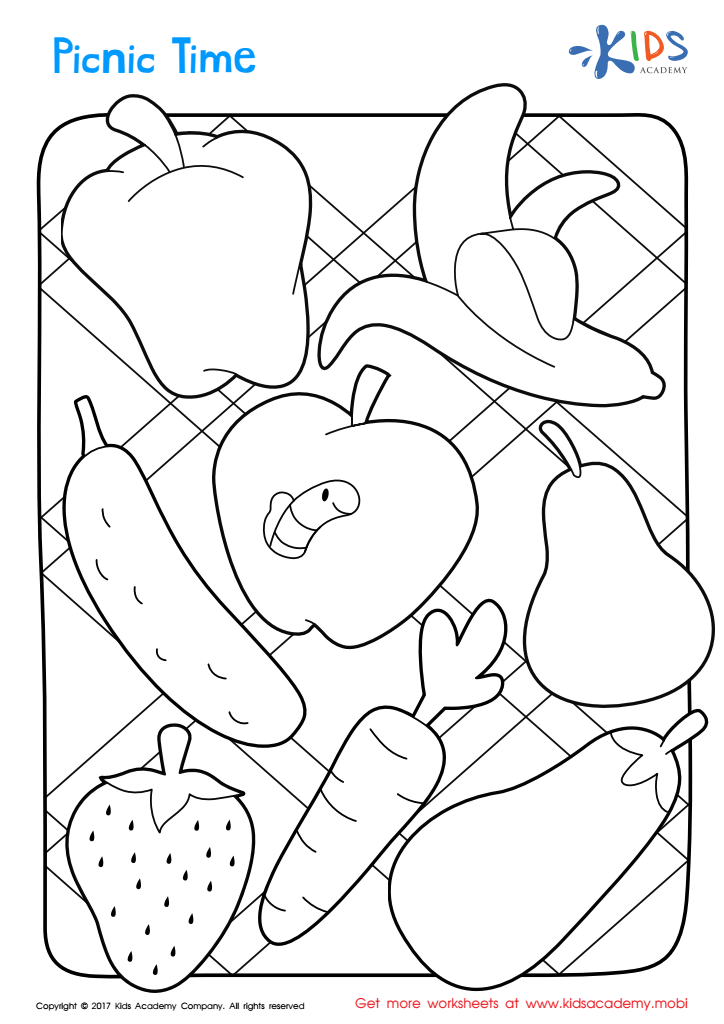
Picnic Time Coloring Page
 Assign to My Students
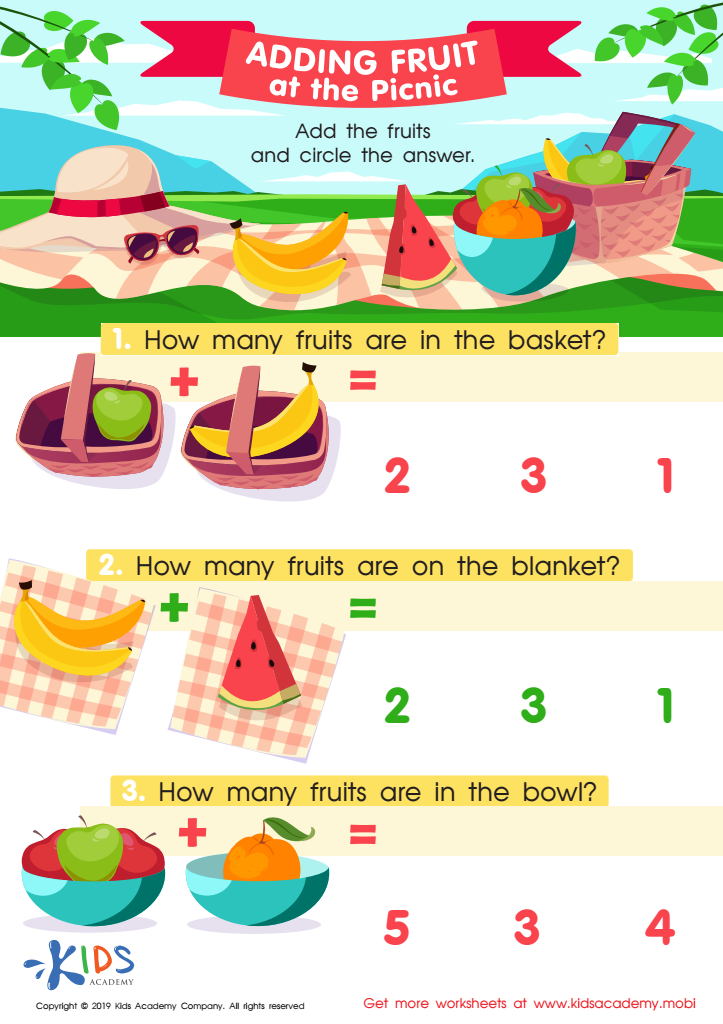
Adding Fruit at the Picnic Worksheet







Object identification is a fundamental skill for children aged 3-9 and serves as a cornerstone for their cognitive and social development. For parents and teachers, fostering this skill can significantly enhance various aspects of a child's growth.
Firstly, object identification promotes language development. As children learn the names and characteristics of objects, they broaden their vocabulary and communication skills. This not only helps them express themselves more clearly but also strengthens their ability to understand others, fostering better social interactions.
Secondly, it aids in developing categorization and classification abilities. Children begin to group objects based on similarities and differences, a crucial cognitive skill that supports mathematical thinking and early science learning. For example, recognizing the shapes and colors of objects can illuminate basic geometric and sensory concepts.
Moreover, object identification enhances memory and attention. Engaging with different objects helps children become more observant, boosting their concentration and the ability to recall details. These skills are vital for academic success as they progress through school.
Lastly, facilitating object identification nurtures curiosity and encourages exploration. Children learn about their environment interactively, promoting a lifelong love of learning. Essentially, focusing on this skill provides a strong foundation for children to understand and interact with the world more meaningfully and confidently.








