
Shape identification Easy Worksheets for Ages 3-9
6 filtered results
Difficulty Level
Grade
Age
-
From - To
Subject
Activity
Standards
Discover our user-friendly Shape Identification Easy Worksheets for ages 3-9, designed to nurture early learning in a fun and engaging way. Tailored to develop shape recognition, these worksheets are perfect for young learners, combining colorful visuals with interactive exercises. Each printable is crafted to boost cognitive skills and hand-eye coordination, making foundational geometry concepts easy to grasp. Aimed at both parents and educators, these resources support various learning speeds and styles, transforming abstract shapes into an exciting learning adventure. Equip your child or students with essential skills and a love for learning today!
Favorites
With answer key
Interactive
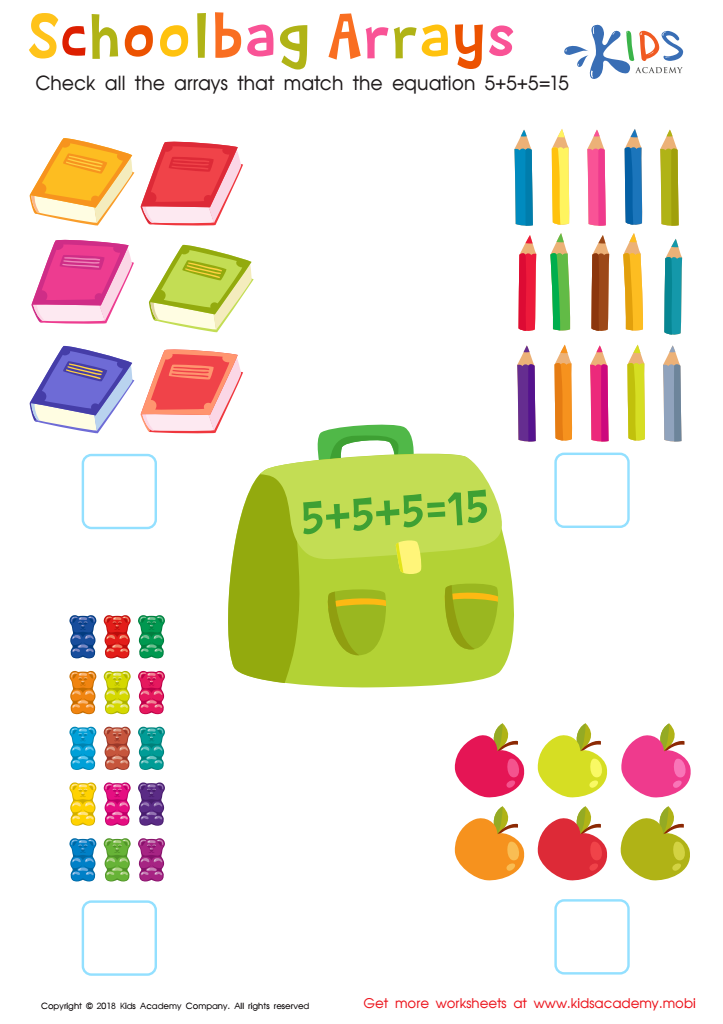
Schoolbag Arrays Worksheet
Help your child spot the correct arrays in this worksheet: having them count the items in each and check the boxes for the ones with 15 objects. Ask them to differentiate between rows and columns and explain which ones match the equation 5+5+5=15.
Schoolbag Arrays Worksheet
Worksheet
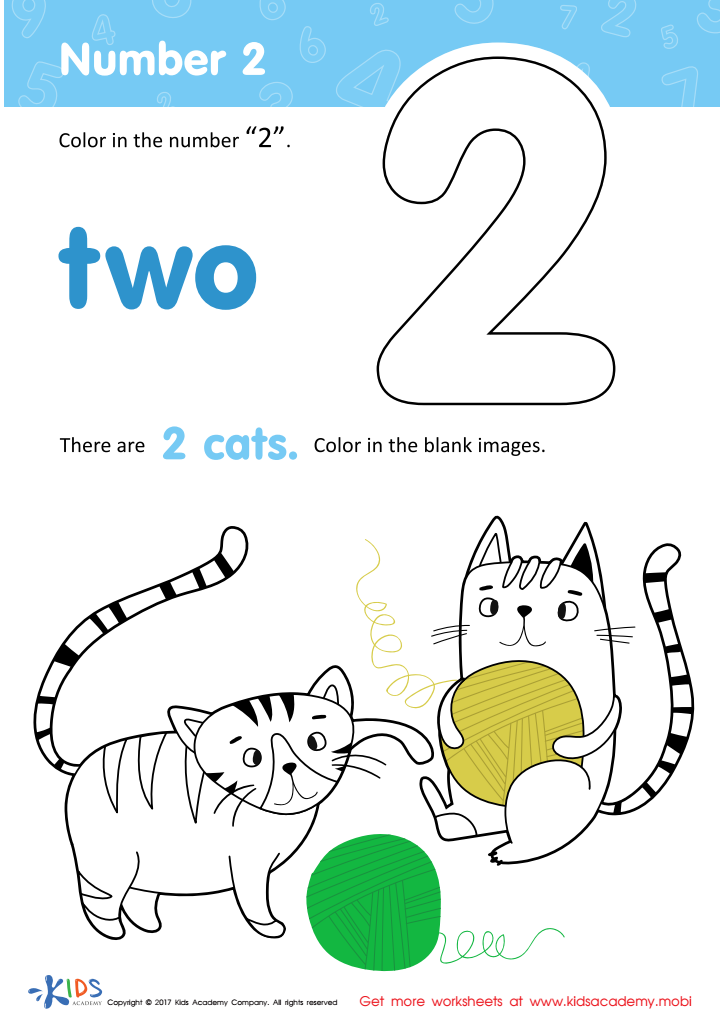
Number 2 Printable
Help your child learn to recognize the number two with these cats and their yarn balls. Print this coloring page – it's great for counting and coloring fun! Your child will develop basic numeracy skills as they visually see numbers in action.
Download (PDF)
 Assign to My Students
Assign to My Students
Number 2 Printable
Worksheet
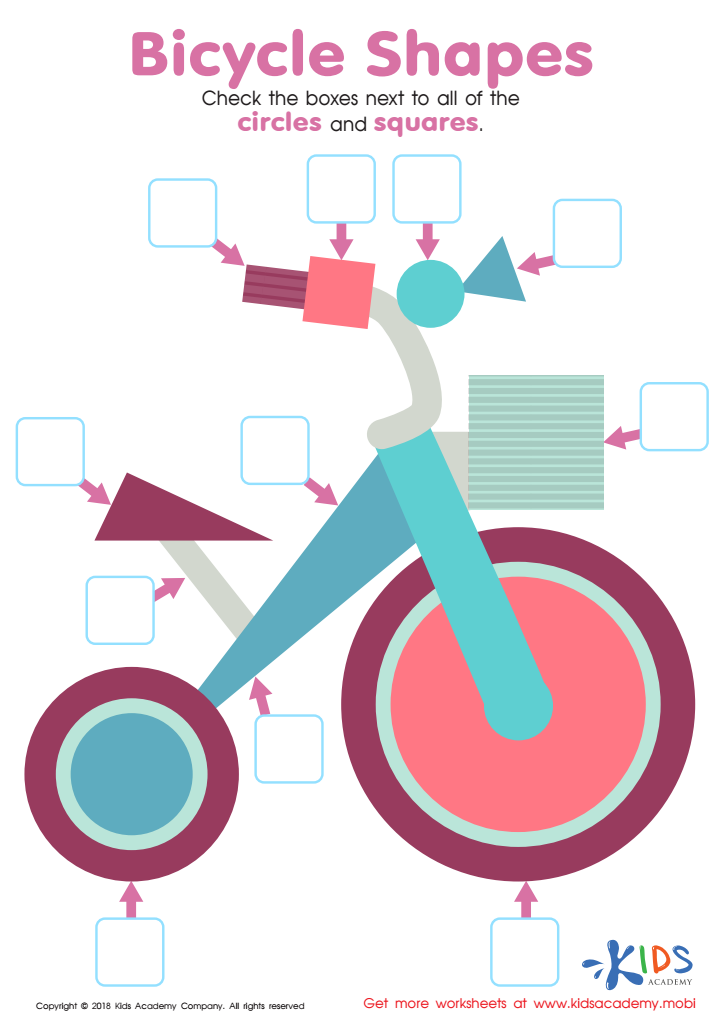
Bicycle Shapes Worksheet
This fun geometry worksheet for preschoolers asks the child to spot hidden shapes (circles, squares) in a colorful bicycle. Each shape varies in size and the child checks the box when it's found. It's a visual way to teach shapes.
Bicycle Shapes Worksheet
Worksheet
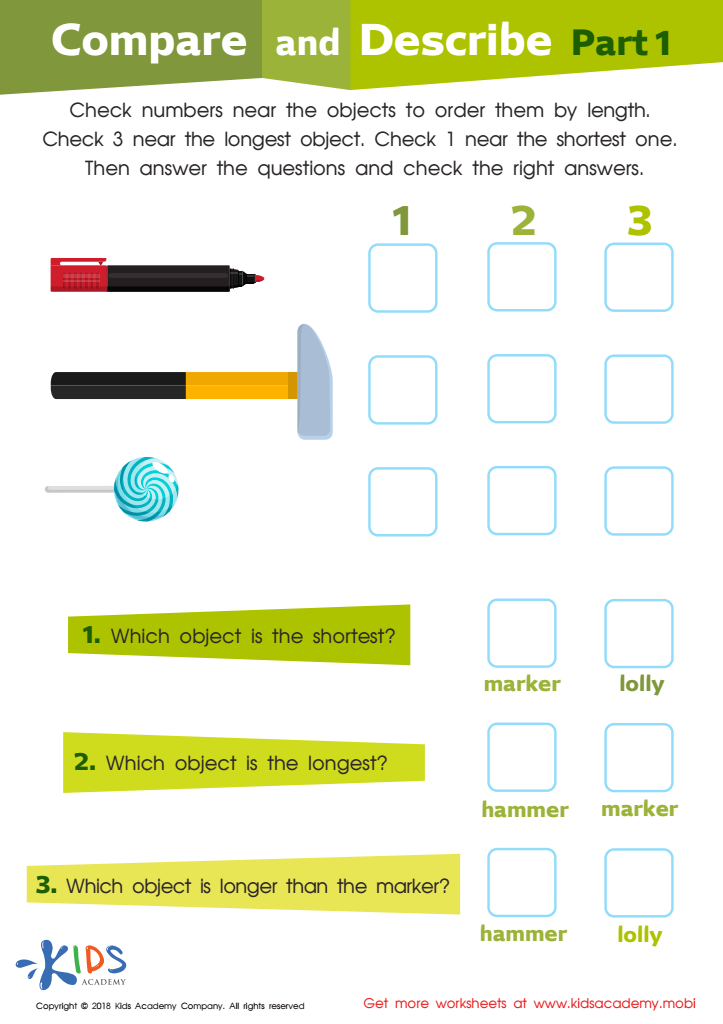
Compare and Describe: Part 1 Worksheet
In this worksheet from Kids Academy, kids can start learning measurement in stages. Observe the images, then compare their length - which one is shortest? Which one is longest? Answer the questions at the bottom to complete the sheet. It's an easy way to help kids understand measurement basics.
Compare and Describe: Part 1 Worksheet
Worksheet
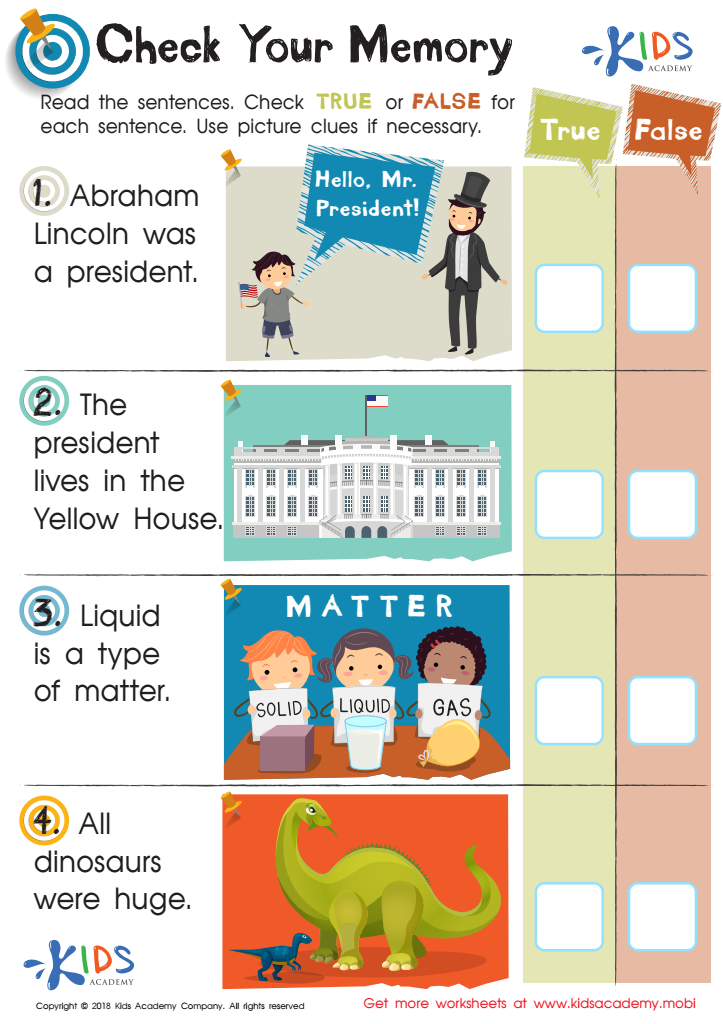
Check Memory Worksheet
Assisting your kids with their homework and using worksheets is a great way for them to learn. The vibrant visuals in this printout can help stimulate the mind and motivate your child. Have them read the sentences and then point to the associated images. Afterwards, ask them to state True or False for each sentence. If they are still uncertain, offer them the picture clues to assist further.
Check Memory Worksheet
Worksheet
Join Kids Academy for Free
Who is primarily going to use this learning content?






Shape identification is a fundamental skill for young children, especially within the critical developmental window of ages 3-9. Parents and teachers should prioritize this aspect of early learning for several compelling reasons.
Firstly, recognizing and differentiating shapes enhances cognitive development by fostering visual-spatial skills. This ability is crucial for understanding and organizing the world, aiding in tasks such as reading, problem-solving, and navigating environments.
Secondly, shape identification bolsters mathematical skills as it lays the groundwork for geometry. Understanding shapes and their properties introduces children to basic math concepts like symmetry, patterns, and classification. This foundation makes future, more complex mathematical learning smoother and more intuitive.
Moreover, this skill also promotes language development. As children learn the names and characteristics of various shapes, they expand their vocabulary and enhance descriptive language abilities. This can improve their communication skills and helps in other academic subjects.
Shape identification activities are often interactive and engaging, can reinforce fine motor skills through activities like drawing or manipulating shapes with hands. Given these wide-ranging benefits, parents and teachers should view shape identification not merely as a rudimentary skill, but as a pivotal component of holistic, early childhood education.








