Sorting skills Easy Worksheets for Ages 3-9
6 filtered results
-
From - To
Unlock your child's potential with our Sorting Skills Easy Worksheets designed for ages 3-9! At Kids Academy, we offer engaging, fun, and educational resources to help young learners develop essential sorting skills. Our expertly crafted worksheets focus on categorizing objects by size, shape, color, and more, ensuring a solid foundation in critical thinking and organization. With vibrant visuals and interactive activities, children learn while having fun, fostering cognitive development and problem-solving abilities. Perfect for both classroom settings and at-home practice, our printable worksheets make learning a joy. Step into a world of organized learning with Kids Academy today!
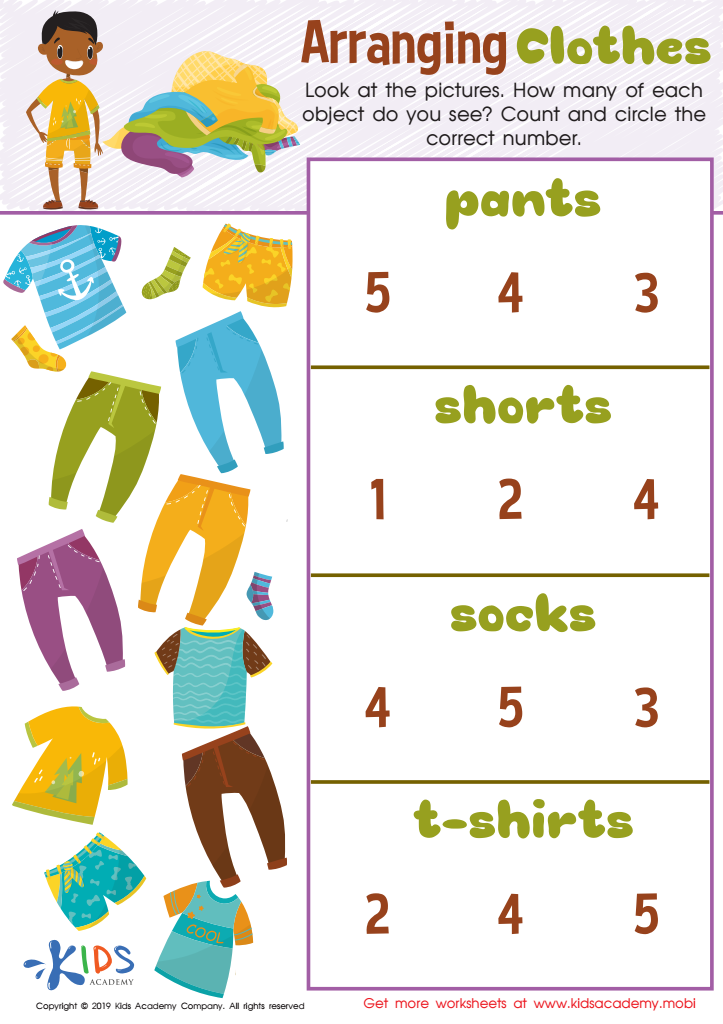
Arranging Clothes Worksheet
 Assign to My Students
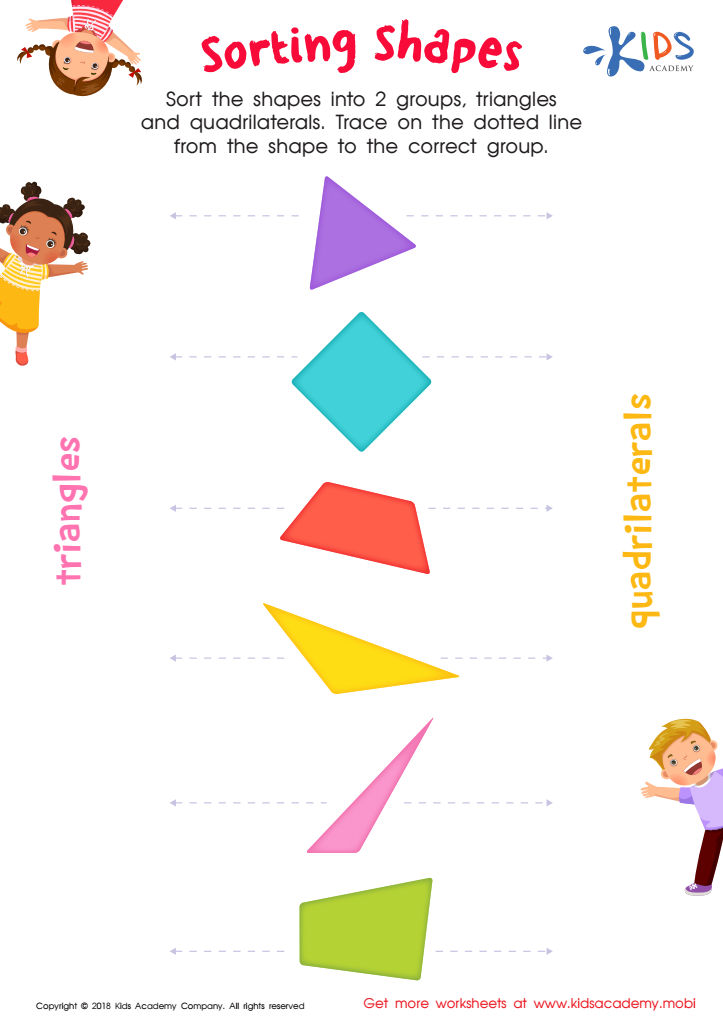
Sorting Shapes Worksheet
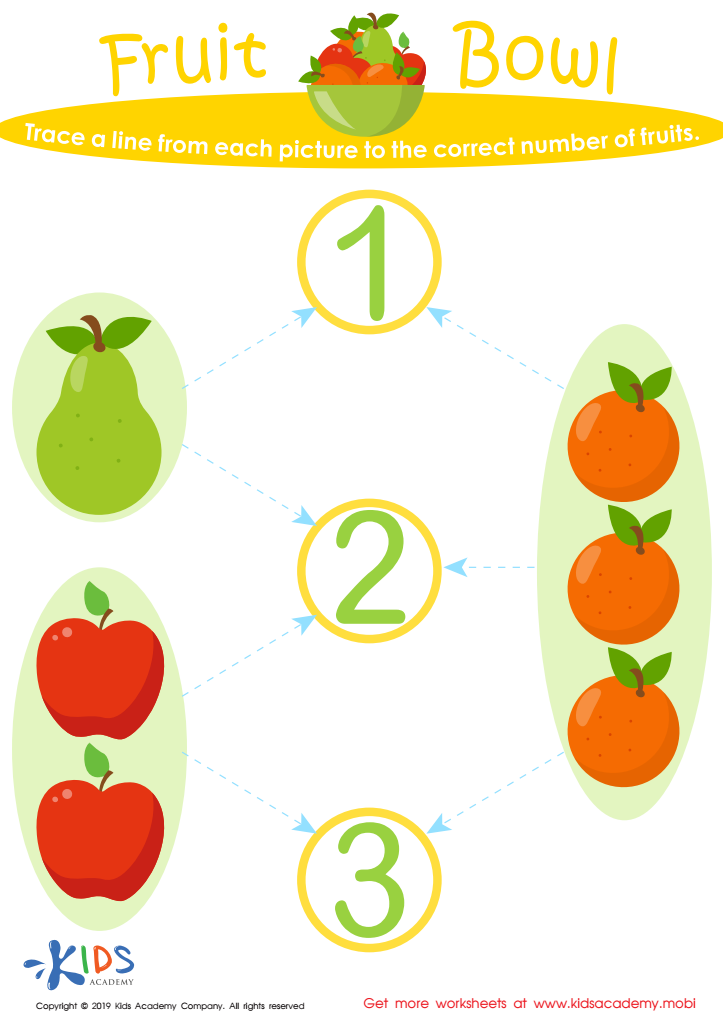
Fruit Bowl Worksheet
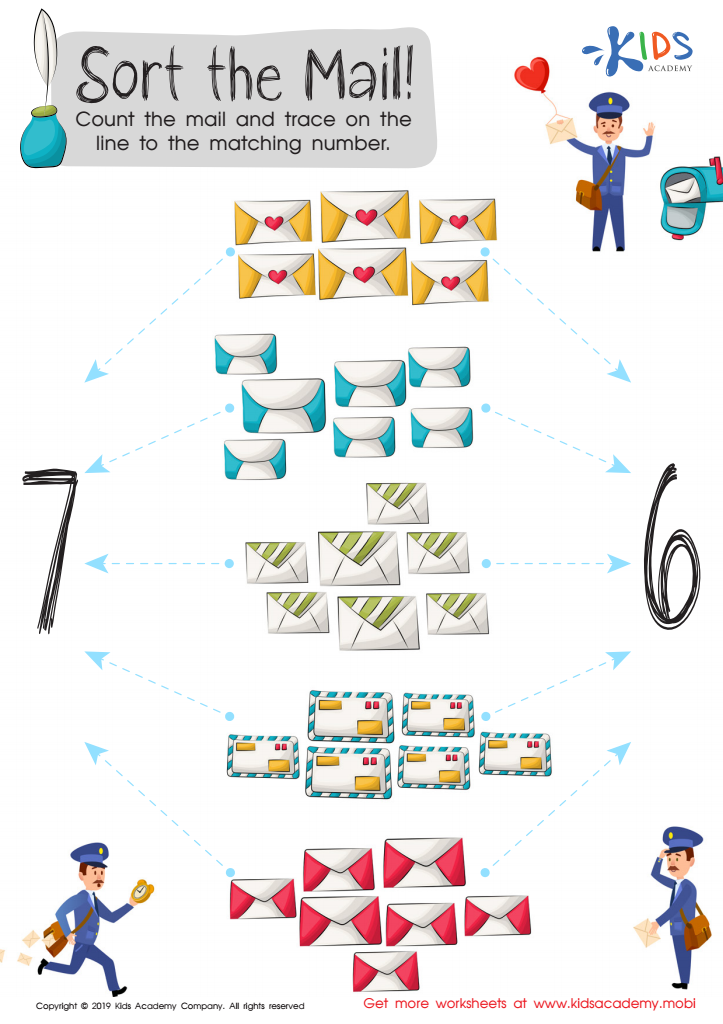
Sort the Mail Worksheet
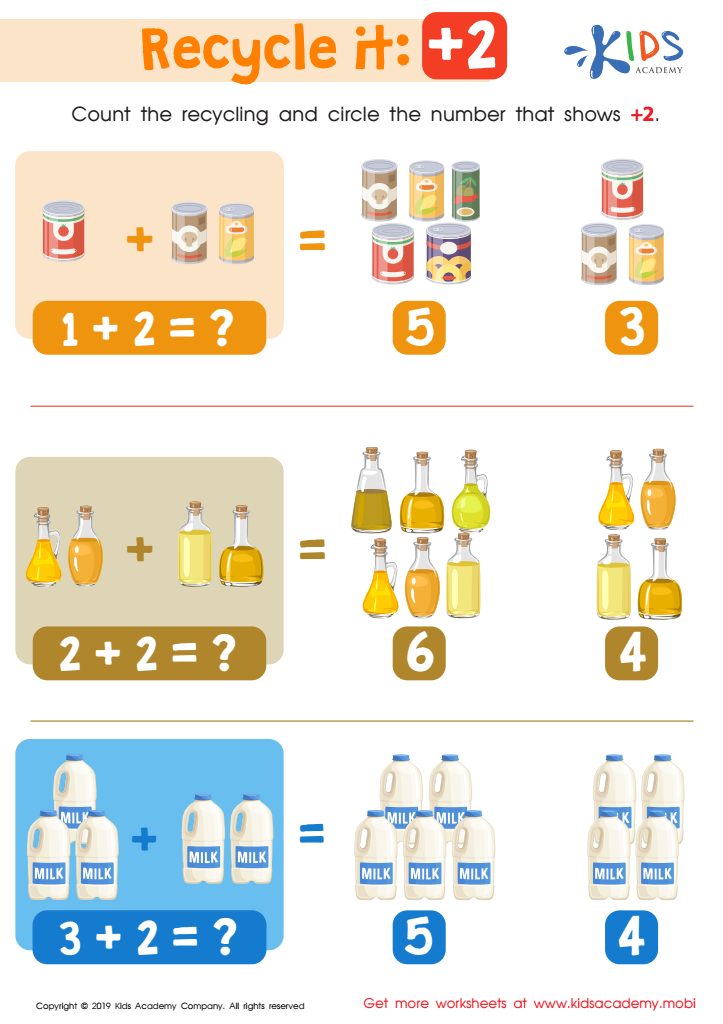
Recycle It: +2 Worksheet
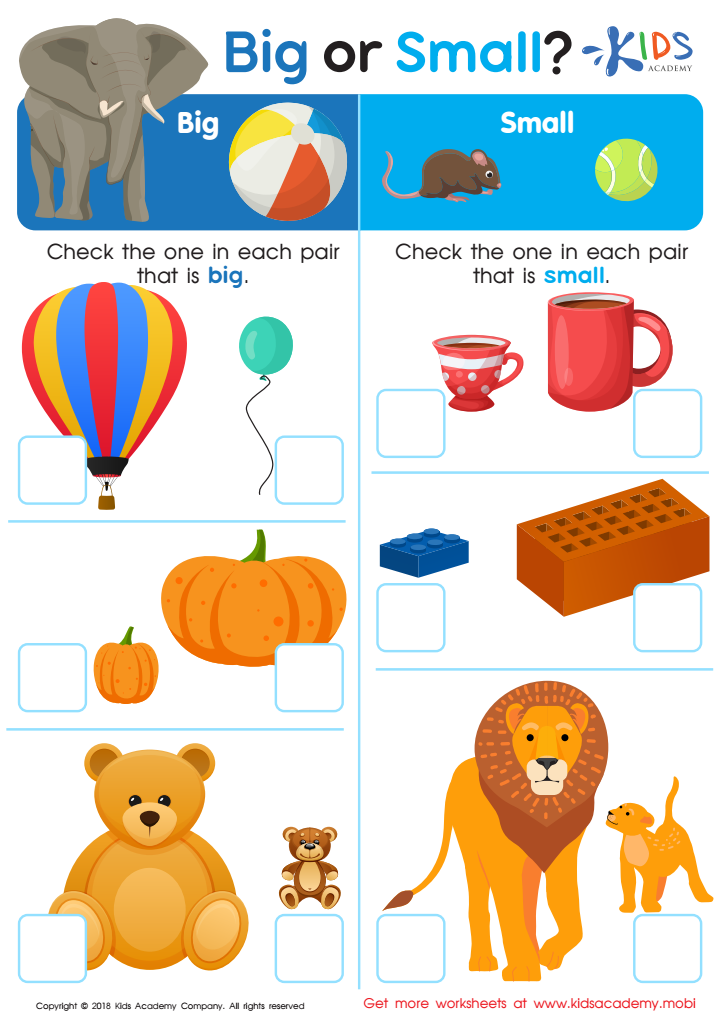
Big or Small? Worksheet







Sorting skills are foundational for young children, and parents and teachers play a crucial role in nurturing these abilities in kids aged 3-9. Sorting involves categorizing objects based on attributes like color, shape, size, or type. This seemingly simple activity develops important cognitive abilities.
First, sorting helps kids understand and make sense of the world. Through sorting, they learn to observe and compare similarities and differences, fostering critical thinking and attention to detail. This skill lays the groundwork for mathematics. For instance, understanding sets, patterns, and number sense all start with the ability to sort and categorize.
Second, sorting encourages language development. When children sort objects, they often discuss their choices, enhancing their vocabulary and communication skills. Describing why an object belongs in a particular group prompts the use of specific terms related to attributes.
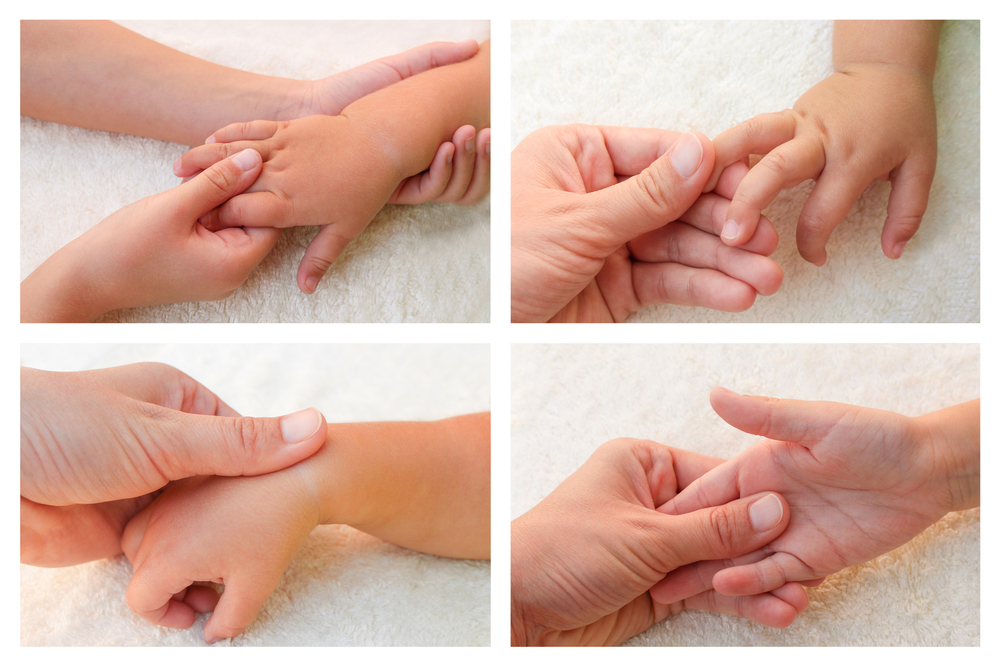
Additionally, sorting promotes fine motor skills. Handling and organizing objects improve their hand-eye coordination and dexterity, essential for tasks such as writing and buttoning.
In an educational context, sorting is prevalent across subjects—whether it's sorting story elements in language arts or organizing animals in science, it enhances overall learning. Therefore, prioritizing sorting activities for young children equips them with critical skills needed for future academic success and day-to-day life.








