Understanding patterns Easy Basic Times Tables up to 12 Worksheets for Ages 3-9
3 filtered results
-
From - To
Introducing "Understanding Patterns: Easy Basic Times Tables up to 12 Worksheets for Ages 3-9" - a perfect resource for young learners to master multiplication! Designed to make learning fun and effective, these worksheets help children recognize patterns and understand the basics of times tables up to 12. Tailored for kids aged 3-9, the engaging activities encourage critical thinking and boost math confidence. With bright visuals and easy-to-follow instructions, young students can practice and improve their multiplication skills at their own pace. Whether at home or in the classroom, these worksheets make math exciting and accessible for all beginners!
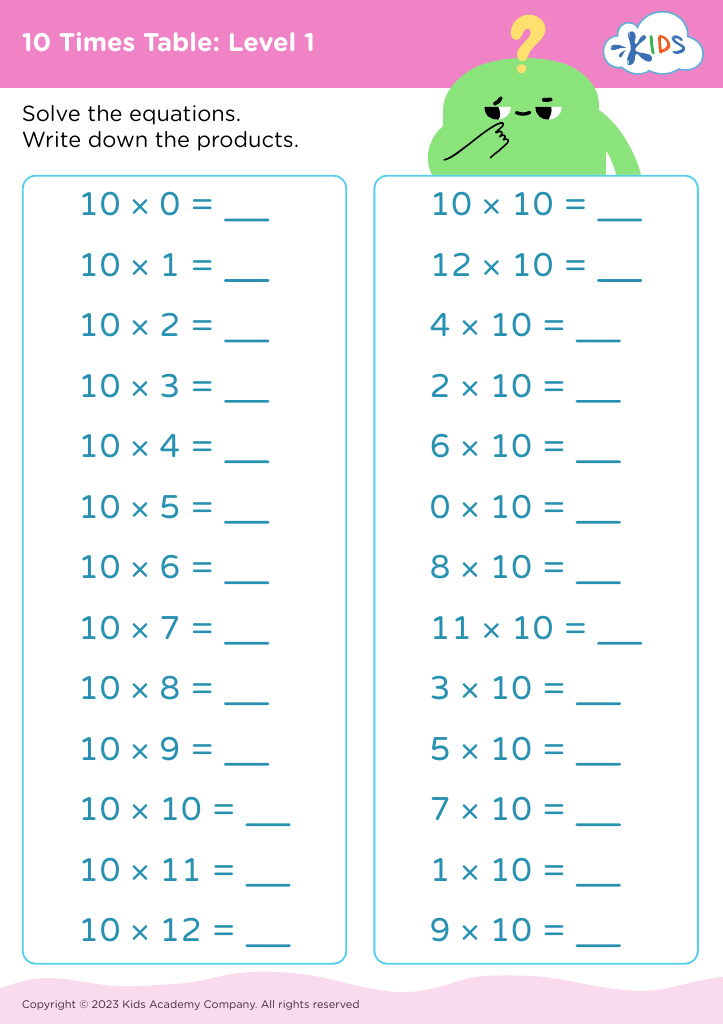
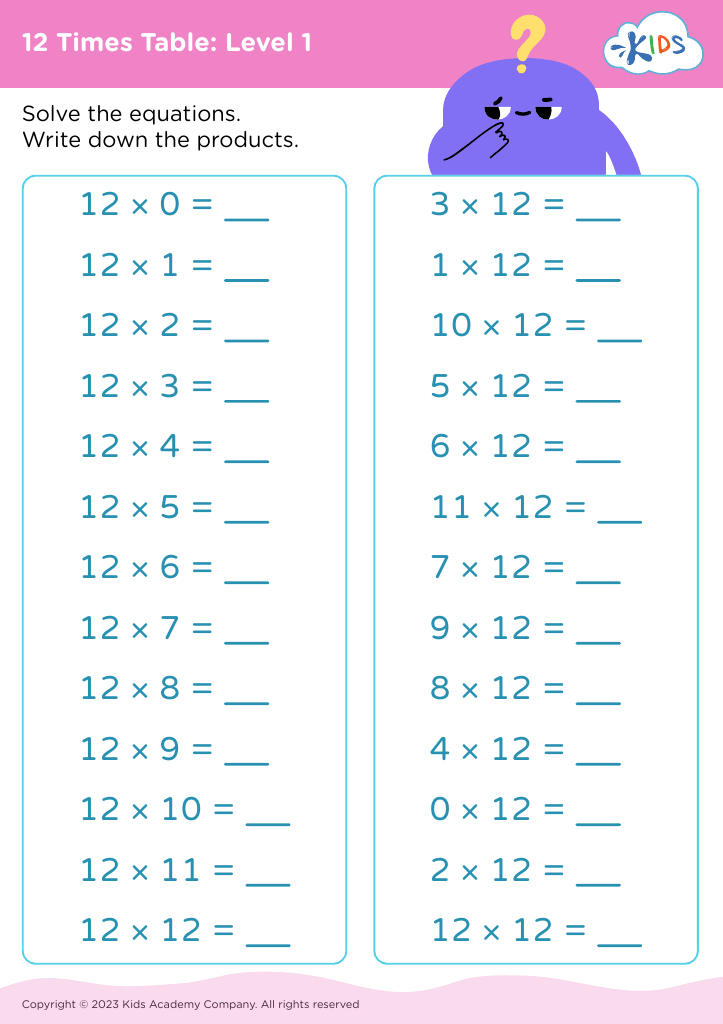
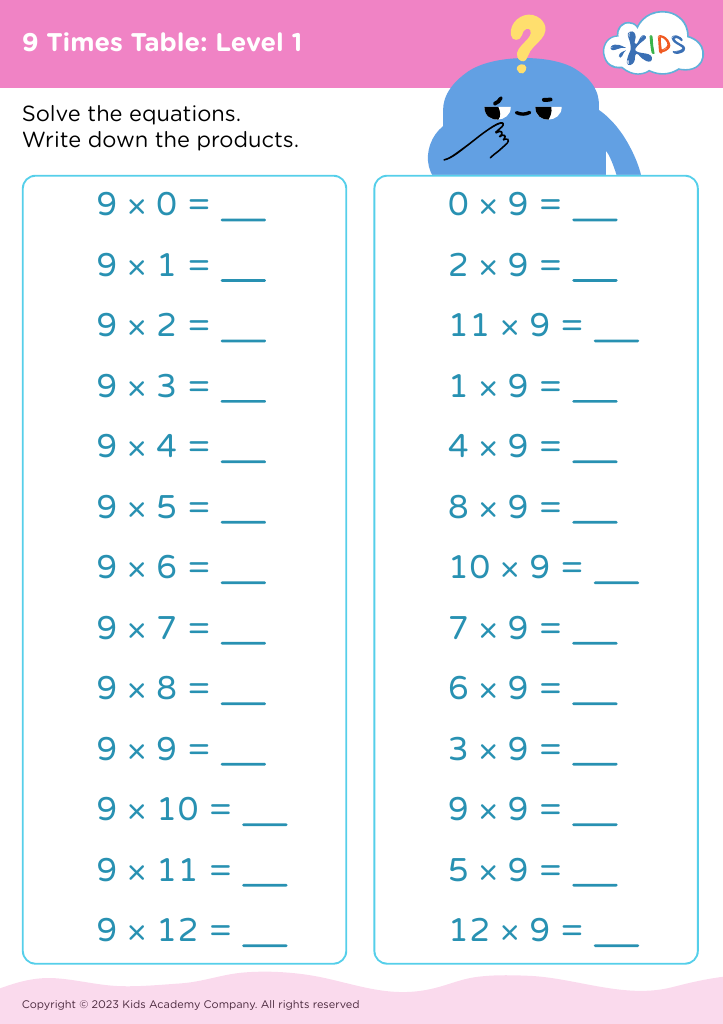


Understanding patterns and basic times tables up to 12 is crucial for young children, as it builds a strong foundation for future mathematical skills. For children aged 3-9, learning to recognize number patterns helps them develop critical thinking and problem-solving abilities. This understanding ensures smoother progress in more complex arithmetic and algebra concepts as they advance in their education.
Times tables are essential for efficient and accurate calculation. Mastering these tables up to 12 enables children to perform basic multiplication and division swiftly, thereby easing the process of tackling more advanced mathematical challenges. It also promotes numerical fluency, which is vital for daily tasks such as telling time, understanding money, and measuring objects.
From a cognitive development perspective, engaging with patterns enhances memory and concentration. When children discern sequences and relationships between numbers, they develop logical reasoning and the ability to make predictions based on observed regularities. This trains their brains to think systematically.
Moreover, an early comprehension of patterns and times tables can boost a child's confidence. Feeling competent in math can lead to a positive attitude towards learning and academic endeavors. Parents and teachers play a significant role in providing playful and supportive environments, making the acquisition of these fundamental skills enjoyable and effective.








