Basic Arithmetic Easy Numbers Worksheets for Ages 3-9
4 filtered results
-
From - To
Welcome to our "Basic Arithmetic Easy Numbers Worksheets" designed specifically for children ages 3-9! Our engaging and interactive worksheets introduce essential math concepts, helping young learners develop crucial skills in addition, subtraction, and number recognition. Each worksheet is crafted to be fun and age-appropriate, promoting an enjoyable learning experience. With colorful illustrations and tabletop activities, children will build confidence and solidify their understanding of basic arithmetic. Ideal for parents, teachers, or homeschooling, these worksheets encourage independent practice while making math a delightful adventure. Explore our resources today and watch your child’s math skills soar!
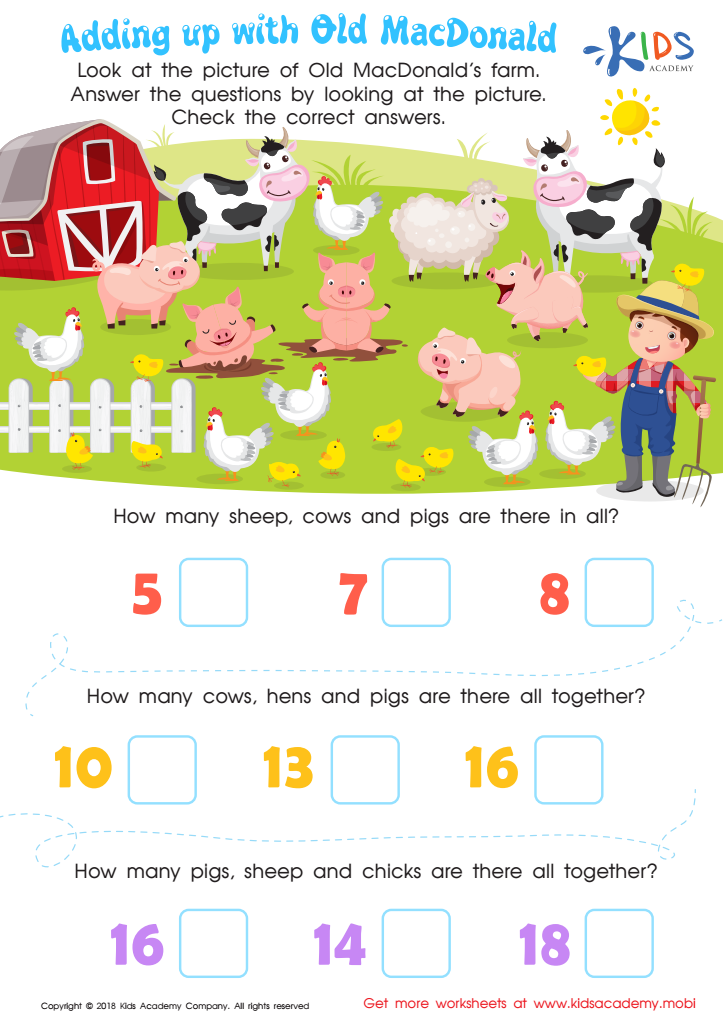
Adding Up with Old MacDonald Worksheet
 Assign to My Students
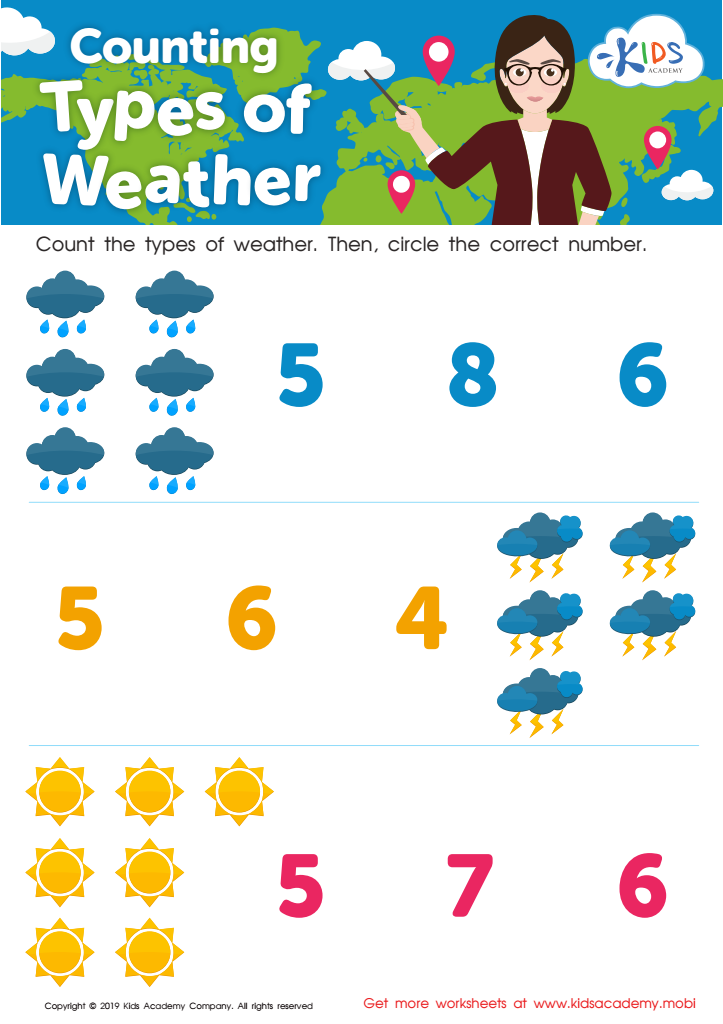
Counting Types of Weather Worksheet
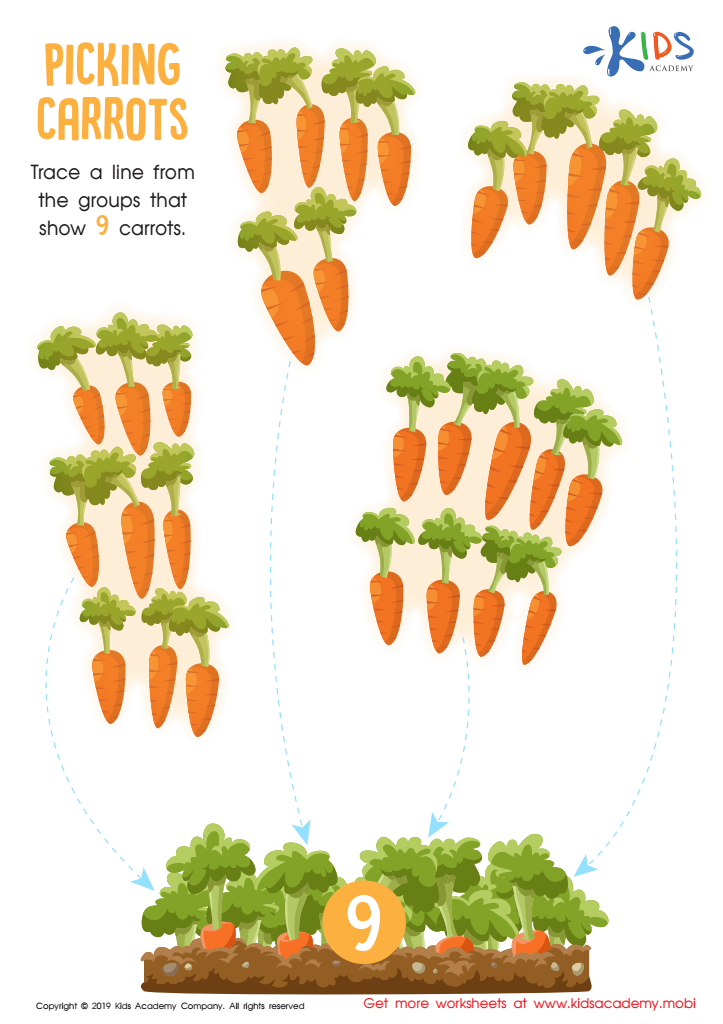
Picking Carrots Worksheet
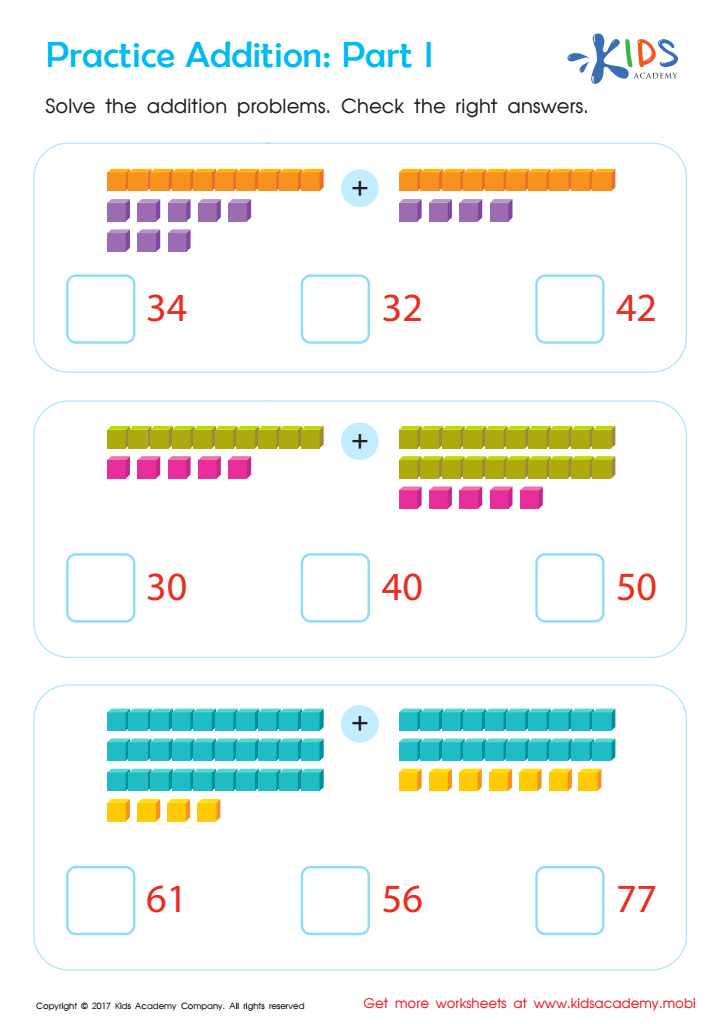
Practice Addition: Part 1 Worksheet








Parents and teachers should prioritize Basic Arithmetic Easy Numbers for children ages 3-9 because this foundational skill set is critical for cognitive development and everyday life. At this age, children’s brains are highly receptive to learning, and mastering basic arithmetic lays the groundwork for future mathematical comprehension. Understanding simple concepts such as addition, subtraction, and number recognition enhances problem-solving capabilities, critical thinking, and analytical skills.
Learning arithmetic also fosters a sense of confidence and achievement in young learners. When children become comfortable with numbers, they are more likely to engage positively with math as they progress through their education. This positive relationship with numbers can lead to improved performance in subjects that rely on mathematical concepts.
Moreover, basic arithmetic skills are integral to daily activities, from counting items to understanding time and managing money. By equipping children with these skills early on, parents and teachers ensure they are prepared for the more complex mathematical concepts they will encounter later.
Additionally, collaborative activities involving numbers can strengthen parent-child and teacher-student relationships, fostering an environment where curiosity and learning thrive. Thus, supporting basic arithmetic learning is not just about math; it’s about nurturing lifelong learners who feel competent and empowered.








