Number Recognition Easy Numbers Worksheets for Ages 3-9 - Page 4
75 filtered results
-
From - To
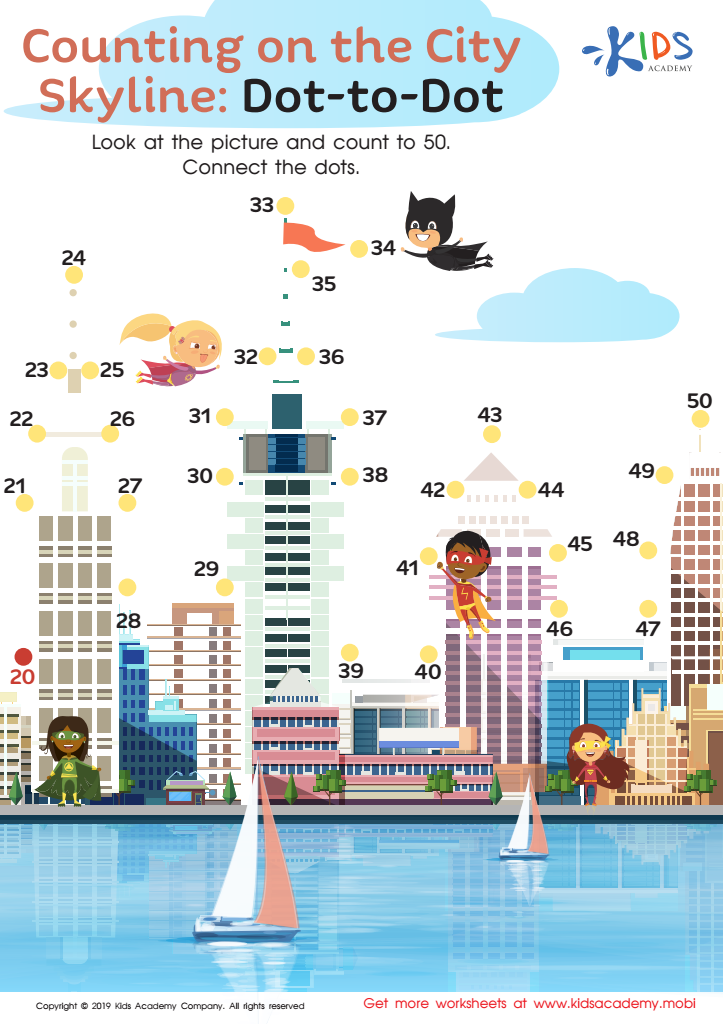
Counting on the City Skyline: Dot-to-Dot Worksheet
 Assign to My Students
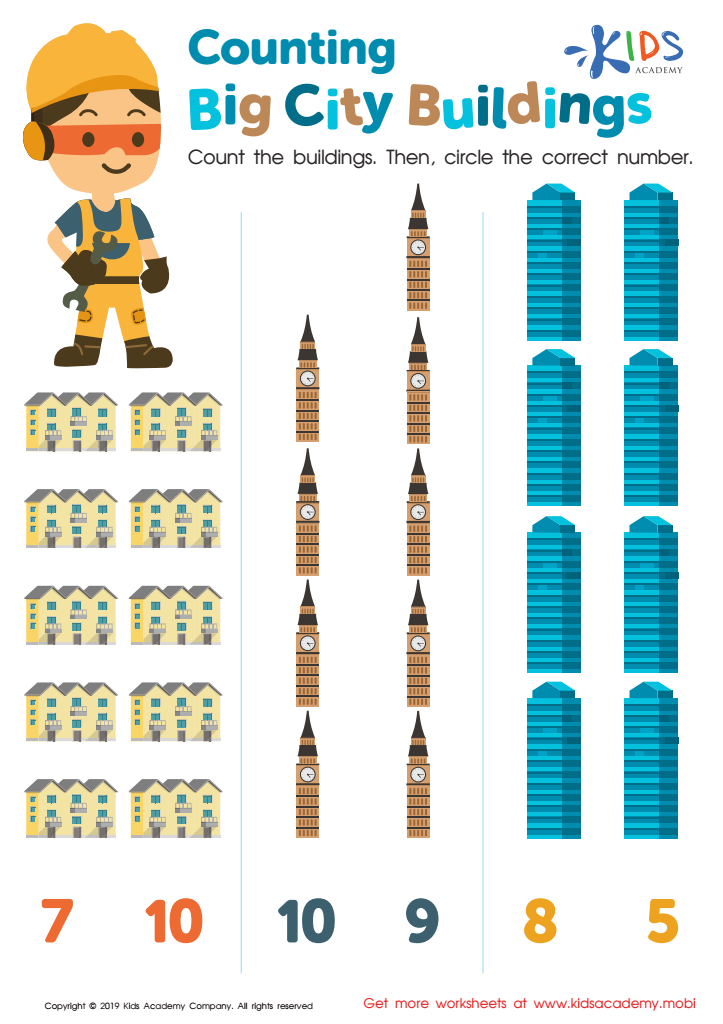
Counting Big City Buildings Worksheet

Night Sky Numbers Worksheet


%20(1).jpg)
.jpg)




Number recognition is a fundamental skill that sets the stage for early math learning and is essential for children aged 3 to 9. During these formative years, children develop cognitive abilities rapidly, and recognizing numbers builds the groundwork for more complex arithmetic and problem-solving skills.
Parents and teachers should prioritize number recognition because it enhances a child's ability to understand and engage with their environment. Numbers are everywhere: in daily routines, on clocks, in menus, and during playtime. Developing number recognition early helps children feel more competent and confident, boosting their self-esteem and easing transitions to formal schooling.
Moreover, number recognition is closely linked to other educational milestones. It aids in mastering counting, understanding number value, and sequencing, which are critical for learning addition and subtraction. Proficiency in these areas contributes to overall academic success and a positive attitude towards mathematics, which can last a lifetime.
In addition, number recognition activities improve fine motor skills when children learn to write numbers. These activities can be both enjoyable and educational, involving games, songs, and creative exercises that captivate young minds and instill a love for learning.
Overall, fostering number recognition in early childhood creates a robust educational foundation, arousing curiosity, logical thinking, and lifelong numeracy skills, benefiting children's future academic journeys.








