Enhancing calculation skills Easy Math Worksheets for Ages 3-9
3 filtered results
-
From - To
Enhancing Calculation Skills: Easy Math Worksheets for Ages 3-9 is designed to make learning math enjoyable for young children. Our carefully crafted worksheets offer engaging and interactive activities that cater to the early stages of math proficiency, focusing on addition, subtraction, multiplication, and division. Perfectly suited for kids aged 3-9, these simple, yet effective exercises help build fundamental calculation skills in a fun and accessible way. Whether your child is just starting to count or refining their arithmetic abilities, our easy math worksheets provide the perfect foundation for future math success. Explore a world of learning and watch your child’s confidence grow!
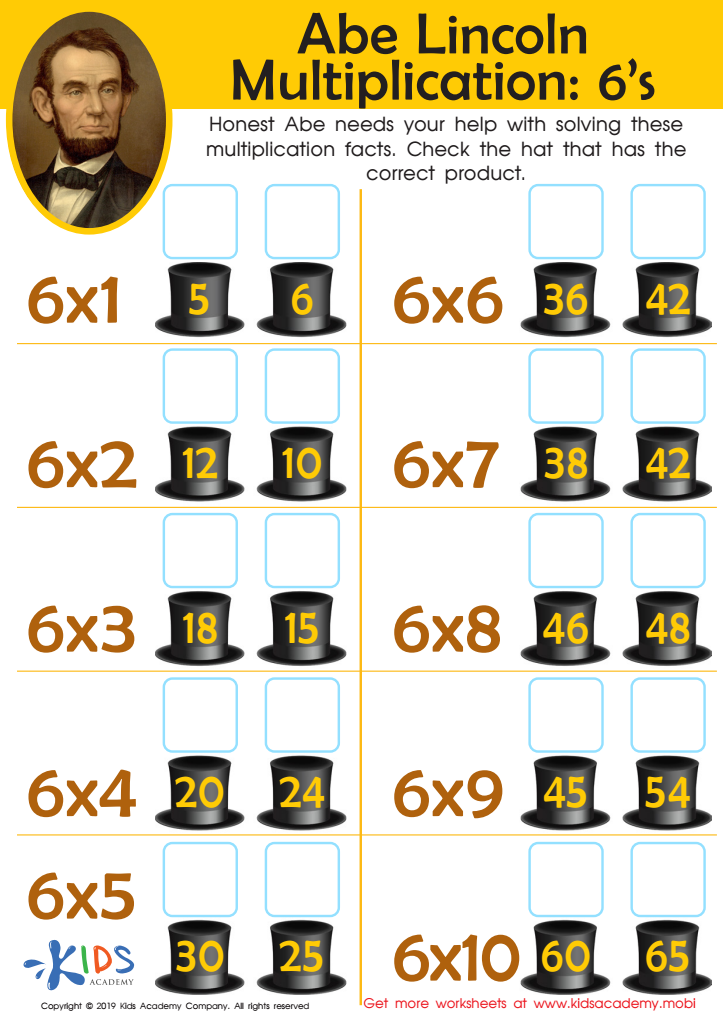
Abe Lincoln Multiplication: 6’s Worksheet
 Assign to My Students
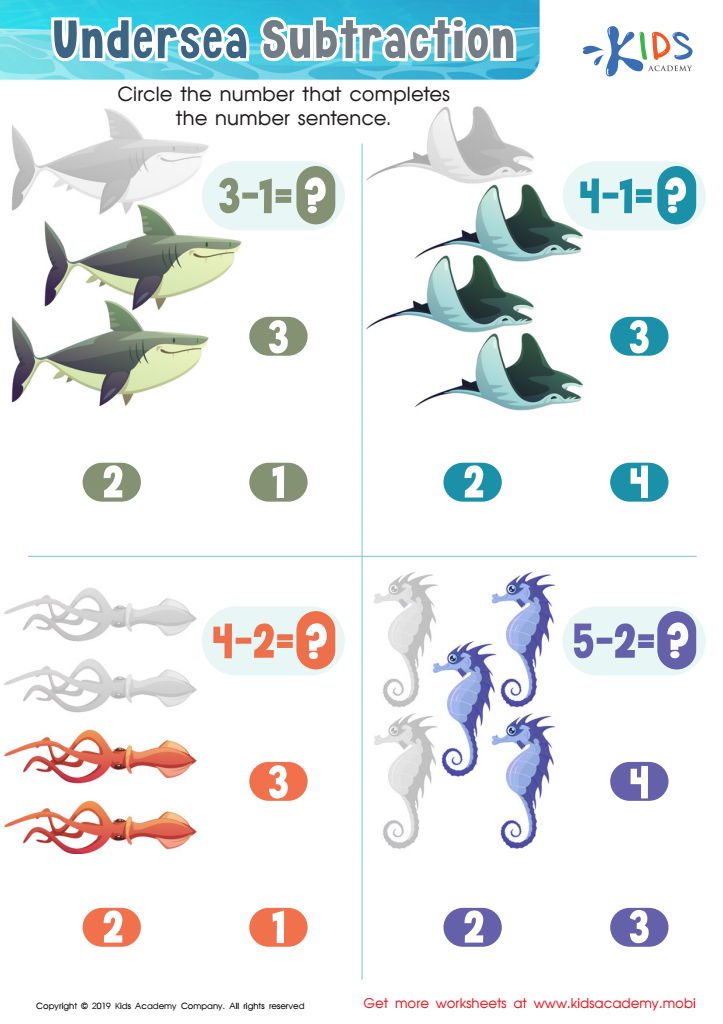
Undersea Subtraction Worksheet
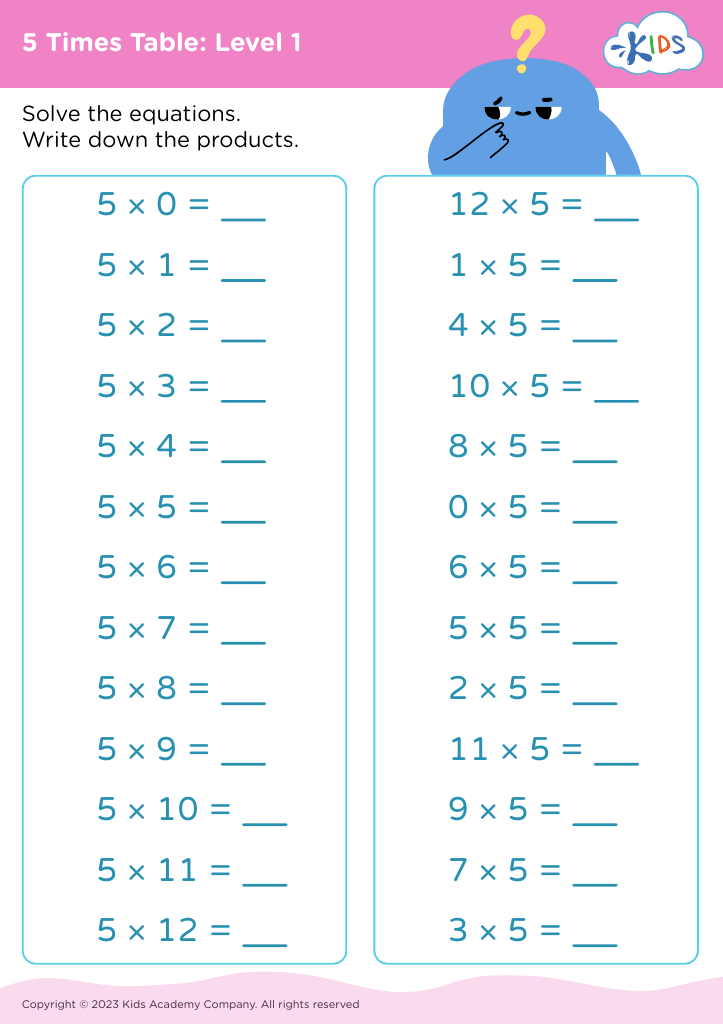








Enhancing calculation skills in children aged 3-9 is crucial for several reasons, and both parents and teachers play a vital role in this development. Early math proficiency is a strong predictor of academic success in later years. By fostering calculation skills at a young age, we can lay a strong foundation for more complex mathematical concepts that students will encounter throughout their education.
At these ages, children's brains are incredibly malleable and receptive to new information. Introducing them to basic math concepts like addition, subtraction, and counting not only builds their numerical literacy but also strengthens cognitive abilities such as problem-solving, logical reasoning, and critical thinking. These skills are transferable and can aid in other academic subjects and everyday decision-making.
Moreover, building confidence in math at an early age can help mitigate math anxiety, a common issue that can hinder academic achievement. When children learn math through engaging, supportive, and age-appropriate methods, such as games and practical activities, they are more likely to develop a positive attitude towards the subject.
Parents and teachers caring about early calculation skills can thus offer children a head start in their academic journeys, resulting in improved educational outcomes and life skills. Moreover, early success and familiarity with math create a positive feedback loop that fosters lifelong learning and curiosity.








