
Visual discrimination skills Easy Math Worksheets for Ages 3-9
3 filtered results
Difficulty Level
Grade
Age
-
From - To
Subject
Activity
Standards
Enhance your child's learning journey with our "Visual Discrimination Skills Easy Math Worksheets," specifically designed for ages 3-9. These engaging worksheets focus on developing essential visual discrimination skills that help children identify differences and similarities in shapes, sizes, and patterns. Such skills are crucial for future math success, aiding in problem-solving and critical thinking. Our user-friendly worksheets feature colorful visuals and age-appropriate activities that make learning fun and effective. Perfect for classrooms or at home, these resources ensure children build a strong foundation while enjoying interactive learning experiences. Explore our collection and watch your child's confidence and math skills flourish!
Favorites
With answer key
Interactive
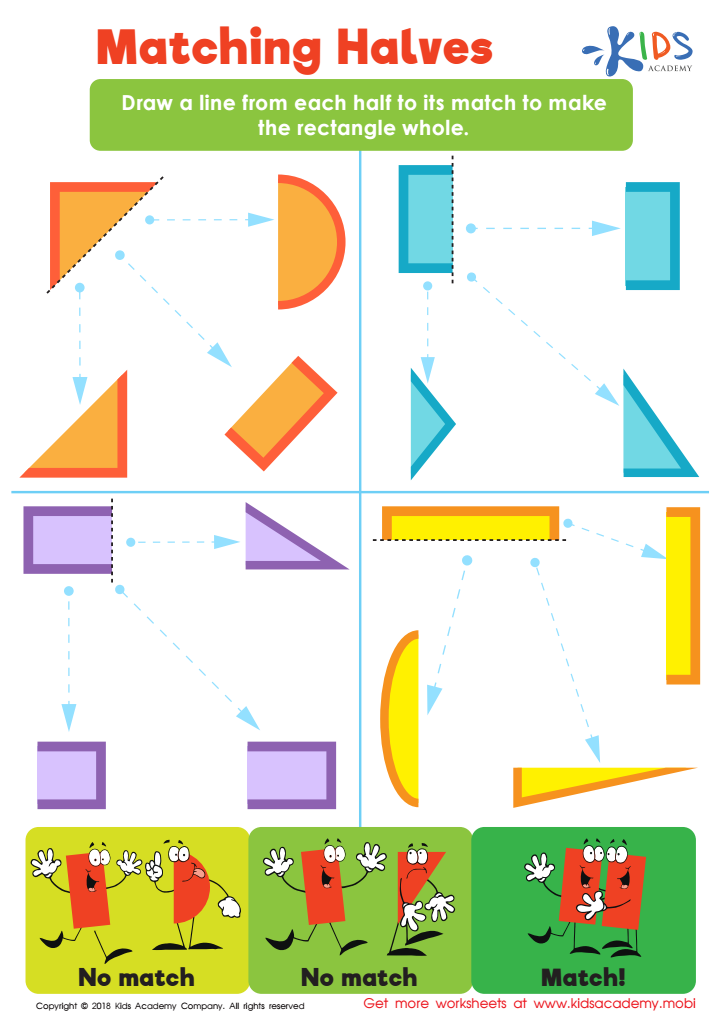
Matching Halves Worksheet
See how your child fares in matching two halves to form a complete rectangle. Provide them with four options, and ask them to draw a line connecting the two correct halves. Put their shape knowledge to the test with this simple worksheet!
 Assign to My Students
Matching Halves Worksheet
Worksheet
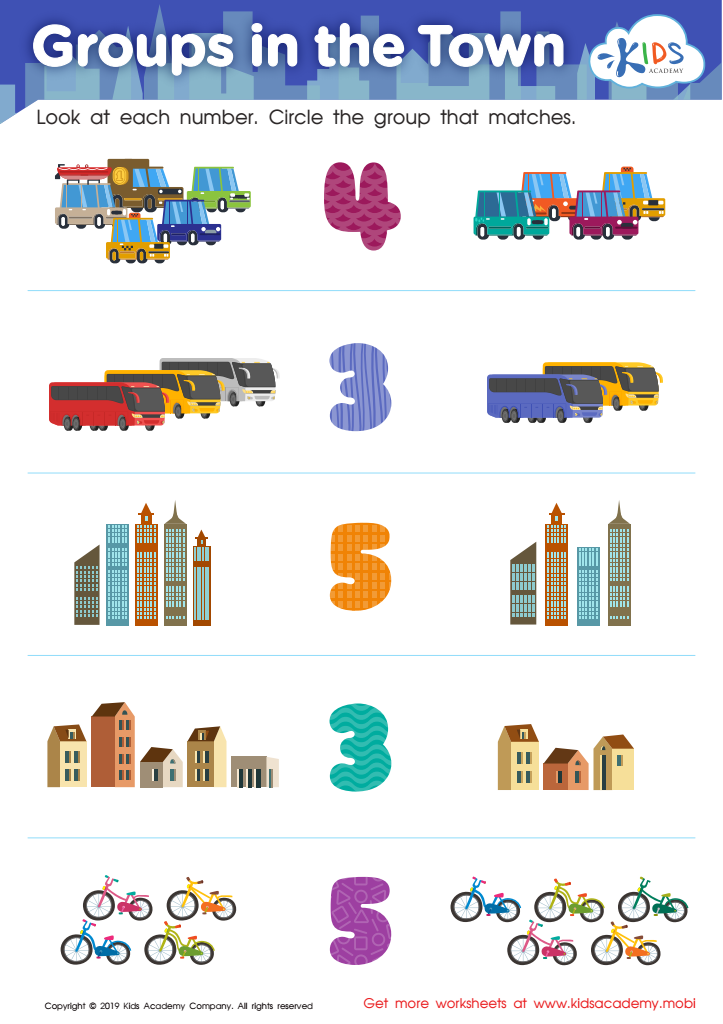
Groups in the Town Worksheet
Help your kids learn to count with this worksheet! Look at each number of objects and circle the group that matches. This simple activity can give them extra practice to support what they learn in school. Learning doesn't have to be a struggle; make it fun and interactive with this worksheet.
Groups in the Town Worksheet
Worksheet
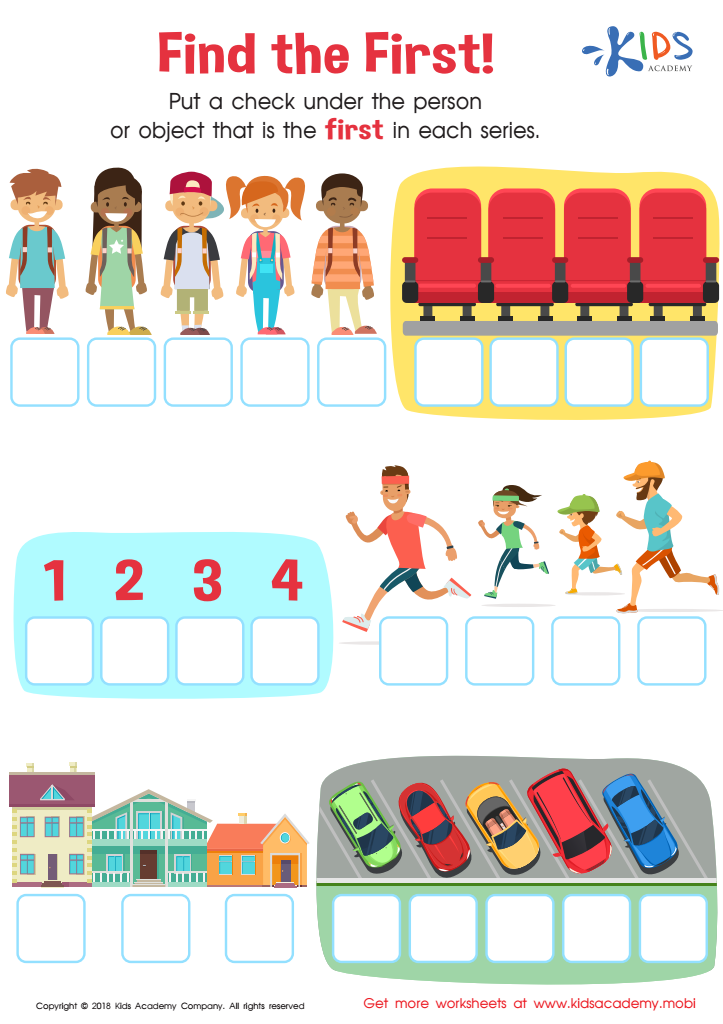
Find the First! Worksheet
Have your young students discuss what it means to be first in line, row, or a race. This free worksheet helps clarify their understanding of "first". View each group of people/objects and choose the first one. Follow up with hands-on activities like lining up students/toys or acting out a sequence of movements. Students can tell what happened first. Enjoy this printout for a fun math lesson!
Find the First! Worksheet
Worksheet
Join Kids Academy for Free
Who is primarily going to use this learning content?








Visual discrimination skills are crucial for early math development in children aged 3-9. These skills involve the ability to recognize and distinguish between different shapes, sizes, patterns, and colors, forming the foundation for more complex mathematical concepts. Parents and teachers should prioritize the enhancement of visual discrimination as it directly impacts a child's ability to learn and succeed in math and other academic areas.
Improving visual discrimination helps children make sense of their environment, supporting their problem-solving abilities as they navigate learning activities. For example, children with strong visual discrimination skills can easily differentiate between numbers and shapes, facilitating their early math understanding, such as counting, sorting, and basic addition or subtraction.
Moreover, engaging in activities that promote visual discrimination can bolster a child's confidence and motivation in learning. When children successfully identify variations in visuals, they experience a sense of achievement that encourages them to tackle more challenging concepts. Additionally, developing these skills early can help root out potential learning difficulties before they become significant hurdles, thus fostering a positive attitude towards math throughout their educational journey. In essence, investing in visual discrimination skills is key to a child’s overall academic success in mathematics and beyond.








